Big Time Safaris home
Plan My Safari
Kenya · Safari destination

Tsavo

Two vast parks of red earth, lava and springs — Tsavo East and Tsavo West together form one of Africa’s largest wildlife landscapes.

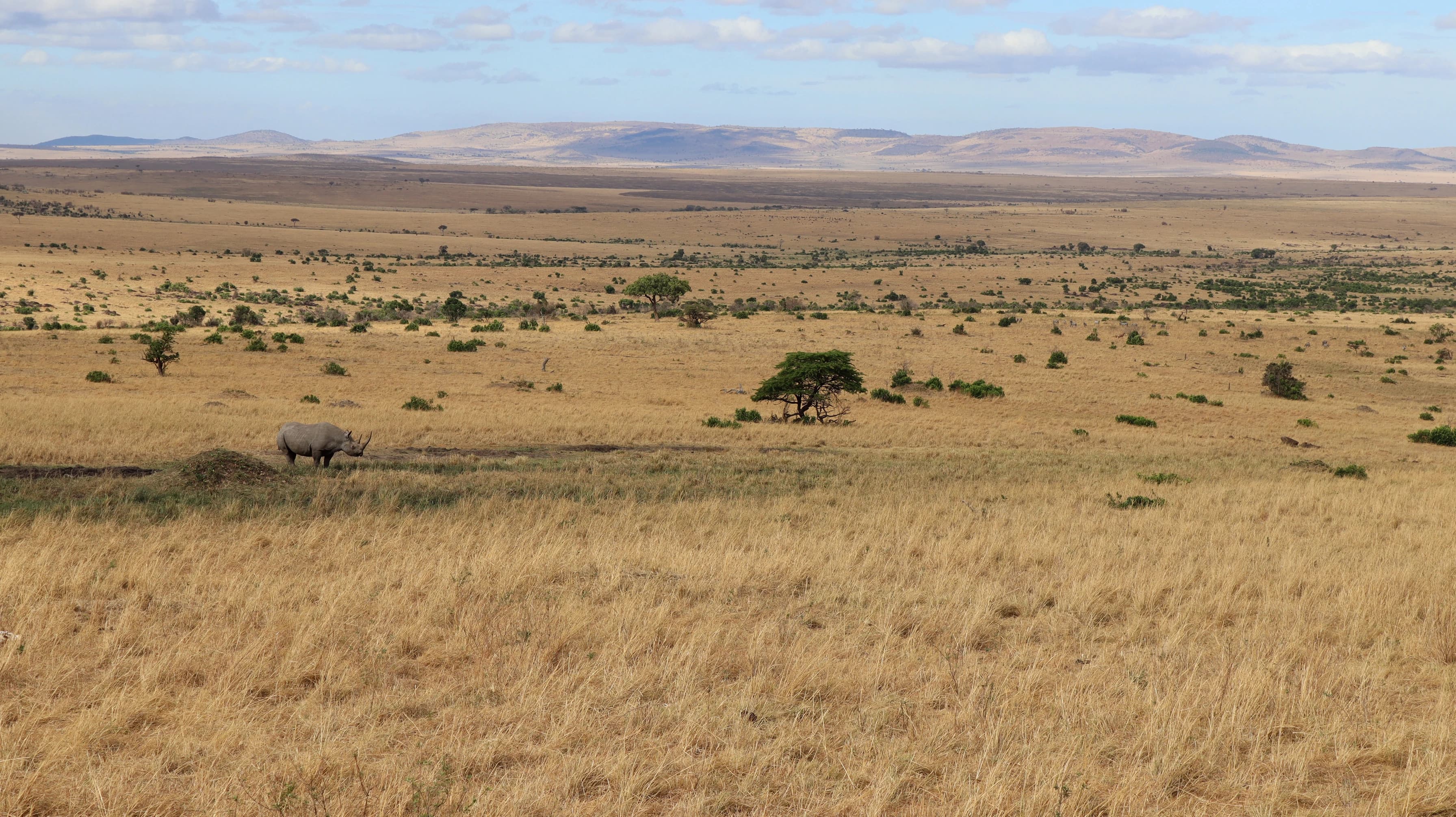
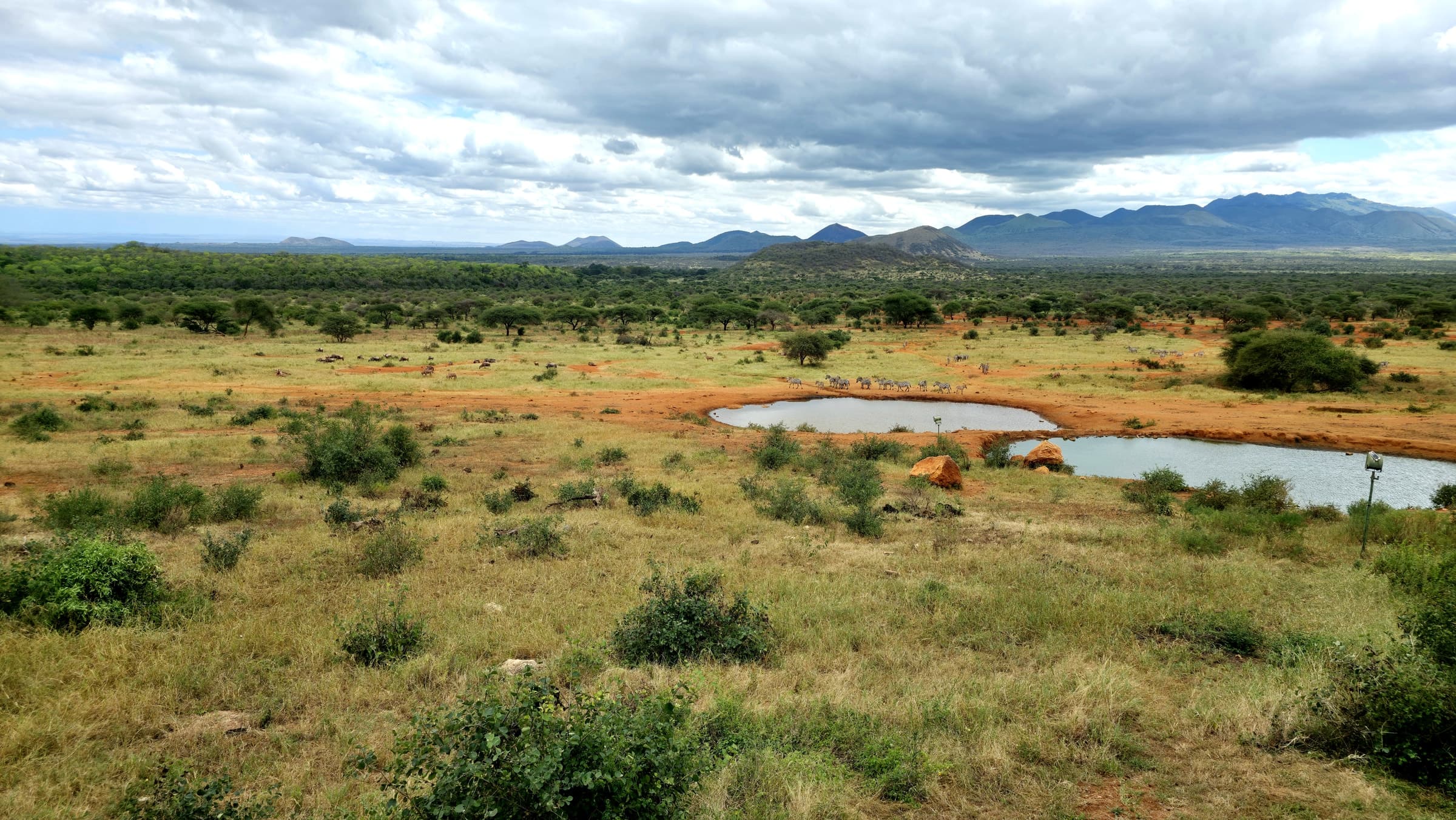
Open bush country in Tsavo West National Park, Kenya
Open bush country in Tsavo West National Park, KenyaPhotograph: Richard Mortel (CC BY 4.0) · Credits
Country
Kenya
Managed by
Kenya Wildlife Service
Tsavo East
About 13,747 km² — Kenya’s largest national park
Tsavo West
About 9,065 km² — Kenya’s second-largest
Tsavo Conservation Area
Around 22,000 km² in Taita-Taveta County
Our journeys here
2 journeys in the catalogue
Is Tsavo right for you?

Who it suits.

Best for
Travellers who want space and a sense of wilderness, history enthusiasts (the man-eaters of 1898 and First World War sites) and anyone heading for the coast.
How it connects
Both parks lie along the Nairobi–Mombasa highway, which separates them; Tsavo West links to Amboseli through Kimana Gate.

Tsavo in our Kenya guide, with the places around it.

Why visit Tsavo

Wilderness on a grand scale.

Tsavo is about space. Tsavo East, established in 1948, is Kenya’s largest national park at about 13,747 square kilometres, and with Tsavo West, the second-largest, it forms the Tsavo Conservation Area of around 22,000 square kilometres in Taita-Taveta County, where elephants dusted red by the soil cross semi-arid plains. Tsavo East also supports the critically endangered hirola, and more than 500 bird species have been recorded there.

It is full of stories too. The man-eating lions of Tsavo attacked workers building the Kenya–Uganda Railway in 1898 and halted construction, and the bush here was a theatre of the First World War’s East African campaign, which Kenya Wildlife Service describes as combining formal military codes with guerrilla tactics. With minimal light pollution, the parks’ night skies are another reason to stay.

Landscapes & wildlife

Lava, springs and rivers.

In Tsavo East, the Galana River cuts through arid bushland and the Yatta Plateau runs alongside it; Kenya Wildlife Service calls the plateau the world’s longest lava flow. The Tsavo and Athi rivers cross the park and provide vital water for wildlife and vegetation, and Kenya Wildlife Service lists the Aruba Dam among its game-viewing points.

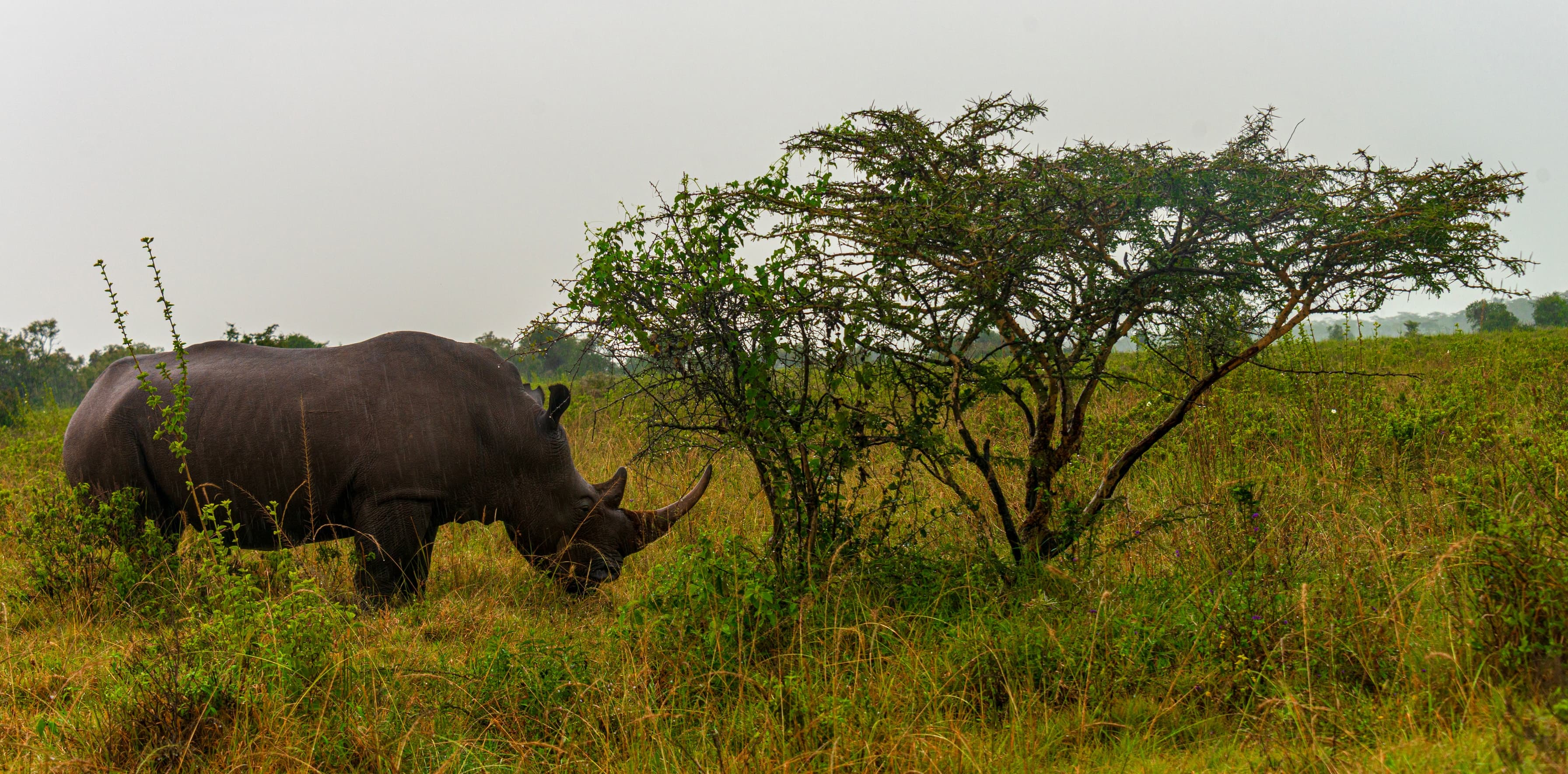
Tsavo West is hillier and more volcanic. Its best-known sight is Mzima Springs, where clear water surges from beneath lava rock into pools that draw wildlife and birds, and the Shetani lava flow and its caves are among the park’s attractions. Viewpoints such as Poacher’s Lookout and Roaring Rocks look out over the park, the Tsavo West Rhino Sanctuary protects rhinos, and Lake Jipe on the border is shared with Tanzania.

  • Red-dusted elephants
  • Mzima Springs
  • The Yatta Plateau
  • The critically endangered hirola
  • Over 500 bird species in Tsavo East and over 600 in Tsavo West

Wildlife moves freely and sightings are never guaranteed.

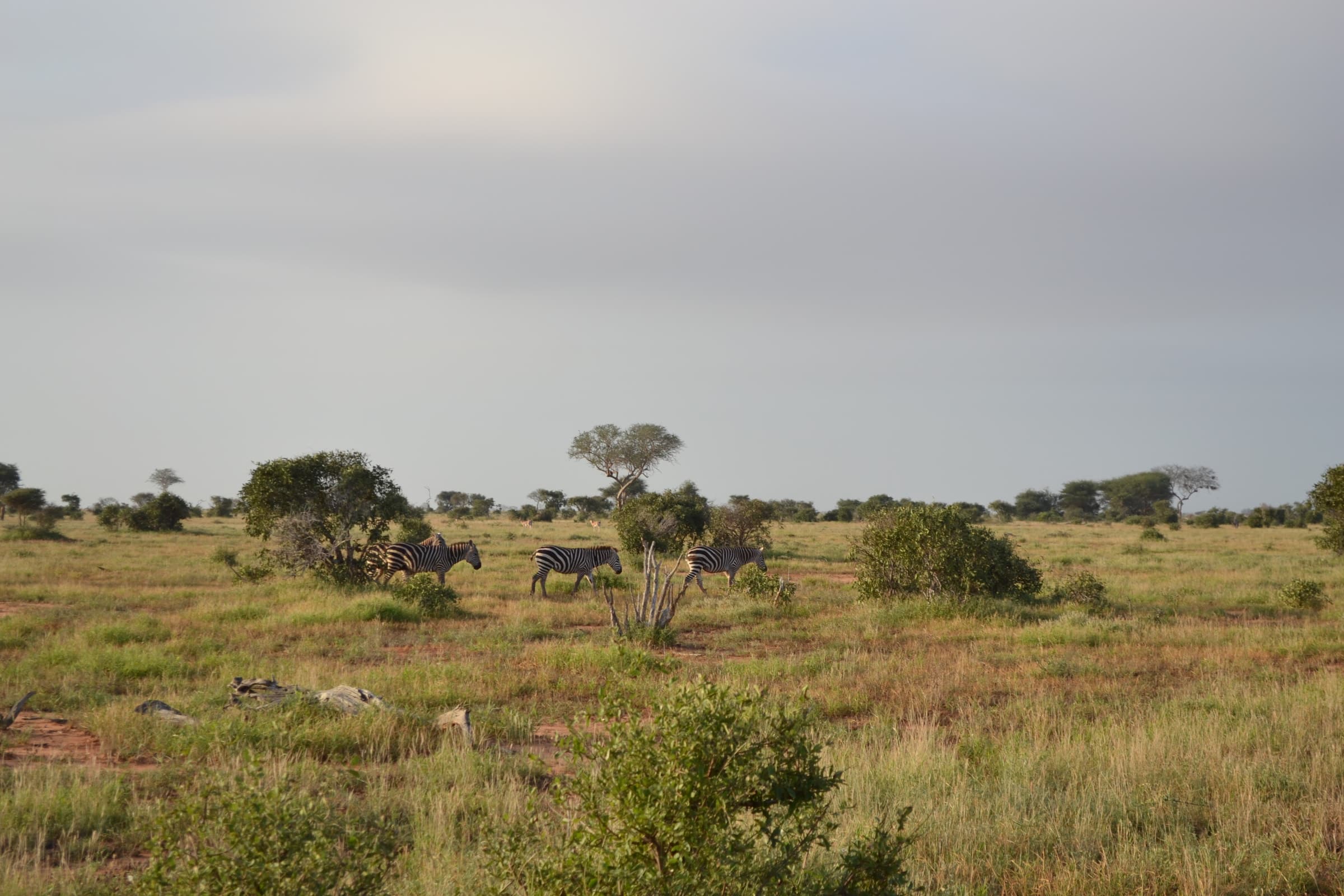
Zebras on the plains east of the Aruba Dam in Tsavo East National Park, Kenya
Photograph: CT Cooper (CC BY 3.0)
When to visit

When to visit Tsavo.

Kenya Wildlife Service describes most of its parks, Tsavo included, as lying in dry, warm to hot country, with the north and east of Kenya hot and dry. It gives July to March as the main season for wildlife viewing and April to June as the low season of the long rains, when roads may need four-wheel drive. The Kenya Meteorological Department adds a shorter rainy season from October to December.

Signature experiences

What to do in Tsavo.

Getting there

Getting to Tsavo.

Both parks lie along the Nairobi–Mombasa highway, which with the railway separates them. Gates include Mtito Andei, Voi, Bachuma and Manyani for Tsavo East, with Sala Gate reached from Malindi, and Mtito Andei, Chyulu (from Amboseli), Tsavo River, Lake Jipe, Maktau and Ziwani for Tsavo West. The Standard Gauge Railway stops at Voi and Miasenyi for Tsavo East and at Mtito Andei for Tsavo West.

Several airstrips serve both parks: Voi and Ithumba are the main airstrips in Tsavo East, while Kilaguni and Finch Hattons serve Tsavo West, with smaller strips throughout. The size of the area means that the choice of gate and base matters, as different parts of the parks can be a long drive apart, and a safari that visits both usually crosses the highway between them.

Questions travellers ask

Tsavo, answered.

What is the difference between Tsavo East and Tsavo West?
Tsavo East is the larger of the two, a semi-arid wilderness with the Galana River and the Yatta Plateau. Tsavo West has hills, volcanic landscapes and Mzima Springs. The Nairobi–Mombasa highway and the railway separate them.
Related destinations

Sources

Facts on this page were checked against these sources in October 2026. Park rules, fees and conditions change, so always check the latest before you travel.

Your journey begins with a conversation

Shape your Tsavo journey.

Tell us when you would like to travel and who is coming, and our team will suggest safaris that include Tsavo.

Let’s talk safari