Big Time Safaris home
Plan My Safari
Uganda safari guide

Uganda, where the forest comes first.

Mountain gorillas in Bwindi’s ancient rainforest, chimpanzees in Kibale, tree-climbing lions in Queen Elizabeth, the Nile forcing through Murchison Falls and the remote valleys of Kidepo, with the permit rules, minimum ages and distances you need to plan.

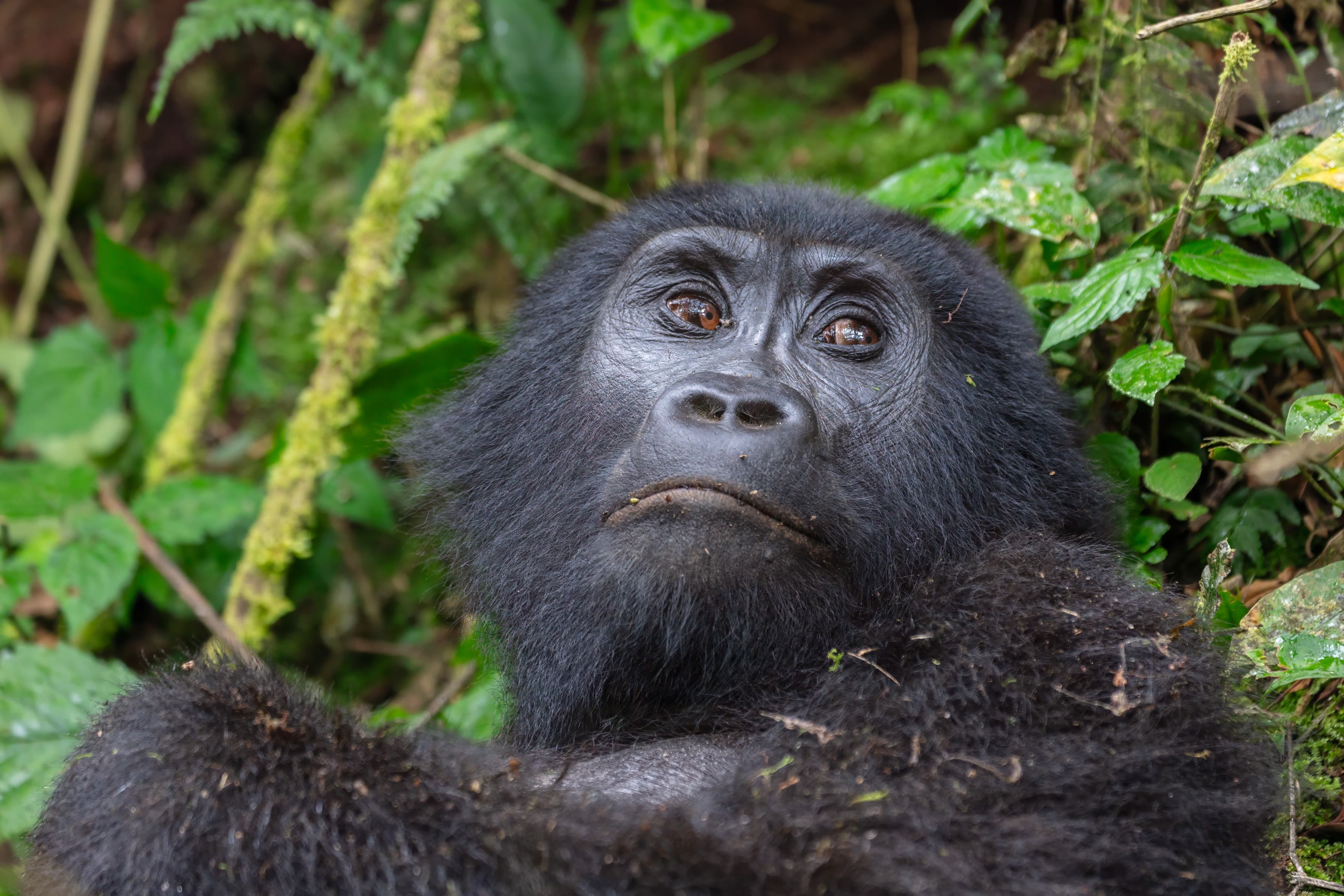
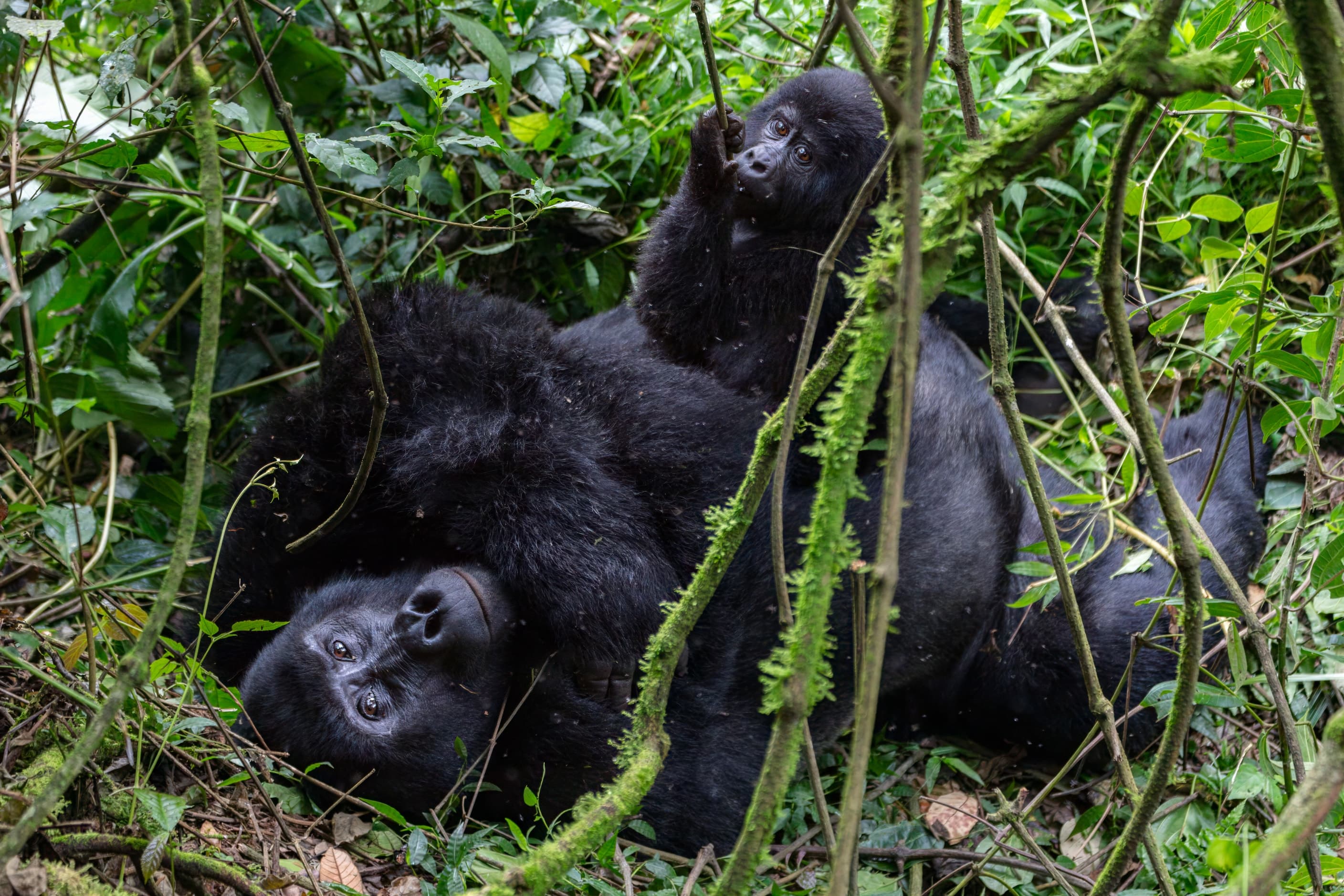
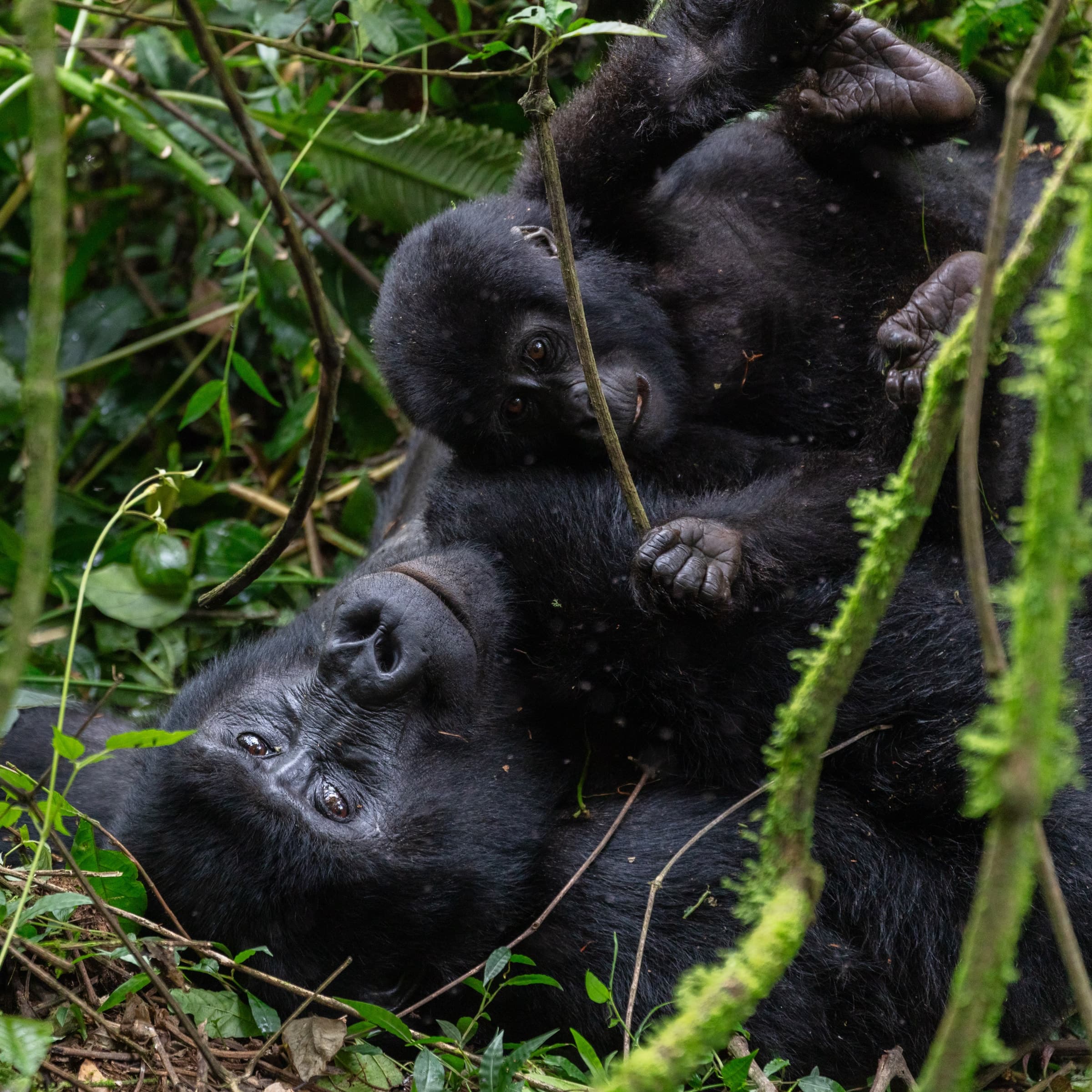
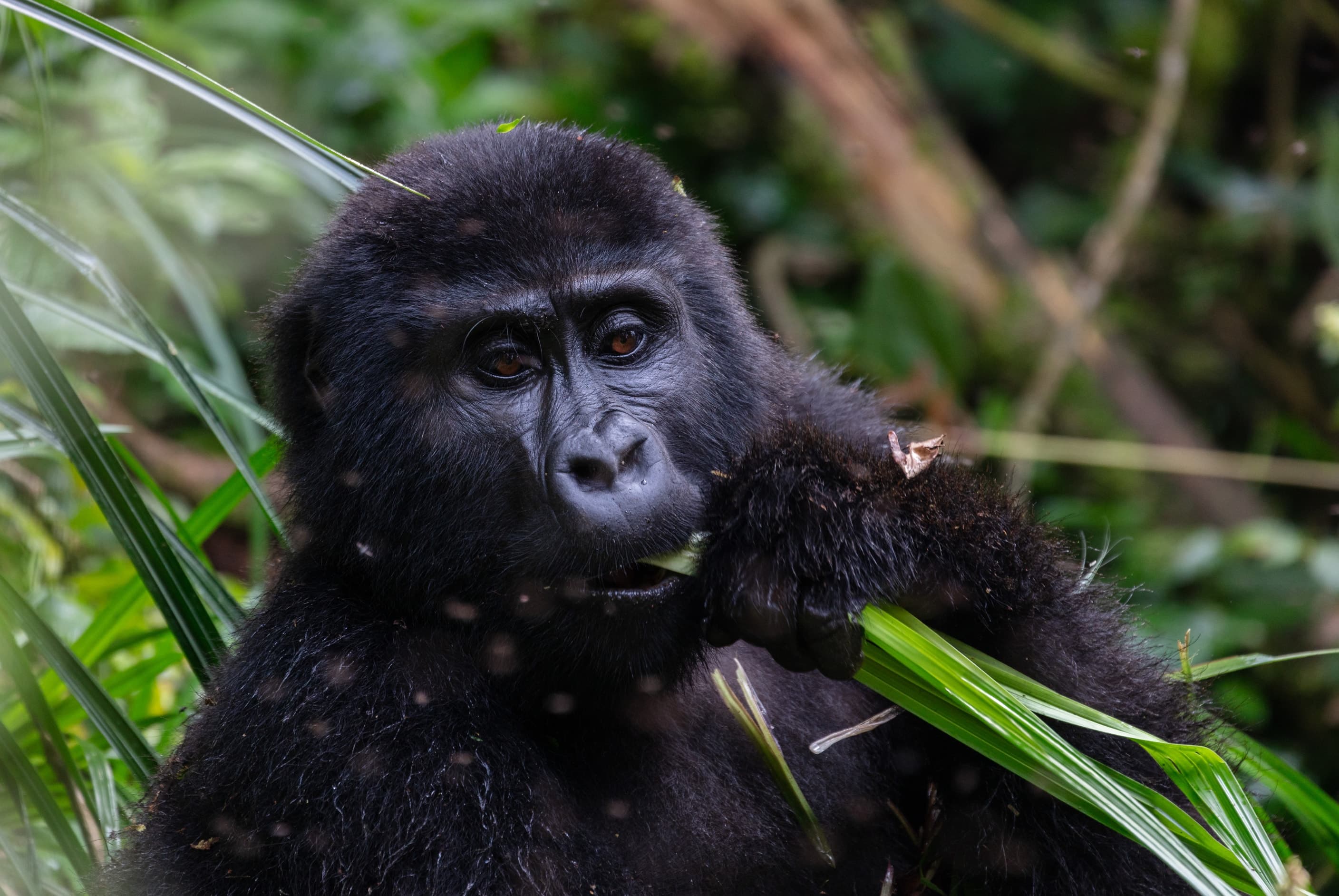
A mountain gorilla family in the undergrowth of Bwindi Impenetrable National Park, Uganda
A mountain gorilla family in the undergrowth of Bwindi Impenetrable National Park, UgandaPhotograph: Diego Delso (CC BY-SA 4.0) · Credits
Uganda safaris
18 in our catalogue
With gorilla trekking
9 of them
Mountain gorillas in Bwindi
About 459 — almost half the world’s population
Parks managed by
Uganda Wildlife Authority
Uganda in brief

Quick answers.

The questions travellers ask first, answered directly. Each links to more detail further down or in our guides.

How old do I need to be for gorilla trekking?

At least 15. The Uganda Wildlife Authority’s published gorilla tracking rules set a minimum age of 15, a maximum of eight visitors per gorilla group and one hour with the gorillas. The rule is the same in its July 2024 – June 2026 tariff and in the revised tariff that takes effect on 1 January 2027 (both checked 20 October 2026).

What is the minimum age for chimpanzee tracking?

The Uganda Wildlife Authority has published two figures: 12 in the chimpanzee tracking rules in its tariffs, and 16 on its Kibale National Park page. Travellers aged 16 or over meet both. For anyone aged 12 to 15, ask us to confirm eligibility with UWA before a permit is booked (checked 20 October 2026).

How do I get a gorilla permit?

Through a licensed tour operator: UWA says gorilla and chimpanzee permits for foreign non-residents and visitors from the rest of Africa can be booked only that way, and permits are limited, so book well ahead. UWA’s notice of 26 February 2026 introduced discounted low-season permits for April, May and November that cannot be rescheduled. Its published tariff period ended in June 2026 and the revised tariff starts on 1 January 2027, so the rate for your dates must be confirmed with UWA: we do not quote permit prices here.

How fit do I need to be?

Reasonably fit. Bwindi’s forest covers steep ridges and deep valleys, Mgahinga lies between about 2,227 and 4,127 metres on volcano slopes, and UWA says chimpanzee treks in Kibale typically last between two and five hours, with one hour in the chimpanzees’ presence. Tell us about any health or mobility concerns before you book.

When is the best time for gorilla trekking in Uganda?

Any month you can travel. The Uganda Wildlife Authority publishes no trekking season for Bwindi or Mgahinga; it discounts permits in its low-season months of April, May and November. Bwindi is a rainforest, so plan for wet, steep trails whenever you go. For the savannah parks, UWA describes a season only for Kidepo, whose Narus Valley is at its best in the dry months.

Do I need a visa and a yellow fever certificate?

Visitors who are not exempt apply online for a Ugandan visa, with a passport valid for at least six months. Yellow fever is three separate questions. To enter Uganda, a certificate is no longer mandatory (Uganda immigration notice of 2 October 2026, reflected in the UK’s travel advice on 8 October 2026). As medical advice, the US CDC still recommends the vaccine for travellers to Uganda; its entry table, last updated in April 2025, still lists a certificate. And if you travel on to Kenya or Tanzania, both ask for proof from travellers arriving from countries WHO lists as a yellow fever risk, which include Uganda. Whether you should be vaccinated is for a travel-health professional to advise.

Uganda, Kenya or Tanzania?

Choose Uganda first for primates: mountain gorillas and chimpanzees in the forest, with savannah parks and the Nile alongside. Kenya and Tanzania are the countries for the great migration and the largest open plains. Many travellers combine a primate journey with a savannah safari.

Why visit Uganda

Primates, rivers and wild savannah.

Uganda is a place to meet mountain gorillas. Bwindi Impenetrable National Park protects about 459 of them — almost half of those left in the world, according to the Uganda Wildlife Authority — in a rainforest more than 25,000 years old. Its forests are rich in other primates too: Kibale National Park, renowned for its 13 primate species, is home to more than 1,500 wild chimpanzees.

Its savannah parks are just as distinctive. Queen Elizabeth National Park straddles the equator, with the Kazinga Channel between two lakes and lions that rest in fig trees in Ishasha. At Murchison Falls the Victoria Nile squeezes through an eight-metre gorge, and Kidepo’s golden valleys make up Uganda’s most remote park.

Uganda safari regions

Where the wild lives.

Uganda’s safari country runs from the rainforests and volcanoes of the south-west, through Kibale’s primate forest and the savannah of Queen Elizabeth, to the Nile at Murchison Falls and the remote north. Our journey titles often describe an experience rather than a place, so some places here are not named in any title: those profiles say so.

Arriving

Entebbe and Kampala.

Route Entebbe International Airport → Kampala → the parks by road or by air

Uganda journeys usually begin at Entebbe International Airport, on the shore of Lake Victoria. The Uganda Wildlife Authority describes daily scheduled flights from Entebbe to Kisoro and Kihihi airstrips, which serve Bwindi’s gorilla sectors, and charter or scheduled flights to airstrips near Queen Elizabeth and Murchison Falls, which can replace a long drive for travellers with limited time.

By road, the parks are a long way from the capital. UWA’s Kibale page puts the forest about six hours’ drive from Kampala, and its Queen Elizabeth page puts the direct drive there at seven to eight hours or more. With distances like these, it makes sense to link the parks in a sequence, with a night or more in each, rather than return to the capital between them.

Sources: Uganda Wildlife Authority (Bwindi Impenetrable National Park: gorillas and getting there (opens in a new tab), Queen Elizabeth National Park (opens in a new tab), Murchison Falls National Park (opens in a new tab), Kibale National Park: chimpanzee tracking (opens in a new tab))

Entebbe and Kampala

Uganda’s arrival point. Entebbe International Airport, on the shore of Lake Victoria, is where flights to the parks’ airstrips begin, and Kampala, the capital, is the starting point for the road routes west and north.

What you may see
  • Scheduled flights from Entebbe to Kisoro and Kihihi airstrips for Bwindi
  • The Kampala–Fort Portal highway towards Kibale
Best for
The first and last night of a Uganda journey, and anyone deciding between driving and flying to the parks.
Landscape
Lake Victoria’s northern shore and the hills of the capital, rather than wildlife country.
When to go
Any time of year: the gateway itself is not seasonal, so plan around the parks you are heading for.
How it connects
The parks are a long way from the capital: UWA’s park pages put Kibale about 326 km from Kampala (about six hours by road) and Queen Elizabeth about 410 km (at least seven to eight hours), and its tariff lists Bwindi at about 512 km.
Good to know
  • Flights between parks are usually arranged by tour operators from Entebbe International Airport.
Our journeys
Our journey titles do not name Entebbe or Kampala; ask us where your journey begins and ends.
The south-west

Gorillas, volcanoes and lakes.

Route Kampala → Lake Mburo → Bwindi (Buhoma, Ruhija, Rushaga or Nkuringo) → Mgahinga

South-western Uganda is gorilla country. Bwindi Impenetrable National Park shelters almost half of the world’s mountain gorillas, and its sectors, including Buhoma, Ruhija, Rushaga and Nkuringo, are reached by different roads, so the sector named on your permit shapes where you stay. Next door, Mgahinga Gorilla National Park, the country’s smallest, has one habituated gorilla group and endangered golden monkeys on the slopes of the Virunga volcanoes.

On the long drive from Kampala, Lake Mburo National Park makes a natural first stop: a small savannah park with Uganda’s only impala, good zebra viewing and walking safaris, which UWA puts about three and a half hours from the capital. Together the three parks show how varied a single region of Uganda can be, from open savannah to forest on extinct volcanoes.

Sources: Uganda Wildlife Authority (Bwindi Impenetrable National Park (opens in a new tab), Bwindi Impenetrable National Park: gorillas and getting there (opens in a new tab), Mgahinga Gorilla National Park (opens in a new tab), Lake Mburo National Park (opens in a new tab))

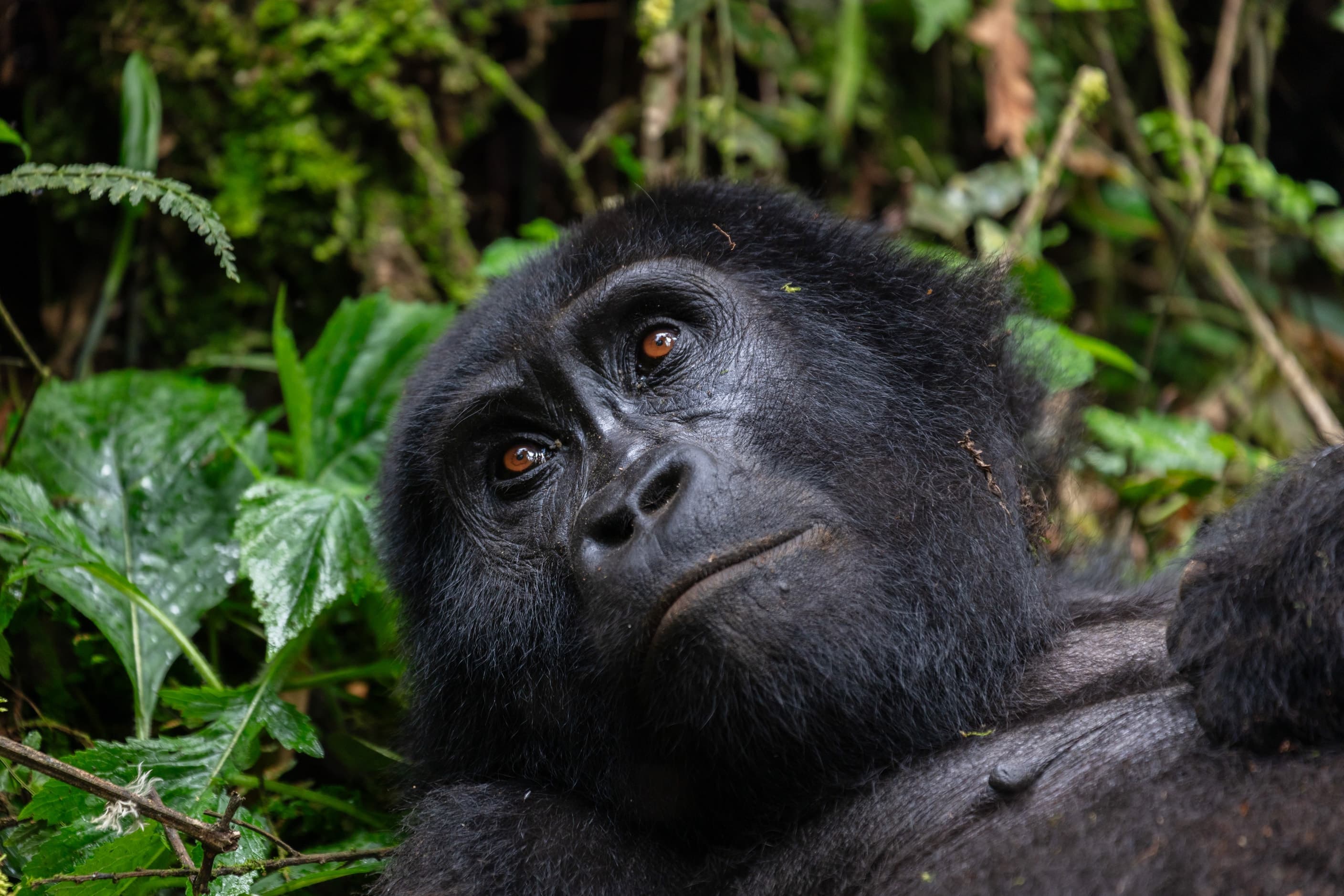
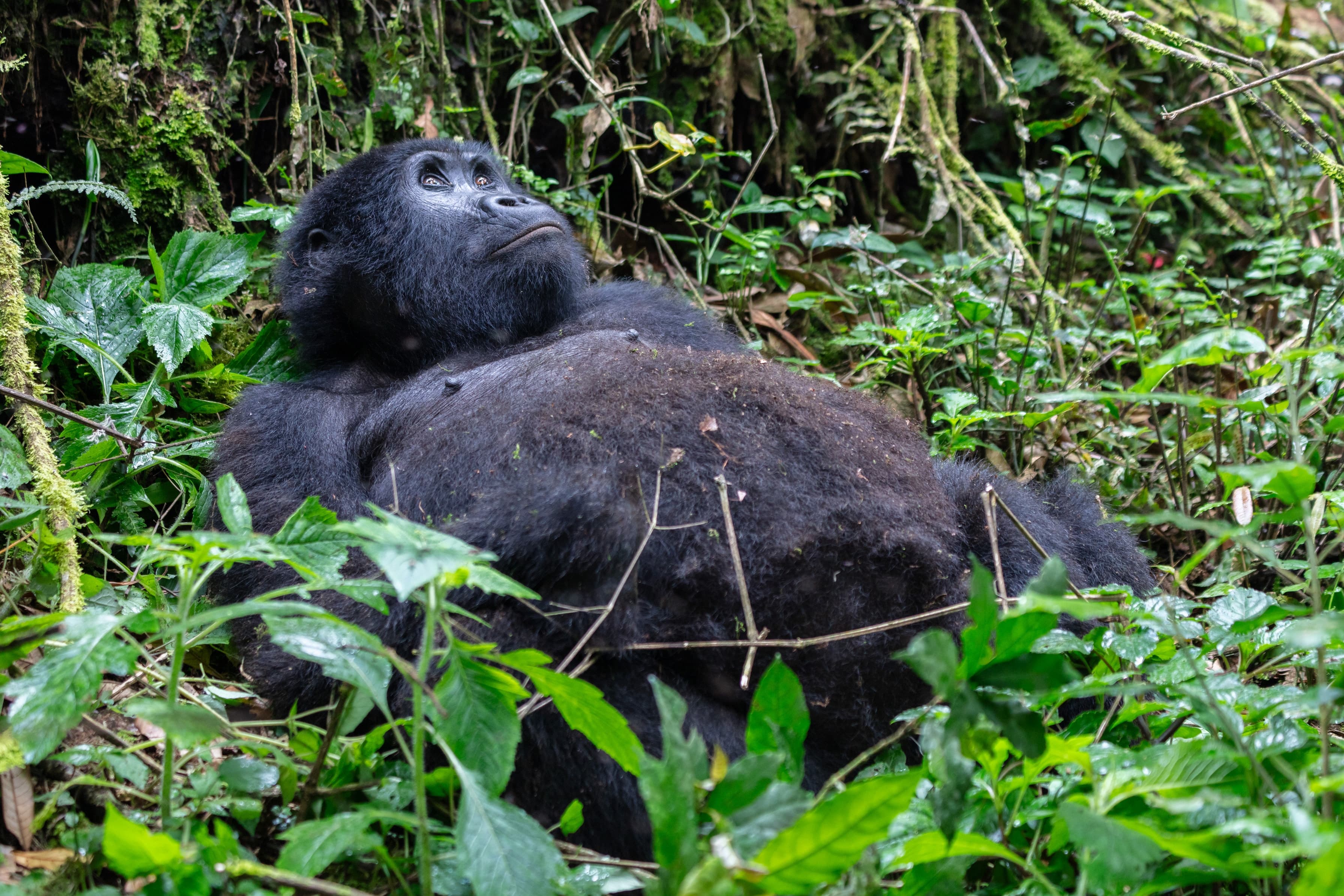
A mountain gorilla in Bwindi Impenetrable National Park, Uganda

Bwindi

Bwindi Impenetrable National Park is an ancient, mist-covered rainforest, more than 25,000 years old, that protects about 459 mountain gorillas: almost half of those left in the world, according to the Uganda Wildlife Authority.

What you may see
  • A habituated gorilla family, for one hour
  • More than 350 bird species, including 23 Albertine Rift endemics
  • Batwa and Bakiga cultural experiences around Buhoma and Nkuringo
Best for
Anyone aged 15 or over who is ready for steep, muddy forest trails. Nine of our Uganda journeys include gorilla trekking.
Landscape
Steep ridges and deep valleys under dense forest, the watershed of five rivers that flow into Lake Edward.
When to go
In any month. UWA publishes no trekking season and discounts permits in its low-season months of April, May and November; as a rainforest, Bwindi can be wet whenever you go.
How it connects
Buhoma, the park headquarters, is reached via Kihihi or Kabale; the southern sectors, Nkuringo and Rushaga, are usually approached via Kisoro. Daily scheduled flights link Entebbe with the Kihihi and Kisoro airstrips.
Good to know
  • A four-wheel-drive vehicle is highly recommended on the murram roads to the park.
  • Do not trek if you have a cold or other infectious illness: gorillas can catch human infections.

Mgahinga Gorilla National Park

Uganda’s smallest national park, 33.7 square kilometres high on three extinct volcanoes of the Virunga range, where Uganda, Rwanda and the Democratic Republic of the Congo meet.

What you may see
  • One habituated gorilla group, which crosses the border
  • Endangered golden monkeys
  • The Batwa trail, led by a Batwa guide
Best for
Gorilla trekkers who also want golden monkeys and volcano scenery, and travellers interested in Batwa heritage.
Landscape
Volcano slopes climbing from about 2,227 to 4,127 metres, part of the Virunga range that runs along the borders of Uganda, Rwanda and the Congo.
When to go
In any month; UWA publishes no season. At this altitude, pack warm layers and rain gear whenever you go.
How it connects
In Kisoro district, close to Bwindi’s southern sectors; reached by road via Kabale, or by air to Kisoro airstrip from Entebbe or Kajjansi.
Good to know
  • The park’s only habituated group can move across the border, so ask us how this affects your plans.
  • A four-wheel-drive vehicle is recommended.
Our journeys
Our journey titles do not name Mgahinga; ask whether a journey can use it.

Lake Mburo National Park

Uganda’s smallest savannah park, 370 square kilometres between Kampala and Mbarara, home, the Uganda Wildlife Authority says, to the country’s only population of impala.

What you may see
  • Zebras, impala and eland, Africa’s largest antelope
  • Buffalo, Defassa waterbuck and reedbuck
  • More than 315 bird species
Best for
Breaking the long drive to Bwindi, families, and walkers: the Uganda Wildlife Authority lists guided walking safaris as well as game drives and boat trips.
Landscape
Open savannah with rocky ridges and forested gorges, riparian woodland and papyrus; wetlands cover about a fifth of the park.
When to go
In any month, as a stop on the way to or from Bwindi; UWA publishes no season for the park.
How it connects
UWA’s park page puts it about 228 km from Kampala, about three and a half hours by road, between Kampala and Mbarara (its tariff lists 253 km). Nshara and Sanga are the gates; charters can reach Mbarara airstrip.
Good to know
  • Small boats run with a minimum number of passengers, so ask whether a boat trip is included.
Our journeys
Our journey titles do not name Lake Mburo; ask whether your route passes it.
The western rift

Chimpanzees and the Kazinga Channel.

Route Fort Portal → Kibale → Queen Elizabeth (Kazinga Channel and Ishasha) → Bwindi

Kibale National Park, reached along the Kampala–Fort Portal highway, holds one of Uganda’s largest wild chimpanzee populations, UWA says, and 13 primate species in all. Chimpanzee tracking groups are limited to six people and advance booking is mandatory, so Kibale is a place to plan early rather than add at the last minute; for anyone aged 12 to 15, the minimum age also needs confirming with UWA before you book, because its tariff rules say 12 and its Kibale page says 16.

South of Kibale, Queen Elizabeth National Park straddles the equator beneath the Rwenzori Mountains. Boat trips on the 40-kilometre Kazinga Channel pass hippos, buffalo and elephants, the Ishasha sector is known for lions that rest in fig trees, and a route through Ishasha leads south to Bwindi, which makes the three parks a natural sequence on a Uganda journey.

Sources: Uganda Wildlife Authority (Kibale National Park: chimpanzee tracking (opens in a new tab), Kibale National Park (opens in a new tab), Queen Elizabeth National Park (opens in a new tab))

Kibale National Park

Uganda’s primate forest: the Uganda Wildlife Authority estimates more than 1,500 wild chimpanzees here, in at least 12 communities, among 13 primate species.

What you may see
  • Habituated chimpanzees, for one hour on a tracking visit
  • Red colobus, black-and-white colobus, L’Hoest’s monkey and grey-cheeked mangabey
  • A chimpanzee habituation experience for those who want more time
Best for
Primate enthusiasts and walkers aged 16 or over. For anyone aged 12 to 15, eligibility must be confirmed with UWA before booking, because its documents give different minimum ages.
Landscape
Forest in western Uganda, explored on foot; the Kanyanchu primate walk is what UWA calls the park’s flagship experience.
When to go
In any month: UWA runs chimpanzee tracking walks daily and publishes no season for the park.
How it connects
UWA’s Kibale page puts the park about 326 km from Kampala on the tarmac Kampala–Fort Portal highway, about six hours by road, or about an hour from Fort Portal. There are no direct flights; Kasese airstrip is the nearest. Queen Elizabeth lies to the south.
Good to know
  • Advance booking is mandatory, and tracking groups are limited to six people.
  • UWA says treks typically last between two and five hours, with one hour in the chimpanzees’ presence.
Our journeys
Our journey titles do not name Kibale. Eight of our Uganda journeys feature chimpanzees or other primates; ask which park each one uses.
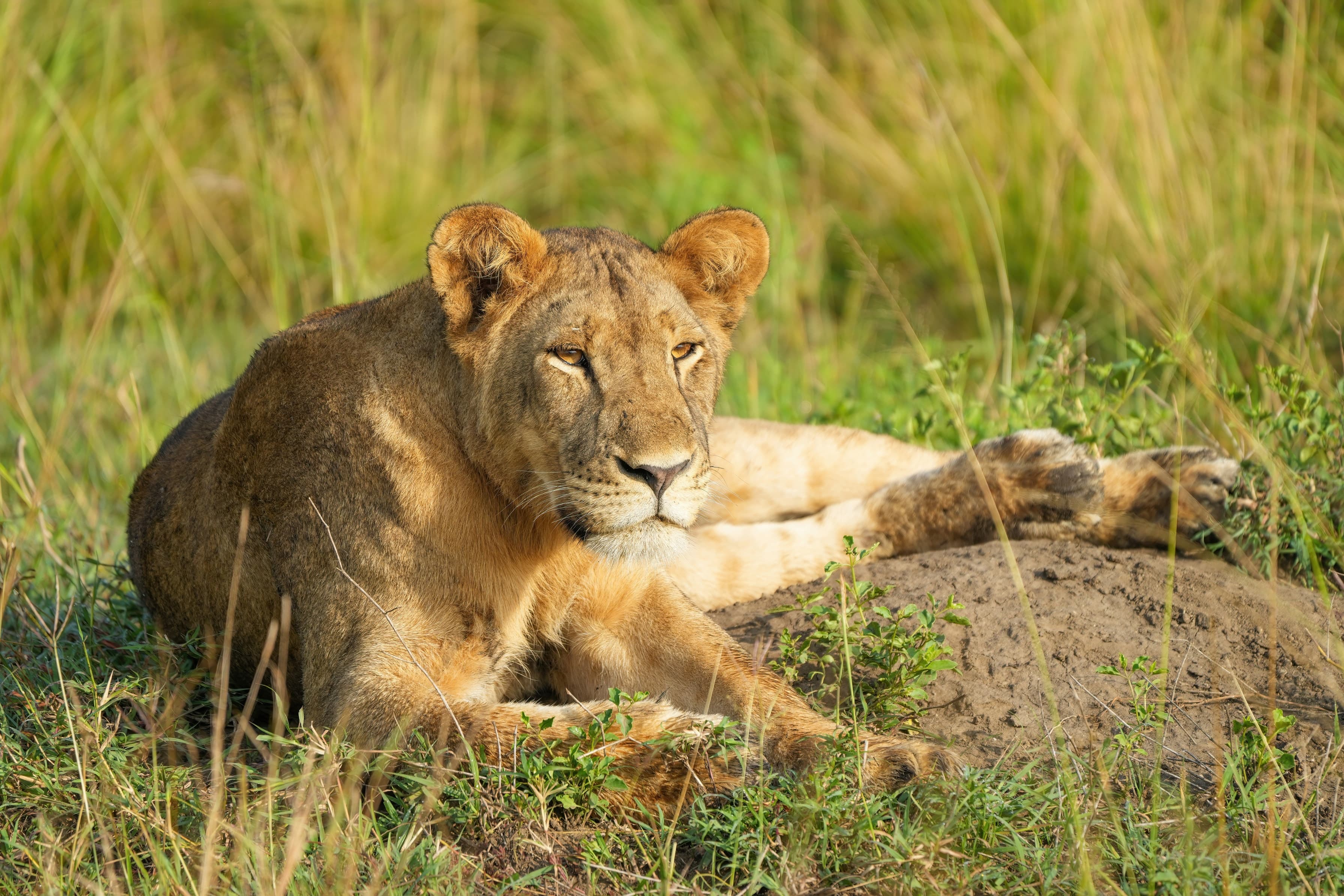
A lioness in golden morning light in Queen Elizabeth National Park, Uganda

Queen Elizabeth National Park

Uganda’s most popular and most biodiverse savannah park, straddling the equator beneath the Rwenzori Mountains, with more than 95 mammal species and over 600 kinds of birds.

What you may see
  • Hippos, buffalo and elephants along the 40-kilometre Kazinga Channel
  • Lions resting in fig trees in the Ishasha sector
  • Chimpanzee tracking in Kyambura Gorge
Best for
Classic savannah game drives and boat trips in Uganda, families, birdwatchers and anyone travelling between Kibale and Bwindi.
Landscape
Open grassland, acacia woodland and candelabra thicket, the Katwe explosion craters and humid forest, between Lake Edward and Lake George.
When to go
In any month, usually as the savannah stage between Kibale and Bwindi; UWA publishes no season for the park.
How it connects
UWA’s park page puts it about 410 km west of Kampala, at least seven to eight hours’ direct drive, though most itineraries stop at other parks on the way (its tariff lists 389 km). Flights reach Kasese, Mweya and Kihihi airstrips, and a route through Ishasha leads south to Bwindi.
Good to know
  • Tree-climbing lions, like all wildlife, are never guaranteed.
The north

The Nile and the remote frontier.

Route Kampala → Murchison Falls → Gulu → Kidepo Valley

Murchison Falls is Uganda’s oldest and largest conservation area. The Victoria Nile squeezes through a gorge eight metres wide and plunges into the Devil’s Cauldron, then calms into a broad river where elephants, giraffes and buffalo come to the banks and hippos and crocodiles are ever present. Downstream, the Albert Delta is one of the places where the shoebill is commonly seen.

Far to the north-east, Kidepo Valley is the country’s most remote park, golden savannah in the valleys of Karamoja with mountains on every horizon. Its wildlife is recovering strongly, and the Uganda Wildlife Authority recommends flying in from Entebbe; by road, the journey through Gulu can be broken with overnight stops.

Sources: Uganda Wildlife Authority (Murchison Falls National Park (opens in a new tab), Kidepo Valley National Park (opens in a new tab))

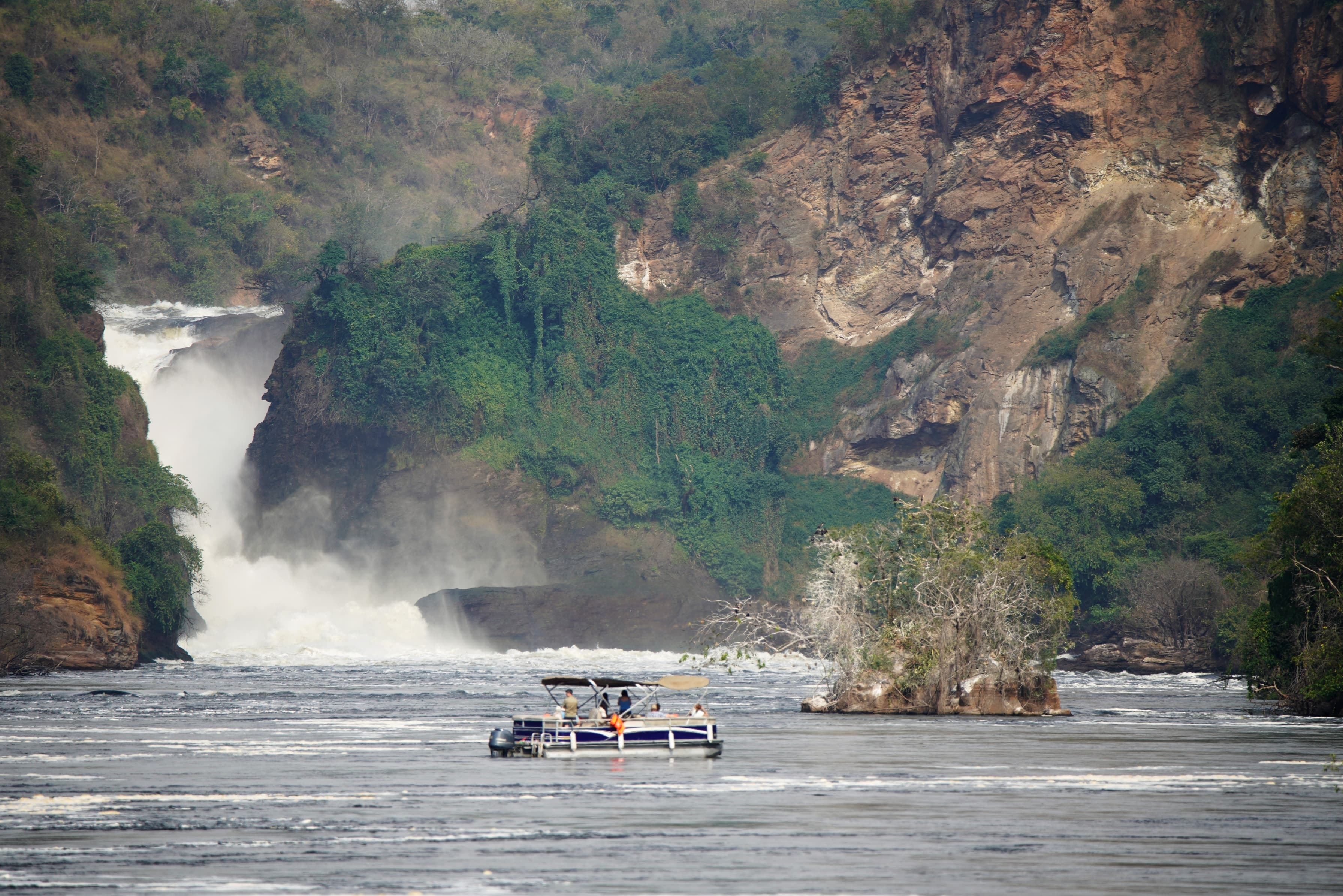
Murchison Falls seen from the Nile, Murchison Falls National Park, Uganda

Murchison Falls

Murchison Falls National Park is Uganda’s oldest and largest conservation area, where the Victoria Nile forces through a gorge eight metres wide and drops 45 metres into the Devil’s Cauldron.

What you may see
  • Elephants, giraffes and buffalo on the northern plains
  • Hippos and Nile crocodiles from a boat below the falls
  • The shoebill on the Albert Delta
Best for
Big-river scenery, boat trips, birdwatchers and a savannah safari within reach of Kampala.
Landscape
Palm-dotted savannah north of the Nile, woodland and forest to the south, at the northern end of the Albertine Rift.
When to go
In any month; UWA publishes no season, and the falls and the river are the constants.
How it connects
North of Kampala, about 305 km by UWA’s tariff; flights from Entebbe or Kajjansi land at Pakuba Airfield near the park headquarters at Paraa.
Good to know
  • The lodges lie some way beyond the southern gate, so allow for the drive inside the park.
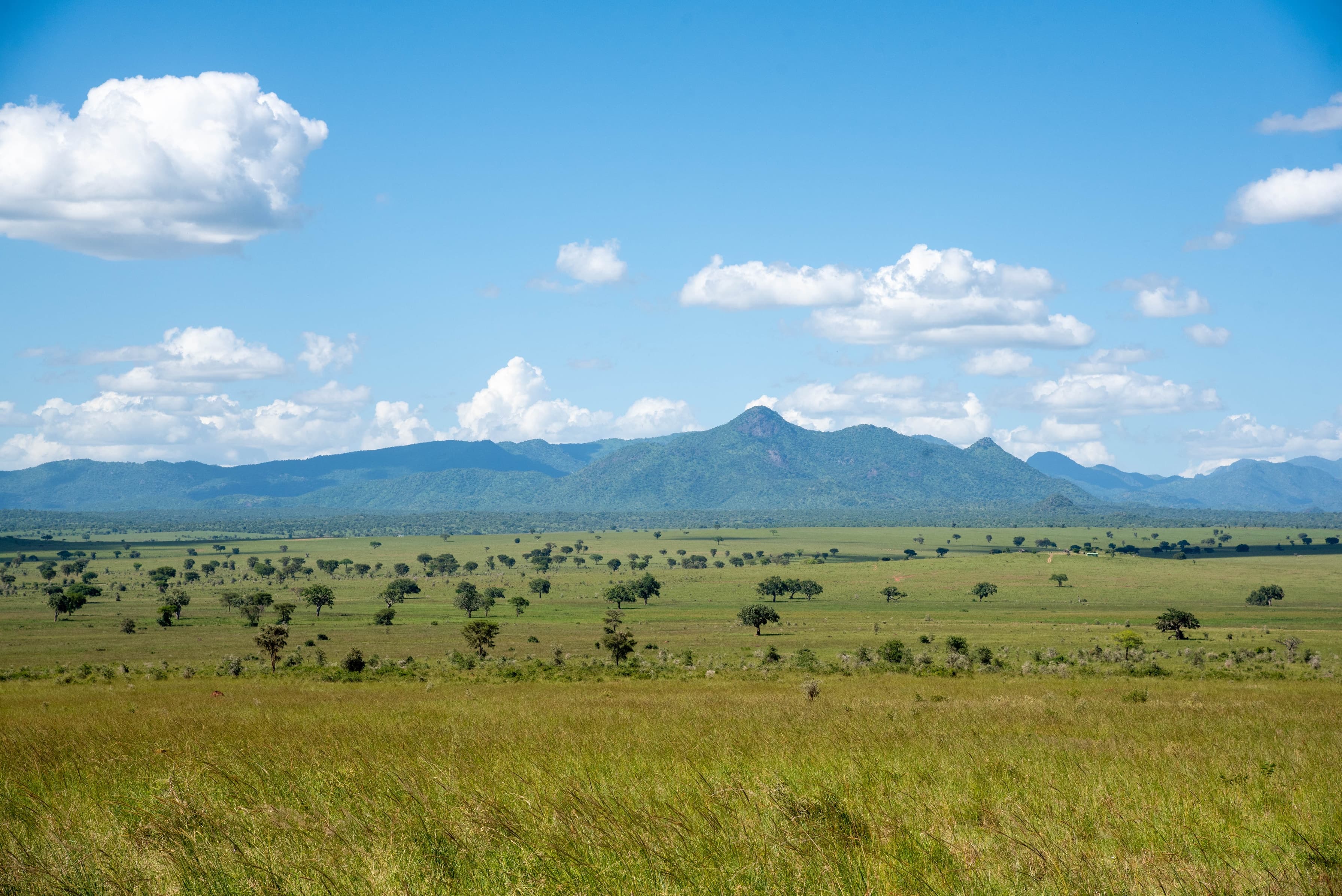
Mount Murongole above the plains of Kidepo Valley National Park, Uganda

Kidepo Valley

Kidepo Valley National Park is Uganda’s most remote park: golden savannah in the semi-arid valleys of Karamoja, bordering South Sudan, with Kenya just to the east.

What you may see
  • Buffalo and elephants in the Narus Valley in the dry months
  • Rothschild’s giraffes, recovered from just three in the mid-1990s
  • More than 476 bird species
Best for
Experienced travellers who want wilderness and solitude, and those with time for a long journey north.
Landscape
A vast savannah framed by distant mountains, whose two rivers dry to scattered pools in the dry season.
When to go
The dry months: the Narus Valley, with its reliable water, is then the park’s prime game-viewing area.
How it connects
The Uganda Wildlife Authority recommends flying from Entebbe; by road (about 571 km in its tariff) the most direct route runs through Gulu to Lokumoit Gate.
Good to know
  • Visits need careful planning, whether by air or by road.
Wildlife & experiences

Gorillas, chimpanzees and the Nile.

Wildlife moves freely, and sightings depend on season and conditions. They are never guaranteed.

Gorilla trekking

A morning with a gorilla family.

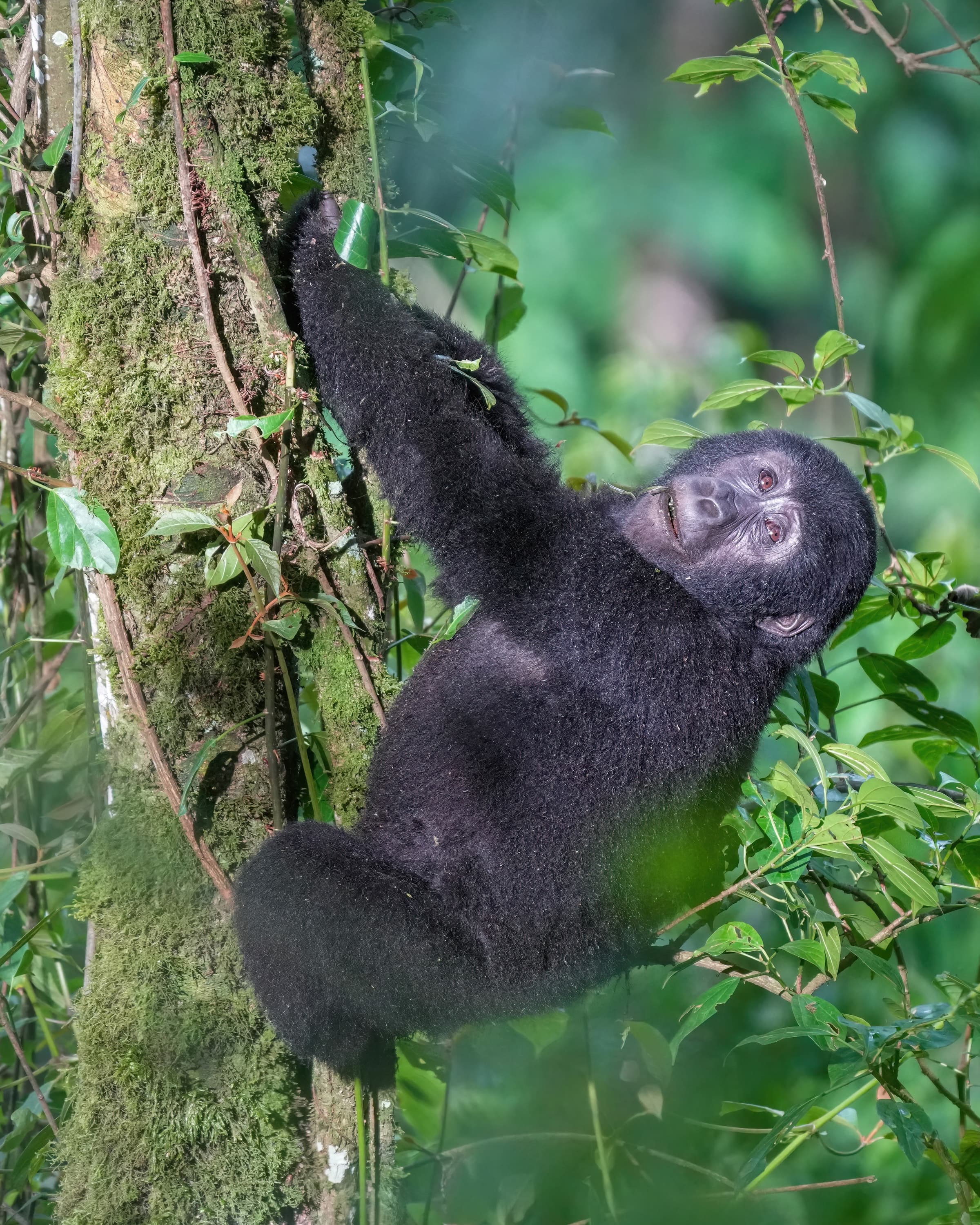
A mountain gorilla climbing a tree in Bwindi Impenetrable National Park, Uganda
A mountain gorilla climbing a tree in Bwindi Impenetrable National Park, UgandaPhotograph: Giles Laurent (CC BY-SA 4.0) · Credits

Gorilla trekking means hiking into the forest with rangers to find a habituated gorilla family, then spending one hour in its company. In Bwindi, the Mubare group became the first habituated for tourism in Uganda in April 1993; Mgahinga adds one habituated group on the slopes of the Virungas. Nine of our 18 Uganda journeys include gorilla trekking, so ask which park and sector each one uses: our titles do not always say.

The forest sets the pace. Bwindi’s trails cross steep ridges and deep valleys, often wet underfoot, and a trek can be short or long depending on where the family has moved overnight. The Uganda Wildlife Authority’s rules exist to protect the gorillas, which can catch human colds and infections; UWA’s permit rate includes its guide fee, and the rules apply to every visitor.

  • The minimum age for tracking is 15 years.
  • At most eight visitors may visit a gorilla group, and visits are limited to one hour per group per day.
  • Do not visit the gorillas if you have a cold or other infectious illness.
  • Keep 10 metres from the gorillas; if you must cough or sneeze, cover your face and turn away.
  • No smoking, eating or drinking during the tracking, and no flash photography.
  • Carry your permit and payment receipts.
Gorilla permits: what UWA has published, and what is not yet clear (checked 20 October 2026)
Until 31 December 2026From 1 January 2027
Published tariffUWA’s website still carries its July 2024 – June 2026 tariff, whose stated period has ended; it does not say which rates apply until the revised tariff startsThe revised tariff, published in October 2026 and running to June 2028
Trekking rulesAs listed above (the same in both tariffs)Unchanged
BookingForeign non-residents and rest-of-Africa visitors book only through licensed tour operatorsUnchanged
Low-season permitsDiscounted in April, May and November under UWA’s notice of 26 February 2026; not reschedulableListed in the revised tariff for the same months
PricesConfirm the rate with UWA, through us, for your datesNot quoted here

Sources: Uganda Wildlife Authority (Bwindi Impenetrable National Park (opens in a new tab), Mgahinga Gorilla National Park (opens in a new tab), Conservation tariff July 2024 – June 2026, with park, gorilla and chimpanzee tracking rules (re-published on UWA’s website on 12 October 2026) (opens in a new tab), Revised conservation tariff, taking effect 1 January 2027 and running to June 2028, with gorilla and chimpanzee tracking rules (published October 2026) (opens in a new tab), Notice to stakeholders, 26 February 2026: low-season gorilla and chimpanzee permit rates and revised tariff (opens in a new tab))

Chimpanzees and primates

Tracking, or a habituation experience.

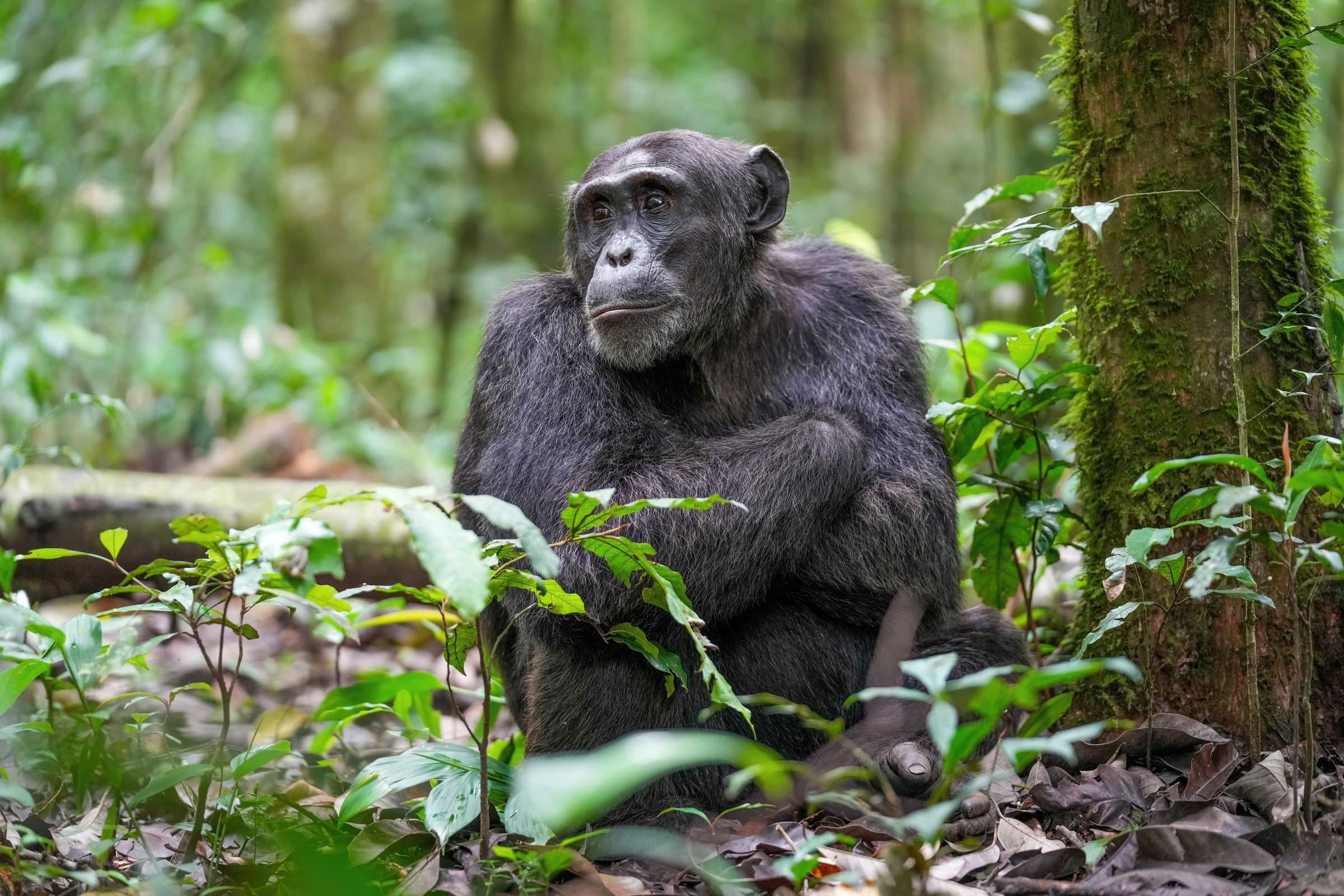
An alpha male chimpanzee in Kibale Forest National Park, Uganda
An alpha male chimpanzee in Kibale Forest National Park, UgandaPhotograph: Giles Laurent (CC BY-SA 4.0) · Credits

Kibale National Park is Uganda’s primate forest. The Uganda Wildlife Authority estimates more than 1,500 wild chimpanzees there, in at least 12 communities, and 13 primate species, including red colobus and grey-cheeked mangabey. A tracking visit allows one hour with a habituated community, and groups are limited to six people; chimpanzee tracking is also offered in Kyambura Gorge, in Queen Elizabeth National Park.

For more time, Kibale offers a chimpanzee habituation experience: following a community that is still being accustomed to people through more of its day, with up to four hours in the chimpanzees’ presence under UWA’s tariff. Ask us which park a primate journey visits and whether tracking or habituation is included, because the answer shapes the whole route.

Sources: Uganda Wildlife Authority (Kibale National Park: chimpanzee tracking (opens in a new tab), Kibale National Park (opens in a new tab), Conservation tariff July 2024 – June 2026, with park, gorilla and chimpanzee tracking rules (re-published on UWA’s website on 12 October 2026) (opens in a new tab), Revised conservation tariff, taking effect 1 January 2027 and running to June 2028, with gorilla and chimpanzee tracking rules (published October 2026) (opens in a new tab))

Choosing your primates

Gorilla trekking or chimpanzee tracking?

The two experiences differ in more than the animal. A gorilla visit is an hour with one habituated family group, while chimpanzees live in larger communities spread through the forest, which is why a chimpanzee trek can range more widely. The minimum ages, group sizes and booking rules differ too, and many travellers choose to do both on one journey, usually with Queen Elizabeth in between.

Gorilla trekking and chimpanzee tracking compared (UWA rules, checked 20 October 2026)
Gorilla trekkingChimpanzee tracking
WhereBwindi and MgahingaKibale, and Kyambura Gorge in Queen Elizabeth
Minimum age1512 in UWA’s tariff rules, 16 on its Kibale page: confirm with UWA for anyone under 16
Group sizeAt most eight visitors per gorilla groupSix per tracking group in Kibale
Time with the animalsOne hourOne hour; up to four hours on a habituation experience
Distance to keep10 metres10 metres
PhotographyNo flashNo flash
BookingThrough a licensed tour operator; book well aheadThrough a licensed tour operator; advance booking is mandatory in Kibale

Sources: Uganda Wildlife Authority (Conservation tariff July 2024 – June 2026, with park, gorilla and chimpanzee tracking rules (re-published on UWA’s website on 12 October 2026) (opens in a new tab), Revised conservation tariff, taking effect 1 January 2027 and running to June 2028, with gorilla and chimpanzee tracking rules (published October 2026) (opens in a new tab), Kibale National Park: chimpanzee tracking (opens in a new tab), Bwindi Impenetrable National Park (opens in a new tab), Mgahinga Gorilla National Park (opens in a new tab))

Getting around

Distances, roads and flights.

Uganda’s parks are far apart, and the roads to the forest parks end in winding murram, where the Uganda Wildlife Authority highly recommends four-wheel drive. UWA publishes two sets of figures: road distances from Kampala in its tariff, and distances with approximate driving times on some park pages. Where they differ, both are shown; actual times depend on the route, the season and the stops you make.

From Kampala: UWA’s distances and driving times, and the airstrips it names
ParkUWA park pageUWA tariffAirstrips UWA names
Lake MburoAbout 228 km; about three and a half hoursAbout 253 kmNone in the park; charters to Mbarara
Murchison Falls—About 305 kmPakuba
KibaleAbout 326 km on tarmac; about six hours (about an hour from Fort Portal)About 358 kmNo direct flights; Kasese is nearest
Queen ElizabethAbout 410 km; at least seven to eight hours directAbout 389 kmKasese, Mweya and Kihihi
Mgahinga—About 482 kmKisoro
Bwindi—About 512 kmKihihi and Kisoro
Kidepo Valley—About 571 kmFlights usually arranged from Entebbe

Checked 20 October 2026. A dash means the park page we read gives no figure.

Sources: Uganda Wildlife Authority (Revised conservation tariff, taking effect 1 January 2027 and running to June 2028, with gorilla and chimpanzee tracking rules (published October 2026) (opens in a new tab), Lake Mburo National Park (opens in a new tab), Murchison Falls National Park (opens in a new tab), Kibale National Park: chimpanzee tracking (opens in a new tab), Queen Elizabeth National Park (opens in a new tab), Mgahinga Gorilla National Park (opens in a new tab), Bwindi Impenetrable National Park: gorillas and getting there (opens in a new tab), Kidepo Valley National Park (opens in a new tab), Bwindi Impenetrable National Park (opens in a new tab))

People and places

Community tourism in Uganda.

Uganda’s parks sit among communities with their own histories, and several offer visits arranged with local people. Around Buhoma and Nkuringo, the Batwa, Bwindi’s original forest inhabitants, share their hunter-gatherer heritage through performances, workshops and village walks, alongside the Bakiga. In Mgahinga a Batwa guide leads the Batwa trail, and near Queen Elizabeth there are cultural tours with Bakonzo, Basongora and Banyabindi communities.

In the far north, the Karamojong pastoralists and the Ik of the mountains live near Kidepo Valley. As anywhere, a visit is someone’s home: ask before photographing people, follow your guide’s lead, and confirm in advance what a visit includes and whether a fee is involved, because practices differ from one community to another.

Sources: Uganda Wildlife Authority (Bwindi Impenetrable National Park (opens in a new tab), Mgahinga Gorilla National Park (opens in a new tab), Queen Elizabeth National Park (opens in a new tab), Kidepo Valley National Park (opens in a new tab))

Birdwatching

A country for birdwatchers.

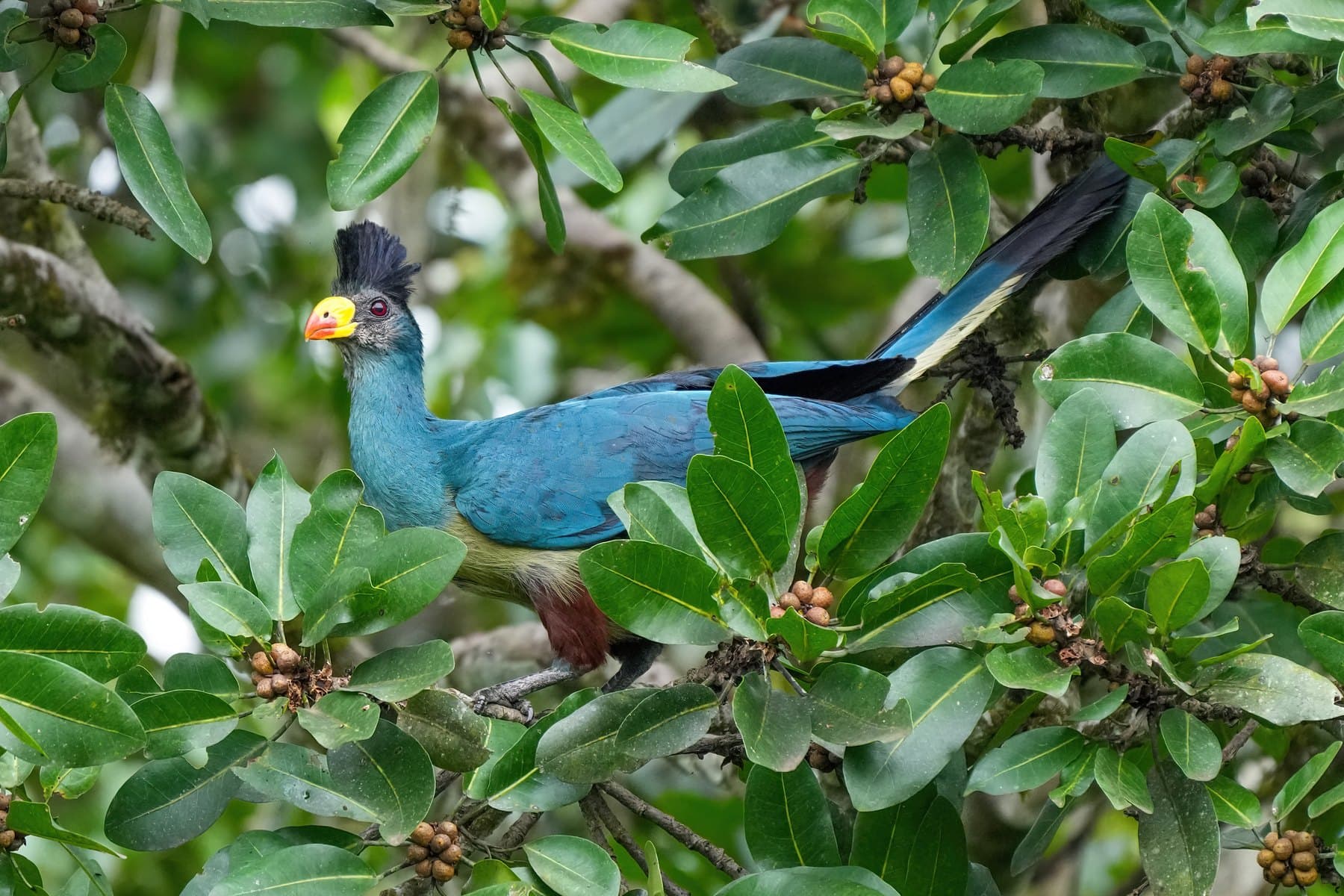
A great blue turaco in Kibale Forest National Park, Uganda
A great blue turaco in Kibale Forest National Park, UgandaPhotograph: Giles Laurent (CC BY-SA 4.0) · Credits

Uganda packs a remarkable range of birds into a small country, from forest specialists of the Albertine Rift to the waterbirds of the Nile and the lakes. The counts below are each park’s own figures from the Uganda Wildlife Authority, and the shoebill, one of Africa’s most sought-after birds, is commonly seen on the Albert Delta at Murchison Falls.

Bird species recorded, by park (Uganda Wildlife Authority)
ParkSpecies recordedHighlights
Queen ElizabethOver 600African fish eagle, shoebill, flamingos and papyrus gonolek
Murchison Falls556The shoebill on the Albert Delta
Kidepo ValleyOver 476Species found in no other Ugandan park
BwindiMore than 35023 Albertine Rift endemics, such as the African green broadbill
Lake MburoOver 315Wetland and savannah birds
MgahingaOver 18014 Albertine Rift endemics

Sources: Uganda Wildlife Authority (Queen Elizabeth National Park (opens in a new tab), Murchison Falls National Park (opens in a new tab), Kidepo Valley National Park (opens in a new tab), Bwindi Impenetrable National Park (opens in a new tab), Lake Mburo National Park (opens in a new tab), Mgahinga Gorilla National Park (opens in a new tab))

Route ideas

How journeys come together.

Our Uganda journeys are often named by experience rather than place. Each pattern lists only real journeys from our catalogue; ask which parks and permits a journey includes before you book.

Safari journeys in Uganda

Start with a route.

All 18 journeys in our Uganda collection. Big Time picks first.

Filter Uganda safaris
Show all 18 Uganda journeys
Is Uganda right for you?

Who it suits.

Uganda rewards travellers who are ready for early starts and forest trails, but it has gentler sides too. These notes are honest about the rules and about what our catalogue includes.

Practical planning

Before you travel.

Entry, health and park rules change. Each panel names the authority that sets them; these facts were checked on 20 October 2026.

Arriving and getting around

  • Entebbe International Airport has daily scheduled flights to Kisoro and Kihihi airstrips for Bwindi, and flights to airstrips near Queen Elizabeth and Murchison Falls.
  • A four-wheel-drive vehicle is highly recommended on the murram roads to Bwindi and Mgahinga.
  • Kibale has no direct flights: UWA puts it about six hours from Kampala on the Kampala–Fort Portal highway.

Sources: Uganda Wildlife Authority (Bwindi Impenetrable National Park: gorillas and getting there (opens in a new tab), Queen Elizabeth National Park (opens in a new tab), Murchison Falls National Park (opens in a new tab), Mgahinga Gorilla National Park (opens in a new tab), Kibale National Park: chimpanzee tracking (opens in a new tab))

Entry and health (check before you go)

  • Apply for a Ugandan visa online through the official immigration portal; the passport must be valid for at least six months (checked 20 October 2026).
  • Entering Uganda: a yellow fever certificate is no longer mandatory (Uganda immigration notice, 2 October 2026).
  • Medical advice: the US CDC still recommends yellow fever vaccination and malaria prevention for travellers to Uganda; see a travel-health professional at least a month before you go.
  • Travelling on: Kenya and Tanzania ask for proof of yellow fever vaccination from travellers arriving from countries WHO lists as a risk, including Uganda.
  • Health advisories change quickly: read our dated travel-health note and current official advice before you travel.

Sources: Uganda Directorate of Citizenship and Immigration Control (Uganda Tourist Visa: single entry (opens in a new tab), Official notice: Yellow Fever Vaccination Certificate no longer mandatory for entry (posted 2 October 2026) (opens in a new tab)); UK Foreign, Commonwealth & Development Office (opens in a new tab); US Centers for Disease Control and Prevention (opens in a new tab); World Health Organization (opens in a new tab)

Primate permits and rules

  • Gorilla and chimpanzee permits for foreign non-residents and visitors from the rest of Africa are booked only through licensed tour operators.
  • Tariffs: UWA’s July 2024 – June 2026 schedule has passed its stated period, and its revised tariff takes effect on 1 January 2027 with the same rules. Until then, confirm the rate for your dates with UWA through your operator.
  • Low-season permits: discounted in April, May and November since UWA’s notice of 26 February 2026; they cannot be rescheduled.
  • Do not trek if you are unwell: primates can catch human infections.

Sources: Uganda Wildlife Authority (Conservation tariff July 2024 – June 2026, with park, gorilla and chimpanzee tracking rules (re-published on UWA’s website on 12 October 2026) (opens in a new tab), Revised conservation tariff, taking effect 1 January 2027 and running to June 2028, with gorilla and chimpanzee tracking rules (published October 2026) (opens in a new tab), Notice to stakeholders, 26 February 2026: low-season gorilla and chimpanzee permit rates and revised tariff (opens in a new tab))

On the trek: what to wear and carry

  • Your permit and payment receipts, which UWA asks every tracker to carry.
  • Waterproof boots with good grip, long trousers and long sleeves for dense, often wet vegetation; gloves help on steep slopes.
  • A light rain jacket in any month: Bwindi is a mist-covered rainforest.
  • Water and a snack for the hike, kept away from the gorillas: UWA does not allow eating or drinking during the visit.
  • A camera without flash, which is not allowed with gorillas or chimpanzees.

Sources: Uganda Wildlife Authority (Conservation tariff July 2024 – June 2026, with park, gorilla and chimpanzee tracking rules (re-published on UWA’s website on 12 October 2026) (opens in a new tab), Bwindi Impenetrable National Park (opens in a new tab))

Questions travellers ask

Uganda, answered.

How many mountain gorillas live in Bwindi?

The Uganda Wildlife Authority puts the number at about 459, almost half of the world’s remaining mountain gorillas.

Sources: Uganda Wildlife Authority (opens in a new tab)

Where are Uganda’s tree-climbing lions?

In the Ishasha sector of Queen Elizabeth National Park, where lions are known to rest in fig trees. Sightings cannot be guaranteed.

Sources: Uganda Wildlife Authority (opens in a new tab)

Is gorilla trekking safe?

UWA sets strict rules for every visit, at most eight visitors, one hour, 10 metres from the gorillas, no trekking when ill, and its permit rate includes a UWA guide. The trails are the main challenge: steep, slippery and sometimes long. For country-level safety, read your own government’s travel advice before you book, such as the UK FCDO’s Uganda page.

Sources: Uganda Wildlife Authority (Conservation tariff July 2024 – June 2026, with park, gorilla and chimpanzee tracking rules (re-published on UWA’s website on 12 October 2026) (opens in a new tab), Bwindi Impenetrable National Park (opens in a new tab)); UK Foreign, Commonwealth & Development Office (opens in a new tab)

Can I see gorillas in Mgahinga as well as Bwindi?

Yes. Mgahinga Gorilla National Park has one habituated gorilla group, which ranges across the border, as well as endangered golden monkeys. Our journey titles do not name Mgahinga, so ask whether a journey can use it.

Sources: Uganda Wildlife Authority (opens in a new tab)

What is a habituation experience?

A longer visit to primates that are still being accustomed to people. In Kibale, UWA’s chimpanzee habituation experience allows up to four hours with the chimpanzees; UWA also lists a gorilla habituation experience in Bwindi.

Sources: Uganda Wildlife Authority (Kibale National Park: chimpanzee tracking (opens in a new tab), Revised conservation tariff, taking effect 1 January 2027 and running to June 2028, with gorilla and chimpanzee tracking rules (published October 2026) (opens in a new tab))

Where can I see a shoebill?

The Uganda Wildlife Authority says the shoebill is commonly seen on the Albert Delta at Murchison Falls, where the Nile meets Lake Albert, and lists it among Queen Elizabeth’s birds. No sighting can be guaranteed.

Sources: Uganda Wildlife Authority (Murchison Falls National Park (opens in a new tab), Queen Elizabeth National Park (opens in a new tab))

Where can I see impala in Uganda?

Lake Mburo National Park has Uganda’s only population of impala, along with zebras and eland.

Sources: Uganda Wildlife Authority (opens in a new tab)

Sources

Facts on this page were checked against these sources in October 2026. Park rules, fees and conditions change, so always check the latest before you travel.

Your journey begins with a conversation

Shape your Uganda journey.

Tell us your dates and interests, and we will suggest the regions that suit them.

Let’s talk safari