Big Time Safaris home
Plan My Safari
Kenya · Safari destination

Mount Kenya

Africa’s second-highest mountain: an ancient extinct volcano of glacier-clad peaks, moorland, high tarns and forested slopes.

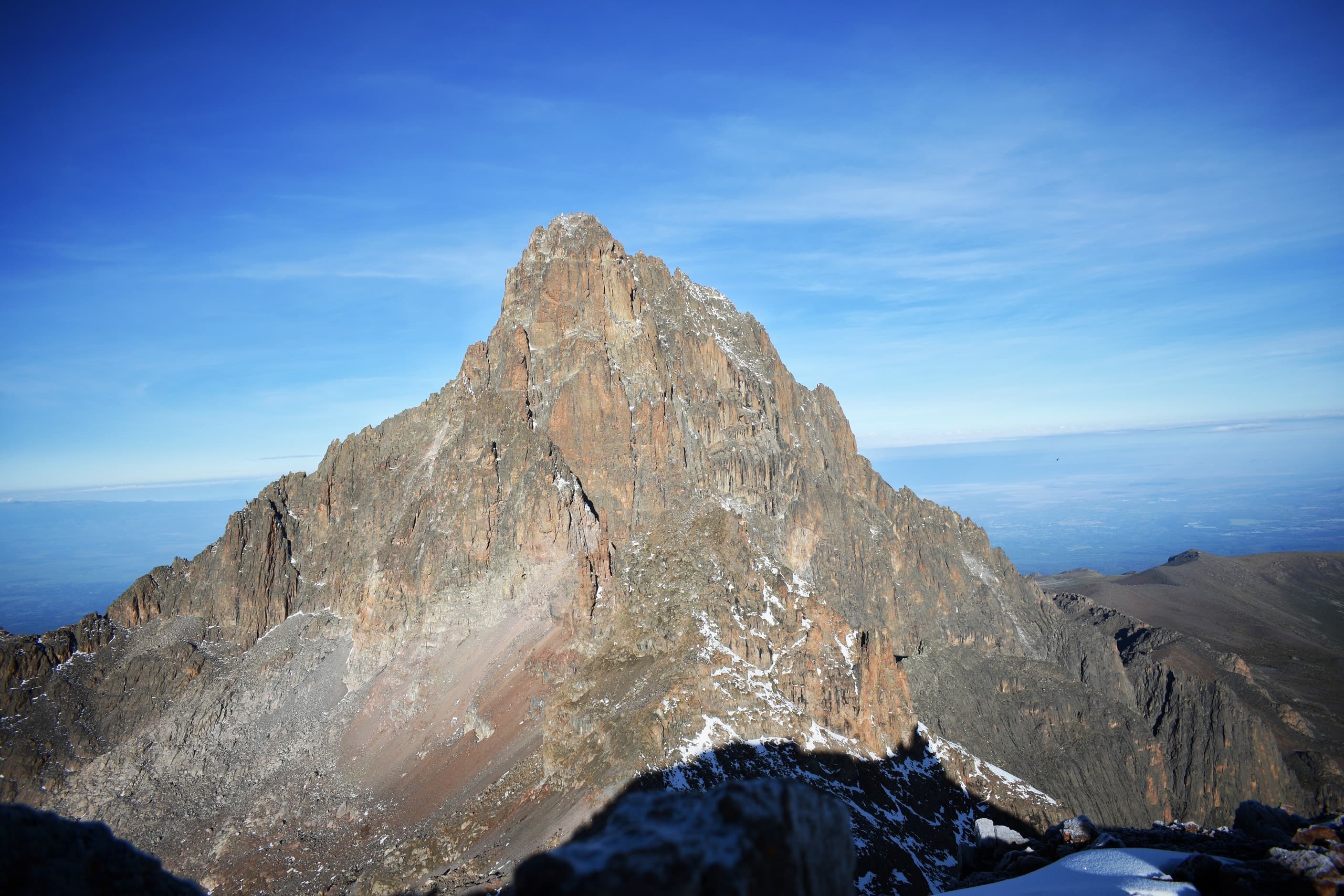
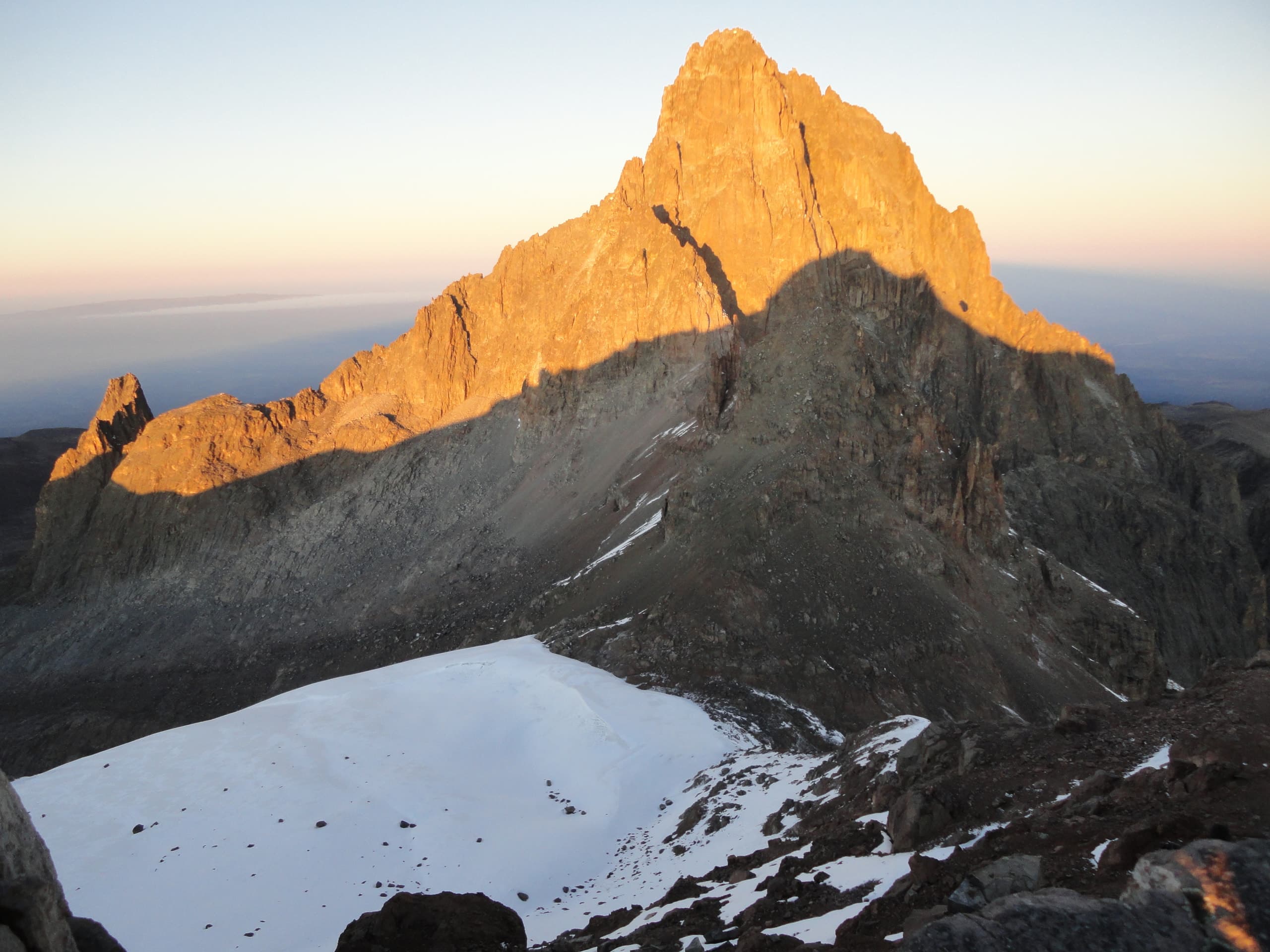
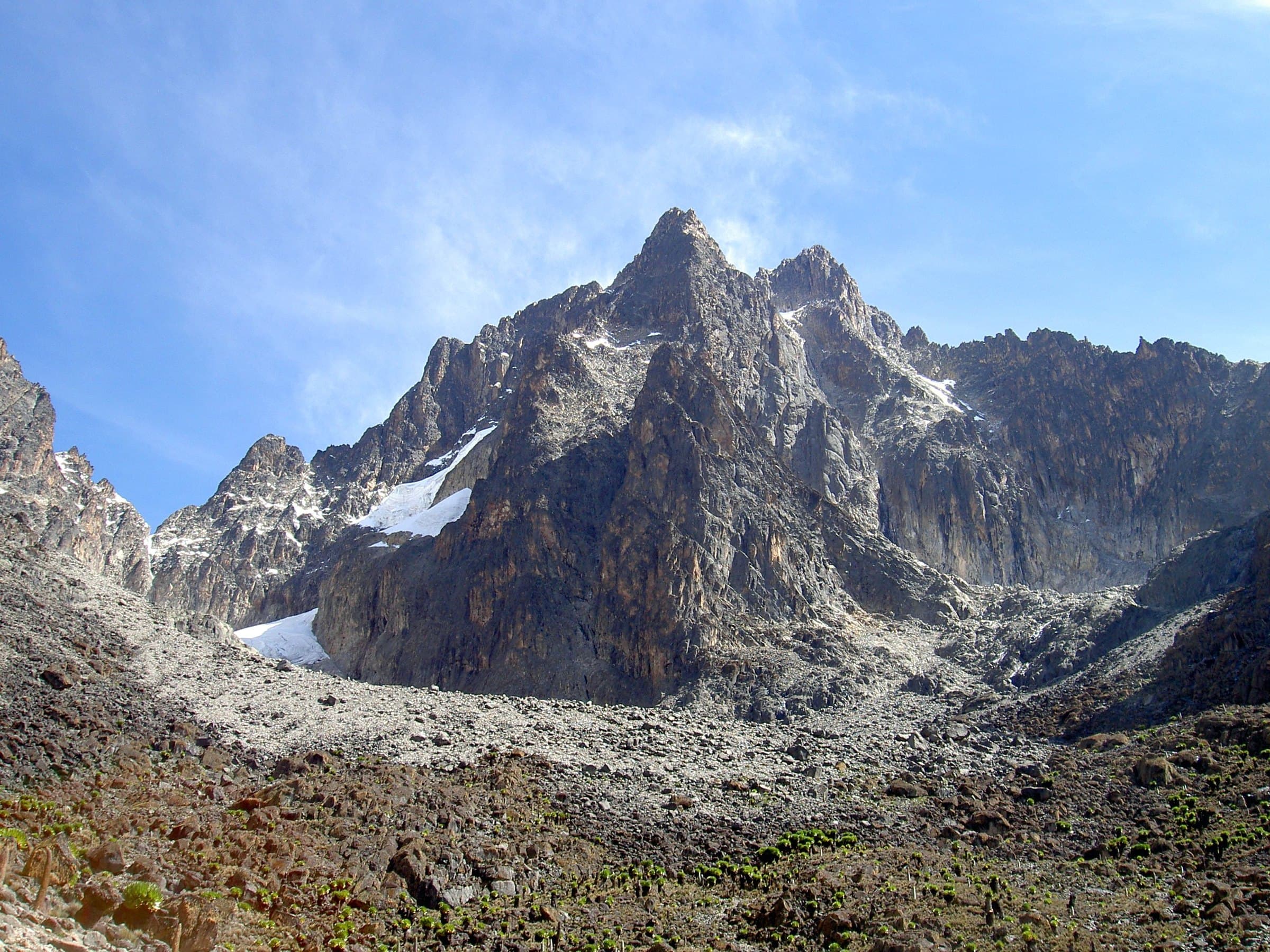
Batian and Nelion, the twin summits of Mount Kenya, with Point Slade in the foreground
Batian and Nelion, the twin summits of Mount Kenya, with Point Slade in the foregroundPhotograph: User:Chris 73 (CC BY-SA 3.0) · Credits
Country
Kenya
Managed by
Kenya Wildlife Service
Highest peaks
Batian 5,199 m · Nelion 5,188 m · Point Lenana 4,984 m
Status
UNESCO World Heritage Site (1997) and Biosphere Reserve (1978)
National park since
1949
Our journeys here
7 journeys in the catalogue
Is Mount Kenya right for you?

Who it suits.

Best for
Trekkers and climbers, with four Mount Kenya treks in our catalogue, and safari travellers who want highland scenery between the Rift Valley and the north.
How it connects
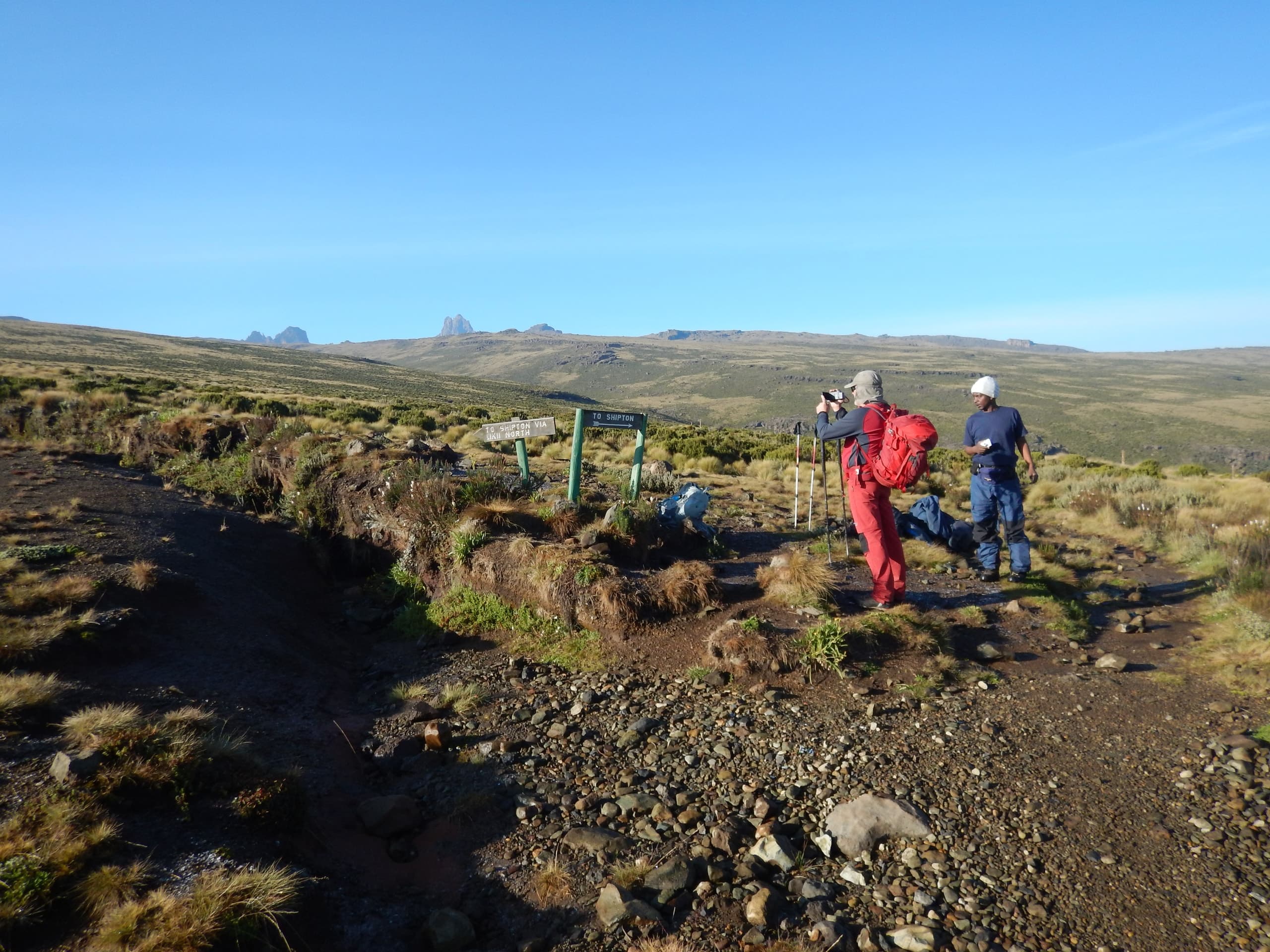
Sirimon, Naromoru and Chogoria gates each begin a different approach, which is why treks are named after them. Nanyuki has the closest commercial airstrip.

Mount Kenya in our Kenya guide, with the places around it.

Why visit Mount Kenya

Kenya from above the clouds.

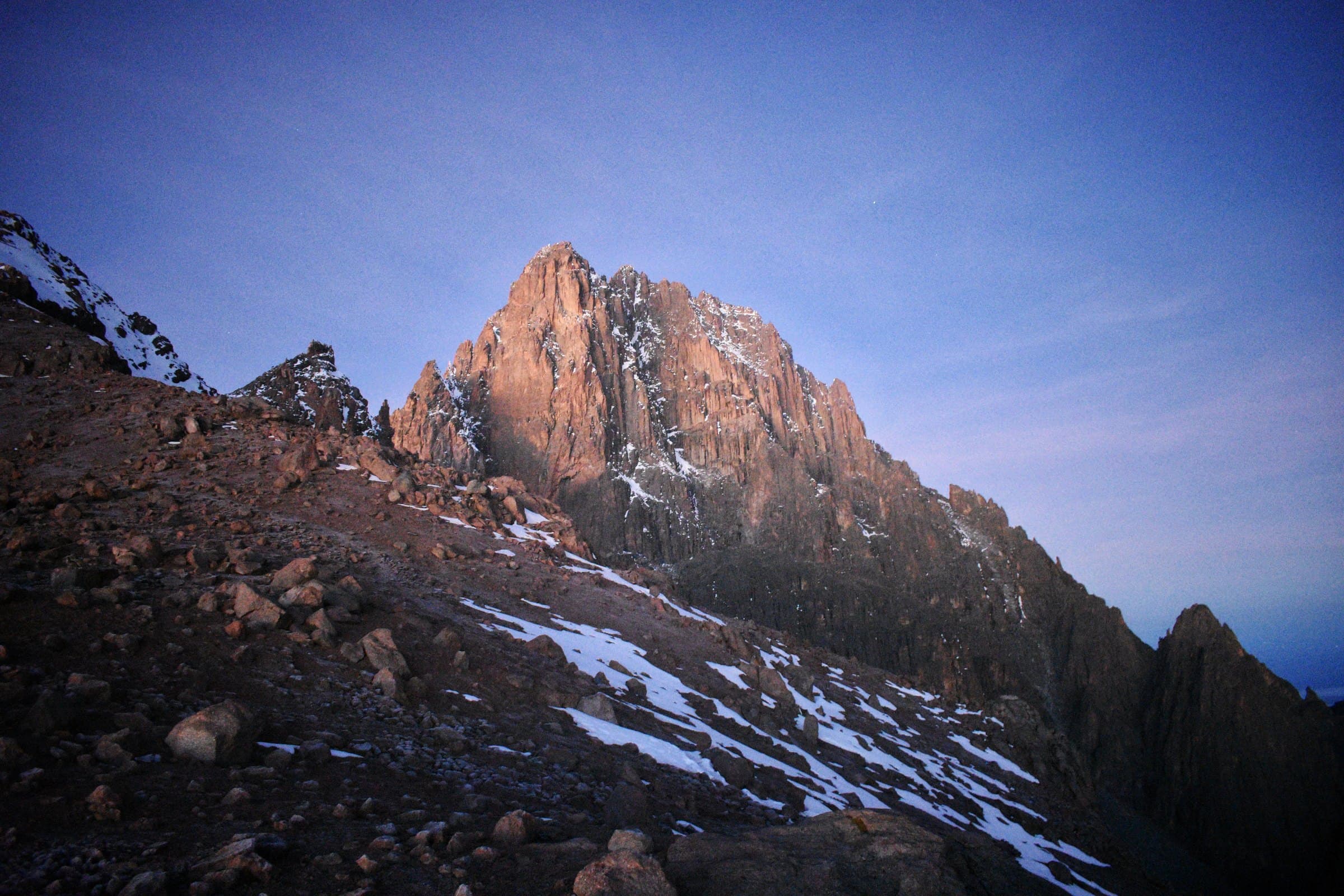
Mount Kenya offers a completely different side of the country from the savannah. Africa’s second-highest mountain, an ancient extinct volcano, rises to three high points, Batian at 5,199 metres, Nelion at 5,188 metres and Point Lenana at 4,984 metres, which draw climbers and trekkers. For those who do not climb, the forested middle slopes, alpine moorland and high tarns reward anyone who simply wants mountain air and space.

The mountain also matters deeply to the communities around it, holding a spiritual significance that Kenya Wildlife Service notes alongside its natural value, and that adds meaning to every visit. Its status reflects both: it is a UNESCO Biosphere Reserve, designated in 1978, and a UNESCO World Heritage Site, inscribed in 1997, protected within a complex of national park and national reserves.
Landscapes & wildlife

From forest to glacier.

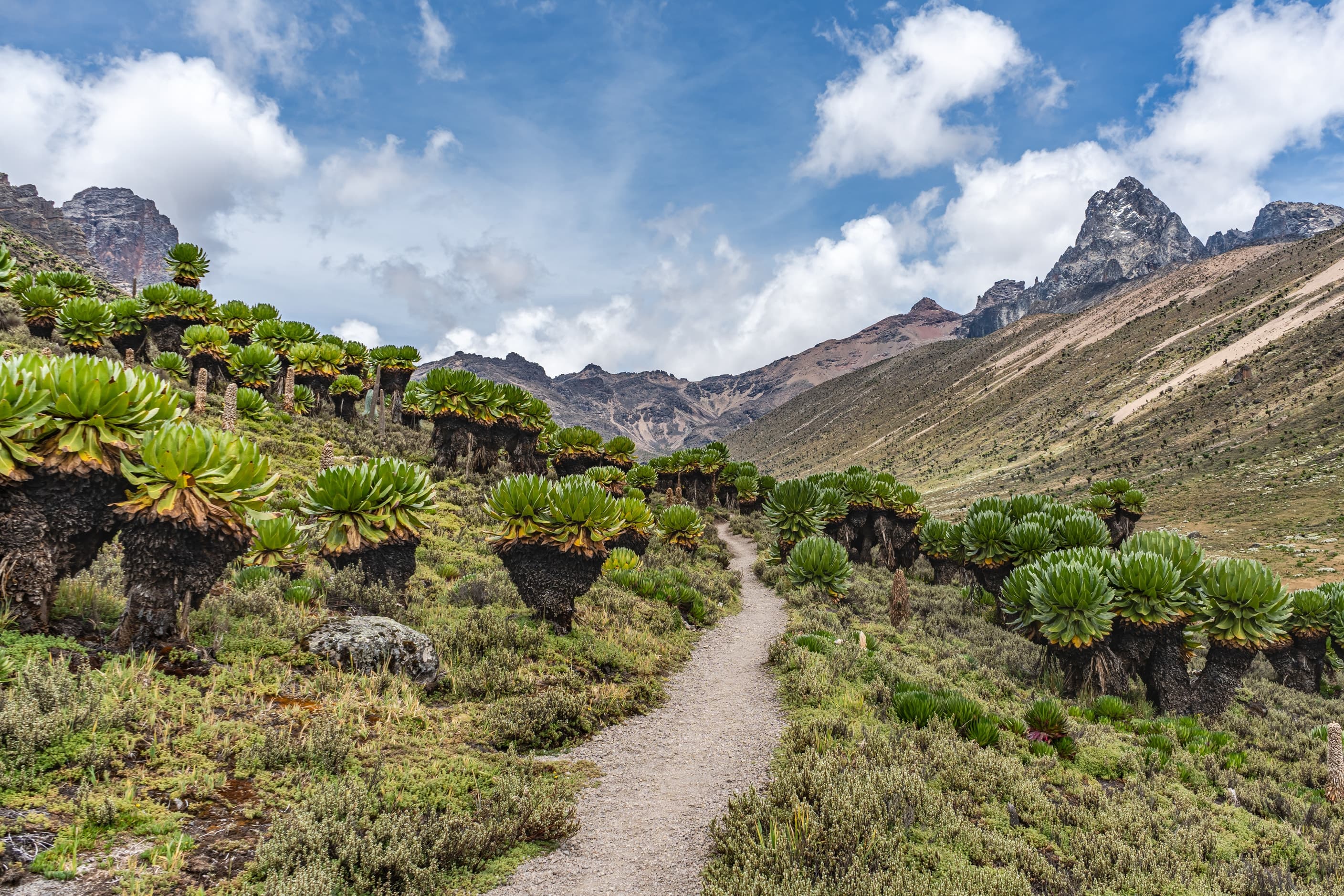
Kenya Wildlife Service describes rugged, glacier-clad summits above forested middle slopes and alpine moorland, with high-altitude lakes and tarns scattered across the mountain. Protection began with the surrounding Mount Kenya Forest Reserve in 1932; the national park followed in 1949 to protect the high-altitude ecosystems, and in 2000 the adjacent forest reserves were gazetted as national reserves, creating one protected complex around the mountain.

  • Glacier-clad summits
  • Alpine moorland
  • High-altitude lakes and tarns
  • Montane forest

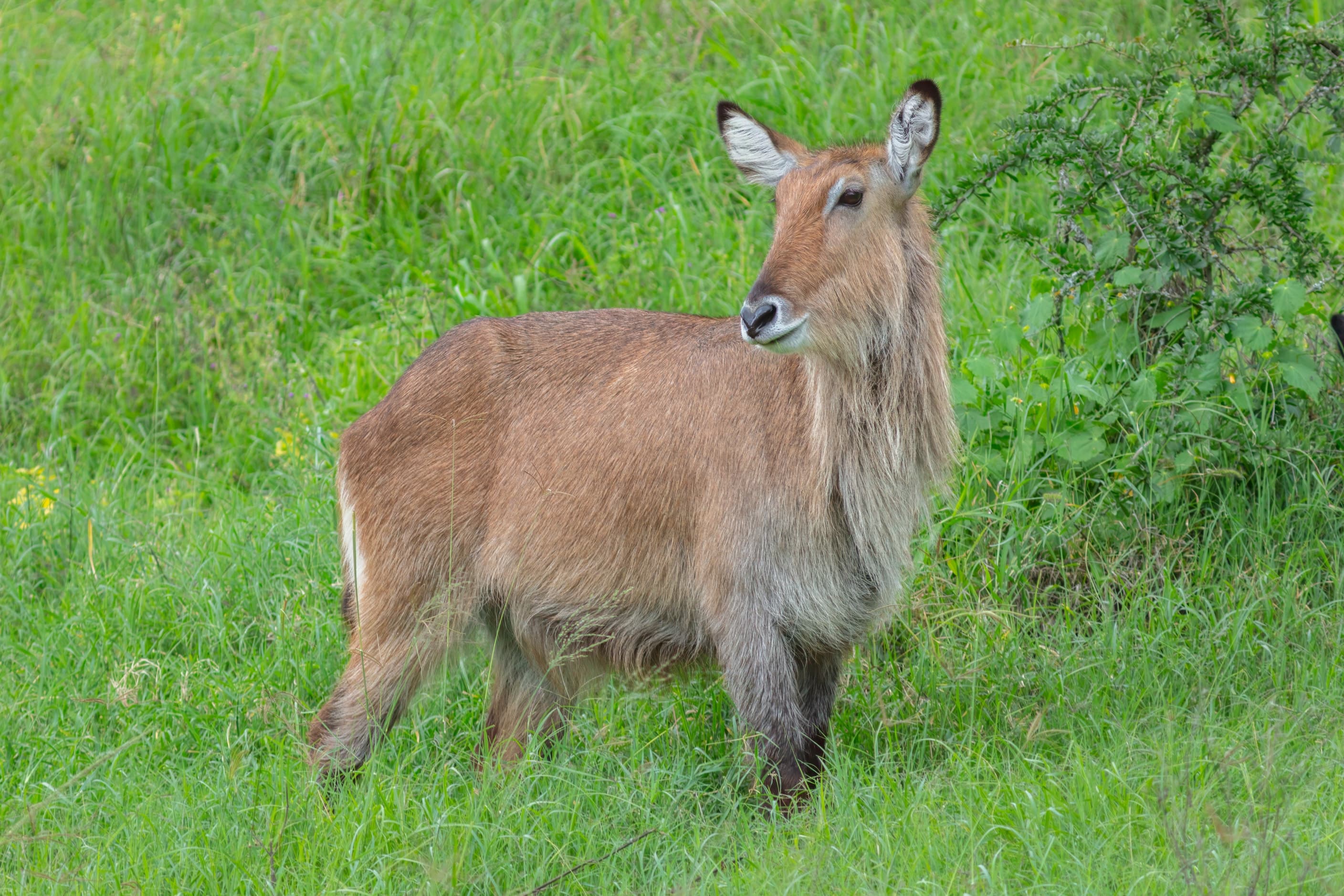
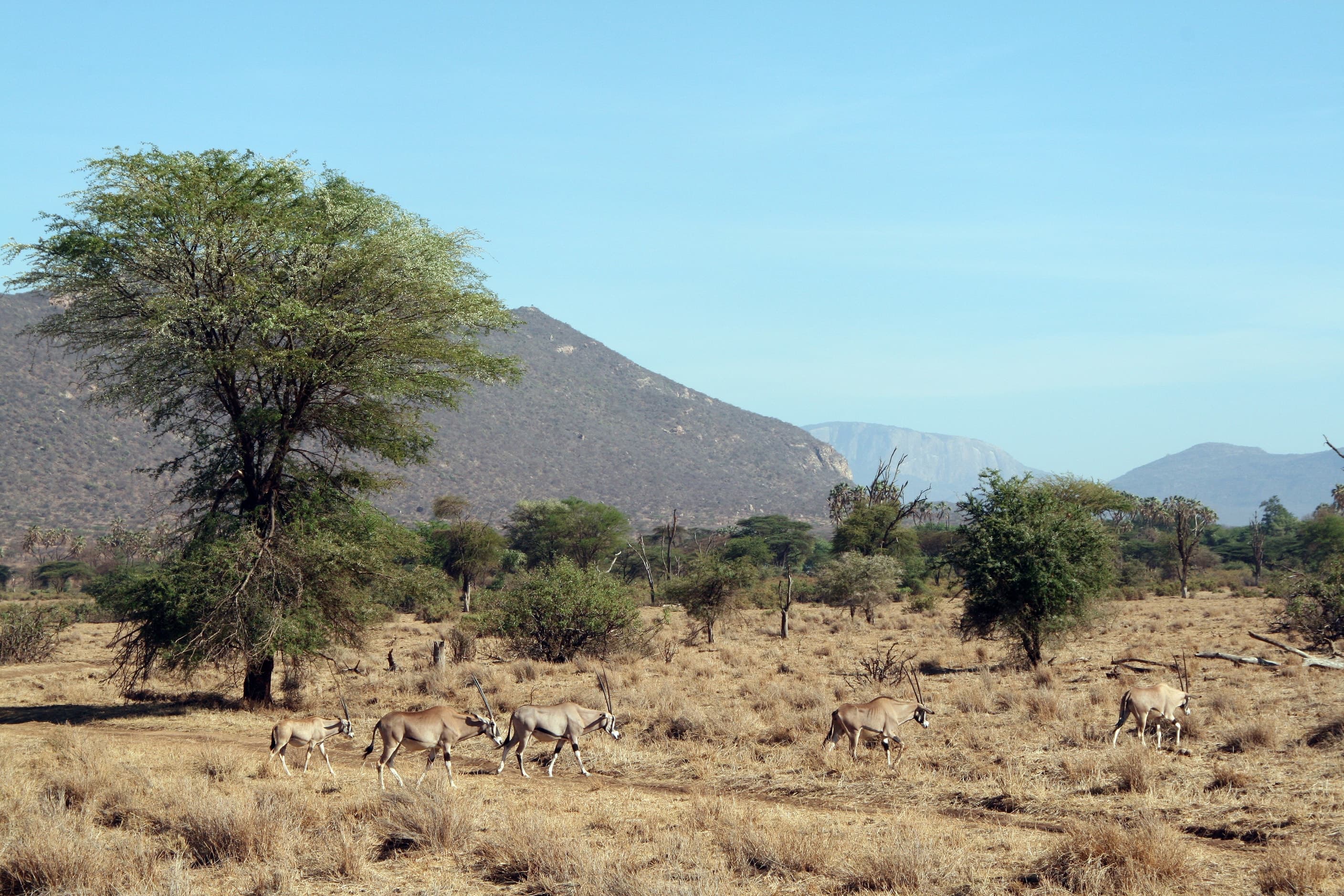
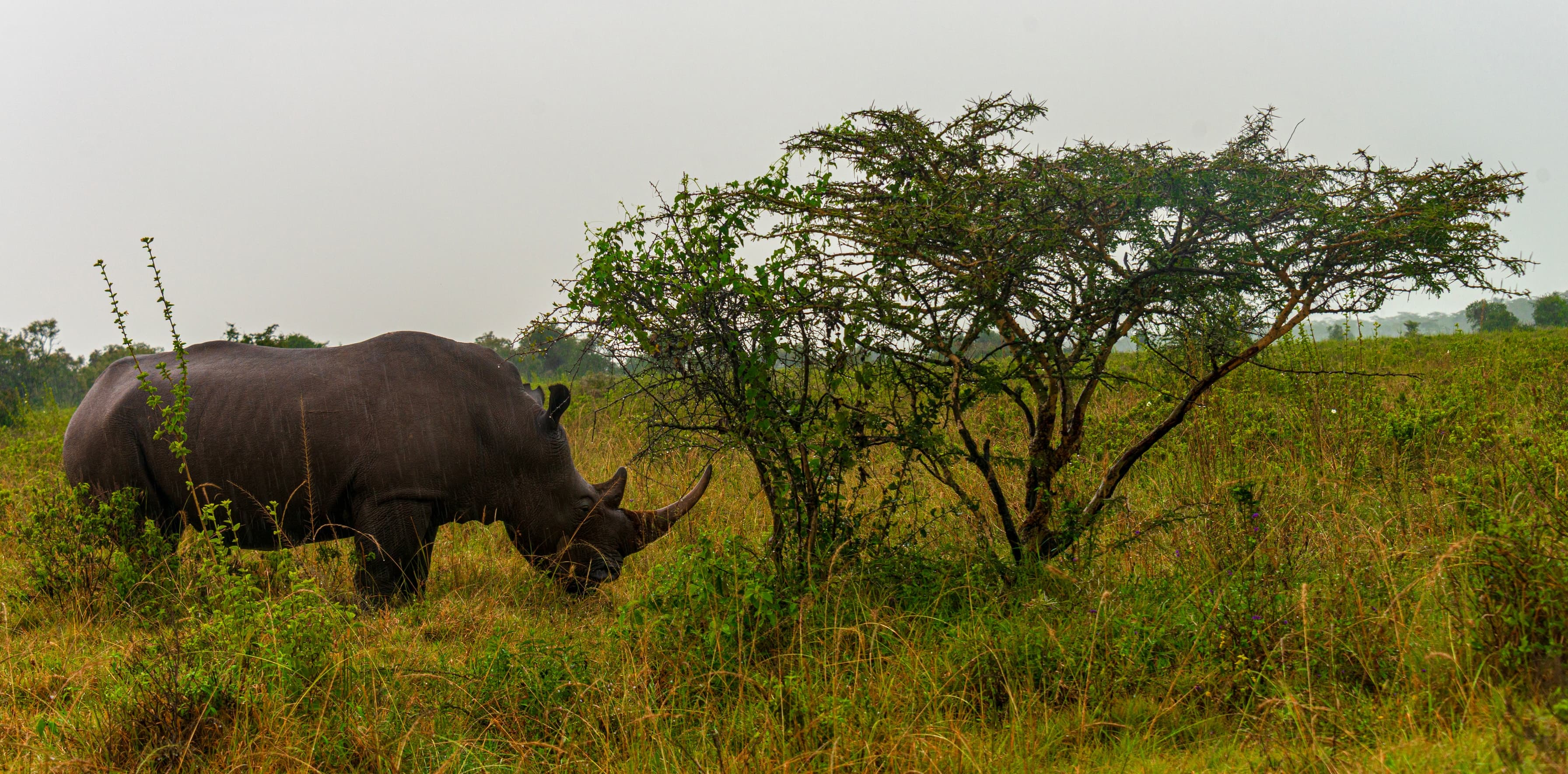
Wildlife moves freely and sightings are never guaranteed.

Batian, the highest peak of Mount Kenya, seen from Point Lenana
Photograph: Bett Duncan (CC BY-SA 4.0)
When to visit

When to visit Mount Kenya.

Kenya Wildlife Service notes that its mountain and forest parks differ from the warm, dry country where most parks lie, and that the central highlands are cool and humid. It describes April to June, the long rains, as the low season, when roads may need four-wheel drive, and July to March as the main season. The Kenya Meteorological Department adds a second rainy season from October to December, which affects the mountain too.

Signature experiences

On the mountain.

Getting there

Getting to Mount Kenya.

The peaks are reached through three official gates: Sirimon Gate off the Nanyuki–Meru road, Naromoru Gate near Naro Moru town on the Nyeri–Nanyuki road, and Chogoria Gate on the Embu–Meru road. Each gate begins a different approach to the upper mountain, which is why treks are often named after them. The closest commercial airstrip to the park is at Nanyuki, on the mountain’s north-western side.

Related destinations

Sources

Facts on this page were checked against these sources in October 2026. Park rules, fees and conditions change, so always check the latest before you travel.

Your journey begins with a conversation

Shape your Mount Kenya journey.

Tell us when you would like to travel and who is coming, and our team will suggest safaris that include Mount Kenya.

Let’s talk safari