
Murchison Falls
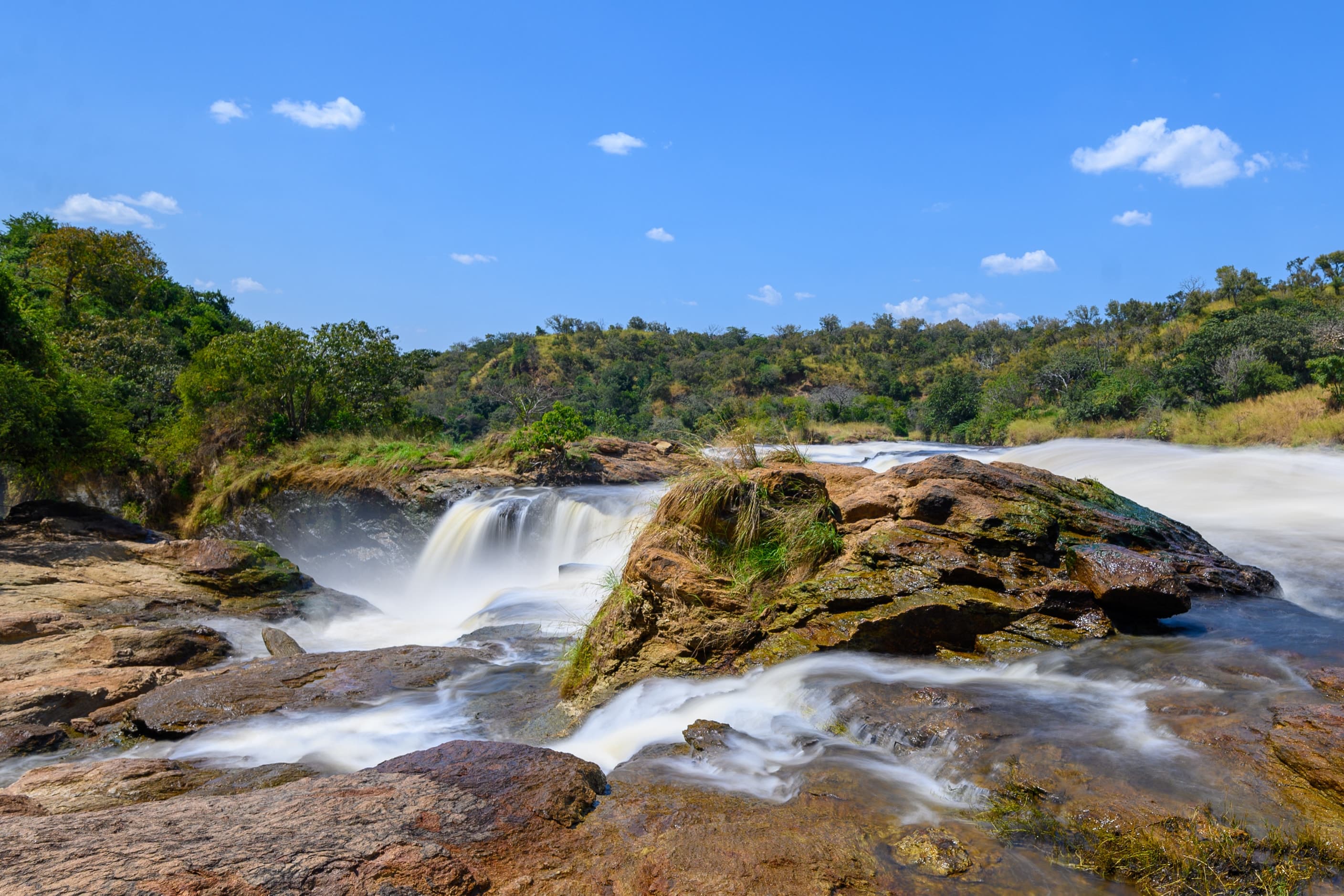
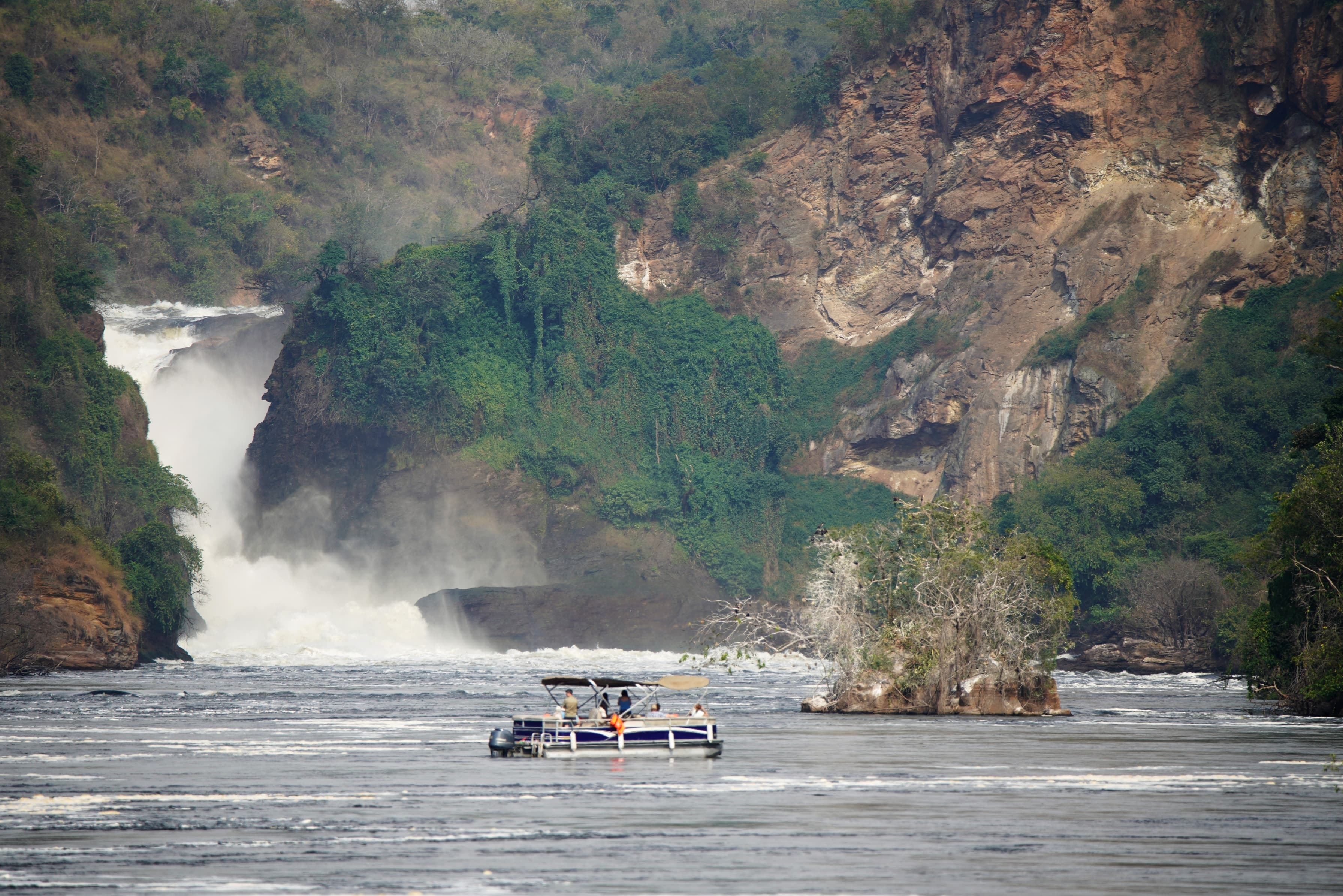
Uganda’s oldest and largest conservation area, where the Victoria Nile forces through an eight-metre gorge and plunges into the Devil’s Cauldron.
- Country
- Uganda
- Managed by
- Uganda Wildlife Authority
- Protected since
- 1926 as a game reserve; national park from 1952
- The falls
- The Nile through an 8 m gorge, dropping 45 m
- Wildlife
- 144 mammal and 556 bird species
- Our journeys here
- 1 journey in the catalogue
Is Murchison Falls right for you?
Who it suits.
- Best for
- Big-river scenery, boat trips, birdwatchers and a savannah safari within reach of Kampala.
- How it connects
- North of Kampala, about 305 km by UWA’s tariff; flights from Entebbe or Kajjansi land at Pakuba Airfield near the park headquarters at Paraa.
Murchison Falls in our Uganda guide, with the places around it.
Why visit Murchison Falls
The Nile at full force.
Murchison Falls is Uganda’s oldest and largest conservation area, first gazetted as a game reserve in 1926 and designated one of the country’s first national parks in 1952. At its heart, the Victoria Nile is forced through a gorge only eight metres wide before plunging 45 metres into the Devil’s Cauldron, the final act of a long stretch of rapids, sending up a thunderous roar and a permanent mist.
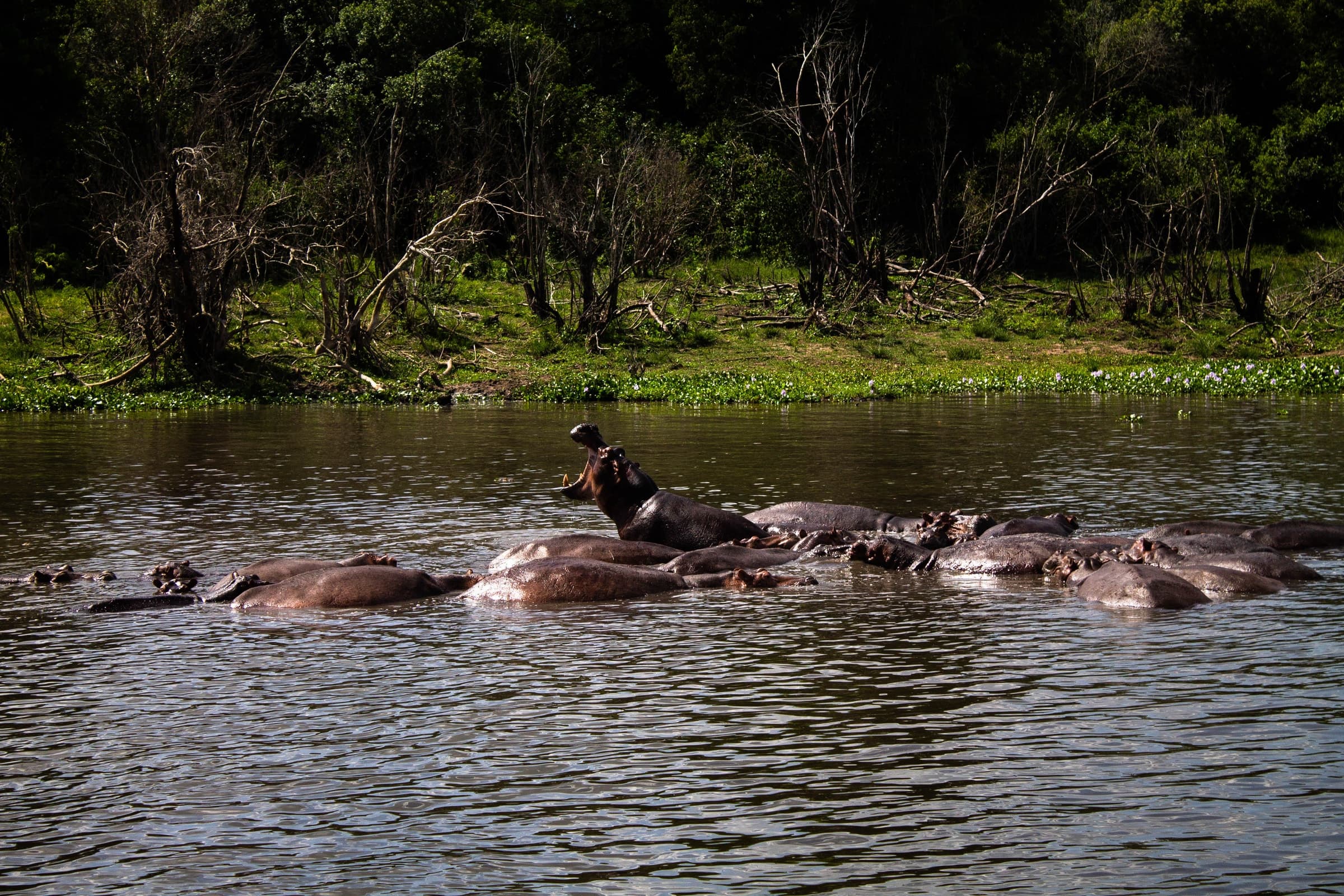
Below the falls the river calms into a broad, quiet flow towards Lake Albert, and this stretch is one of Uganda’s finest places to watch wildlife, with elephants, giraffes and buffalo on the banks and hippos, Nile crocodiles and waterbirds ever present. The park also has a place in film history: “The African Queen” was filmed on Lake Albert and the Nile here in 1951.
Landscapes & wildlife
Palms, savannah and river.
The park lies at the northern end of the Albertine Rift Valley, where the Bunyoro escarpment descends into rolling, palm-dotted plains. North of the river it is open savannah with Borassus palms and acacia woodland, the only part of the park where giraffes have historically lived, while the south is dominated by woodland and forest patches. The park records 144 mammal species, 556 bird species, 51 reptiles and 51 amphibians.
Its large mammals are recovering well. An aerial survey counted more than 900 elephants, with numbers increasing, and buffalo now number over 10,000, making them one of the park’s most commonly seen animals. For birders, the shoebill, one of Africa’s most sought-after birds, is commonly seen along the Albert Delta, where the Nile meets Lake Albert.
- Elephants, giraffes and buffalo
- Hippos and Nile crocodiles
- The shoebill
- The falls and the Devil’s Cauldron
Wildlife moves freely and sightings are never guaranteed.
Signature experiences
At Murchison Falls.
Game drives
Giraffes, elephants and buffalo on the northern plains.
Boat cruises
Along the calm Nile below the falls.
Birding on the delta
Looking for the shoebill where the Nile meets Lake Albert.
Getting there
Getting to Murchison Falls.
The park lies north of Kampala and is reached by road through the southern entrance gate, or from Fort Portal to the south-west; the Uganda Wildlife Authority notes that the lodges lie some way beyond the gate. Chartered and scheduled flights run from Entebbe International Airport or Kajjansi Airfield, and Pakuba Airfield is the most convenient arrival point for the camps and lodges around the park headquarters at Paraa.
Safaris that visit Murchison Falls
Filter these journeysOne journey to Murchison Falls.
Every journey here includes Murchison Falls on its catalogue route.
Sources
- Uganda Wildlife Authority: Murchison Falls National Park (opens in a new tab)
- Uganda Wildlife Authority: Revised conservation tariff, taking effect 1 January 2027 and running to June 2028, with gorilla and chimpanzee tracking rules (published October 2026) (opens in a new tab)
Facts on this page were checked against these sources in October 2026. Park rules, fees and conditions change, so always check the latest before you travel.
Your journey begins with a conversation
Shape your Murchison Falls journey.
Tell us when you would like to travel and who is coming, and our team will suggest safaris that include Murchison Falls.