
Bwindi
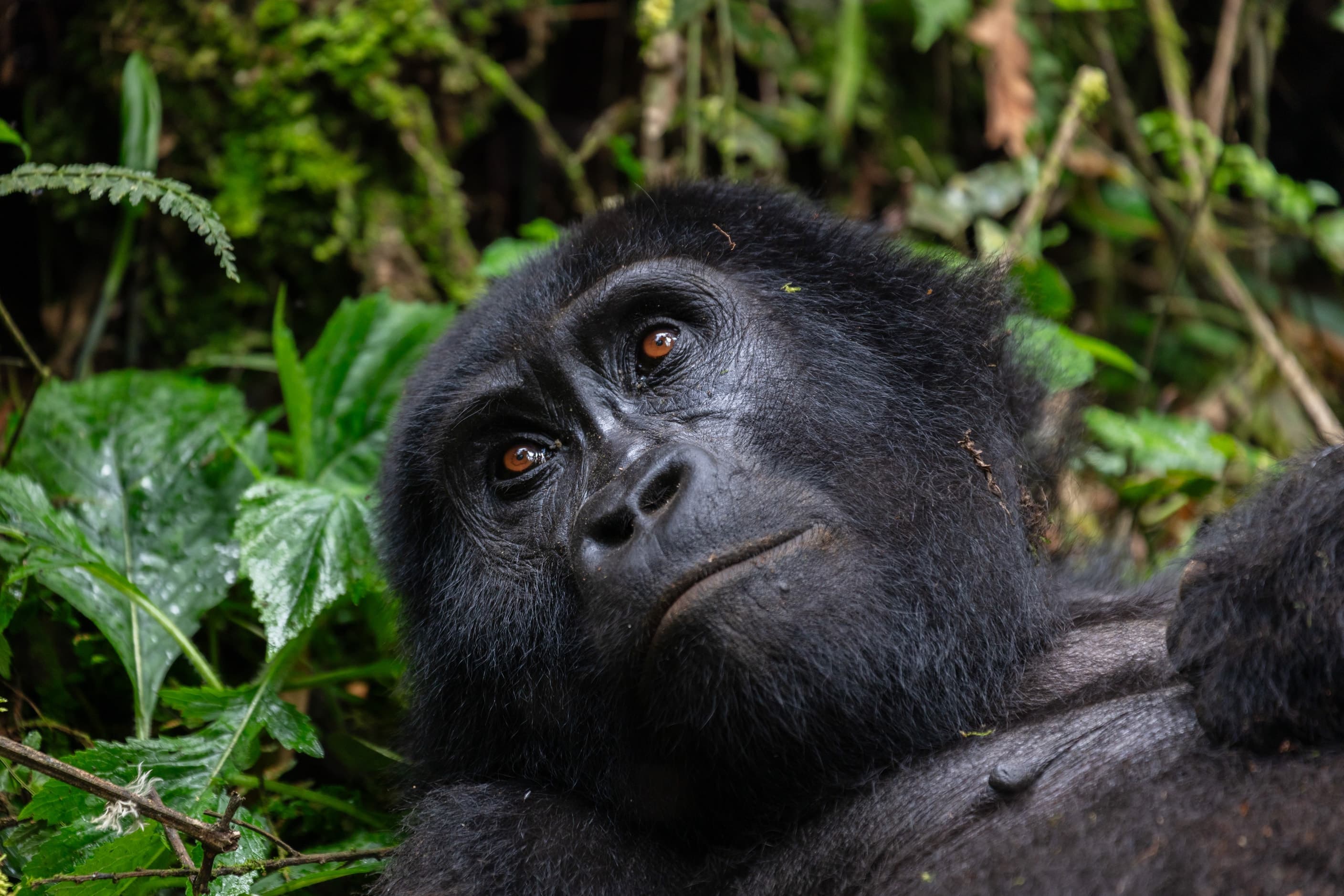
An ancient, mist-covered rainforest in south-western Uganda that shelters almost half of the world’s remaining mountain gorillas.
- Country
- Uganda
- Managed by
- Uganda Wildlife Authority
- Mountain gorillas
- About 459 — almost half the world’s population
- Status
- UNESCO World Heritage Site
- Gorilla trekking since
- April 1993, with the Mubare group
- Our journeys here
- 2 journeys in the catalogue
Is Bwindi right for you?
Who it suits.
- Best for
- Anyone aged 15 or over who is ready for steep, muddy forest trails. Nine of our Uganda journeys include gorilla trekking.
- How it connects
- Buhoma, the park headquarters, is reached via Kihihi or Kabale; the southern sectors, Nkuringo and Rushaga, are usually approached via Kisoro. Daily scheduled flights link Entebbe with the Kihihi and Kisoro airstrips.
Bwindi in our Uganda guide, with the places around it.
Why visit Bwindi
Face to face with mountain gorillas.
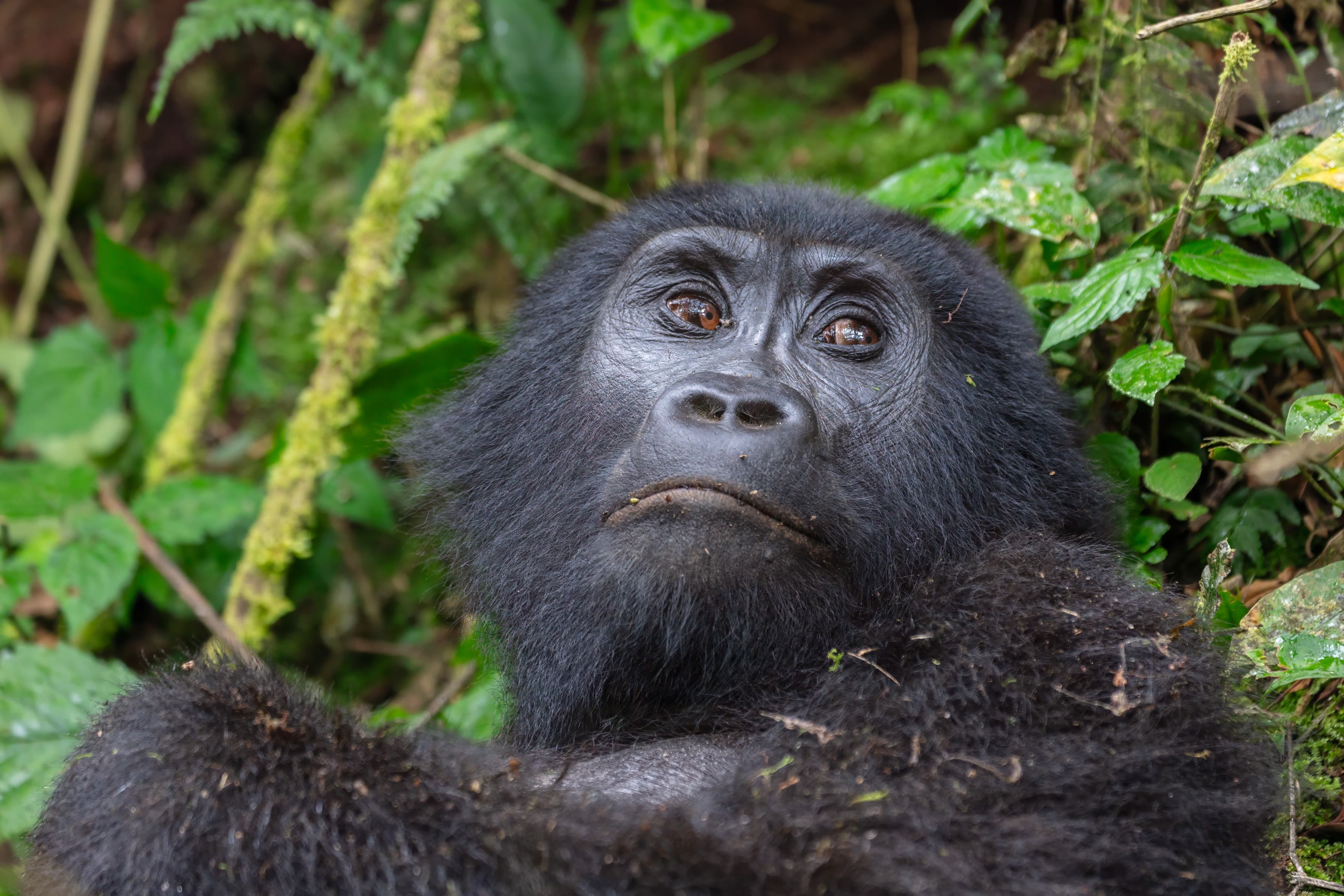
Bwindi Impenetrable National Park, in south-western Uganda on the edge of the Rift Valley, is one of Africa’s most ancient and biologically diverse rainforests, dating back more than 25,000 years. Most famously, it protects about 459 mountain gorillas, almost half of the world’s remaining population, and the Uganda Wildlife Authority describes it as one of the best places on earth to see them in their natural habitat.
Gorilla tourism here has a long history: the Mubare group was the first to be habituated for tourism in Uganda, in April 1993. The forest is also rich in birds, with more than 350 species, including 23 Albertine Rift endemics such as the African green broadbill and Shelley’s crimsonwing. Around Buhoma and Nkuringo, the Batwa, the forest’s original inhabitants, share their hunter-gatherer heritage with visitors.
Landscapes & wildlife
One of Africa’s oldest rainforests.
Bwindi spreads across a landscape of steep ridges and deep valleys, forming the watershed for five major rivers that flow into Lake Edward. The mist-covered forest is home to some 400 plant species and gives refuge to some of the world’s rarest wildlife. That steep, densely forested terrain shapes every visit, and the Uganda Wildlife Authority highly recommends a four-wheel-drive vehicle on the murram roads that lead to the park.
- Mountain gorillas
- Albertine Rift endemic birds
- Chimpanzees and forest elephants
- More than 200 butterfly species
Wildlife moves freely and sightings are never guaranteed.
Signature experiences
In Bwindi.
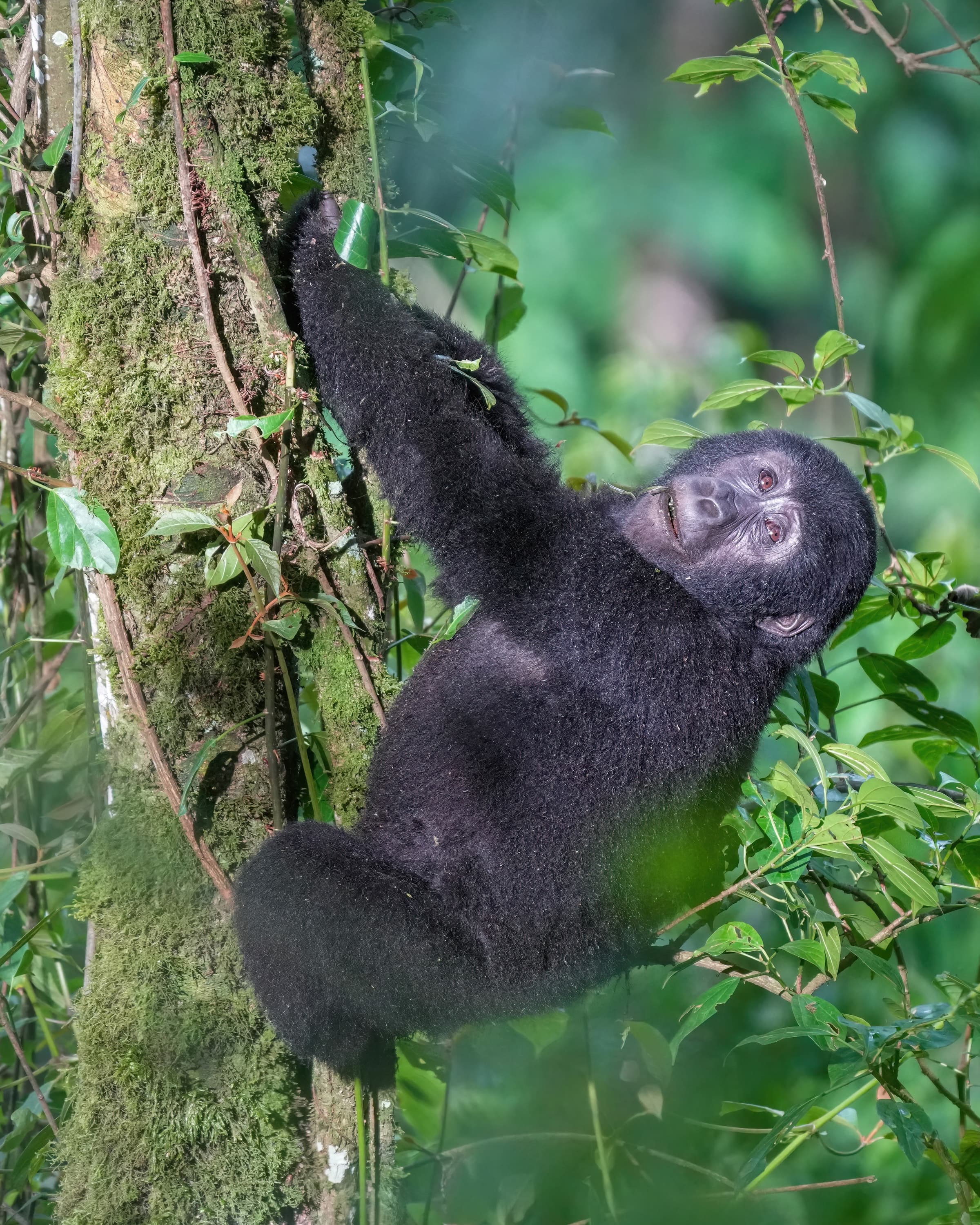
Gorilla trekking
Hiking into the forest to spend time with a habituated gorilla family.
Batwa and Bakiga cultural visits
Around Buhoma and Nkuringo, including performances, workshops and village walks with the Batwa, the forest’s original inhabitants.
Forest birding
Albertine Rift endemics such as the African green broadbill.
Getting there
Getting to Bwindi.
Several road routes lead from Kampala, including via Rukungiri and Kihihi to Buhoma, the park headquarters, and via Kabale; the final stretches are winding murram roads, and UWA highly recommends a four-wheel-drive vehicle. A route through the Ishasha sector of Queen Elizabeth National Park allows a stop on the way.
Practical advice
Good to know about Bwindi.
- Gorilla trekking is managed by the Uganda Wildlife Authority, which sets the rules for trekking. Rules, availability and costs change, so check UWA’s current conditions when you plan.
- The southern sectors, Nkuringo and Rushaga, are usually approached via Kisoro.
Safaris that visit Bwindi
Filter these journeys2 journeys to Bwindi.
Every journey here includes Bwindi on its catalogue route.
Questions travellers ask
Bwindi, answered.
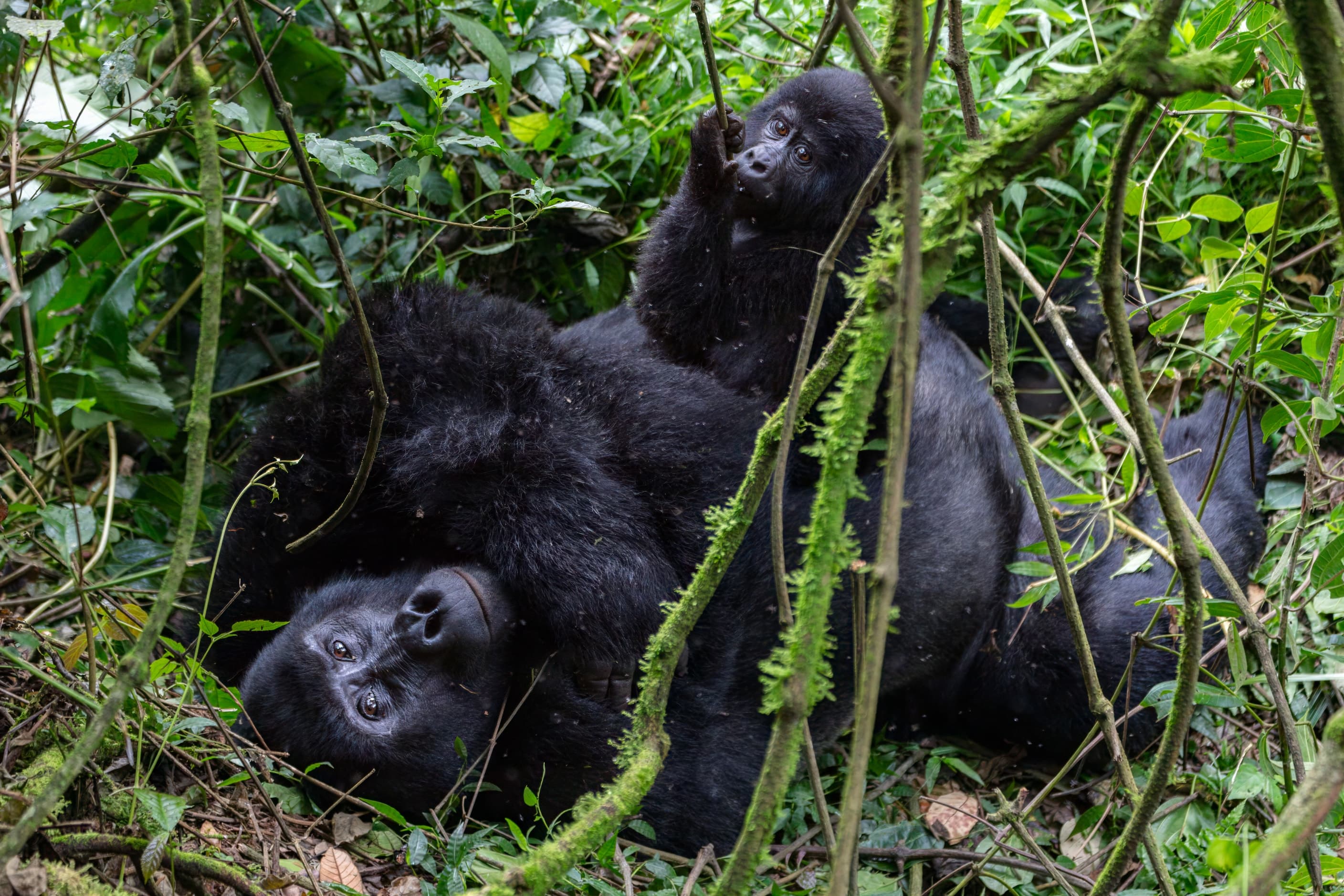
- How many mountain gorillas live in Bwindi?
- The Uganda Wildlife Authority puts the number at about 459, almost half of the world’s remaining mountain gorillas.
Often paired with Bwindi.
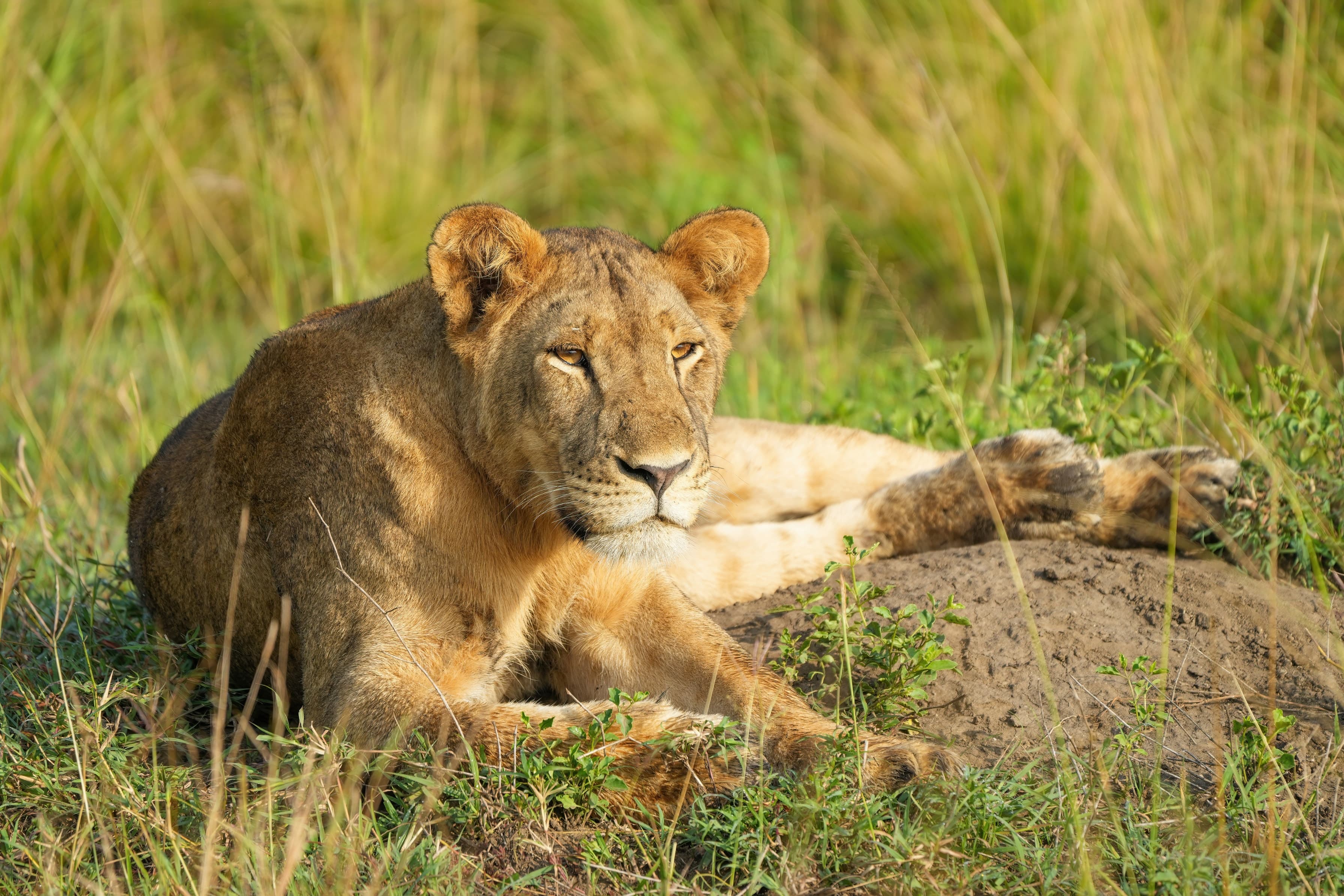
Queen Elizabeth National Park
Uganda
A road route between the parks passes through Queen Elizabeth’s Ishasha sector.
Sources
- Uganda Wildlife Authority: Bwindi Impenetrable National Park (opens in a new tab)
- Uganda Wildlife Authority: Bwindi Impenetrable National Park: gorillas and getting there (opens in a new tab)
- Uganda Wildlife Authority: Conservation tariff July 2024 – June 2026, with park, gorilla and chimpanzee tracking rules (re-published on UWA’s website on 12 October 2026) (opens in a new tab)
- Uganda Wildlife Authority: Notice to stakeholders, 26 February 2026: low-season gorilla and chimpanzee permit rates and revised tariff (opens in a new tab)
Facts on this page were checked against these sources in October 2026. Park rules, fees and conditions change, so always check the latest before you travel.
Your journey begins with a conversation
Shape your Bwindi journey.
Tell us when you would like to travel and who is coming, and our team will suggest safaris that include Bwindi.