Big Time Field NotesNo. 09Your first safari
Gorilla and chimpanzee trekking in Uganda
What a gorilla trek in Bwindi involves, how chimpanzee tracking in Kibale works, the Uganda Wildlife Authority’s rules and age limits, how fit you need to be, and how Uganda’s savannah parks round out a journey.
In brief
- The Uganda Wildlife Authority (UWA) says Bwindi protects about 459 mountain gorillas, and that Uganda is home to more than half of the world’s roughly 1,004.
- UWA’s published rules set a minimum age of 15 for gorilla tracking, at most eight visitors per gorilla group and one hour with the gorillas.
- For chimpanzee tracking, UWA’s Kibale page gives a minimum age of 16, while the rules in its tariffs, including the revised one for January 2027 to June 2028, say 12. For anyone aged 12 to 15, confirm eligibility with UWA before a permit is booked.
- Permits are limited and must be booked in advance; UWA says permits for foreign non-residents are booked only through licensed tour operators. Confirm current prices with us.
Contents
Why go to Uganda for gorillas?
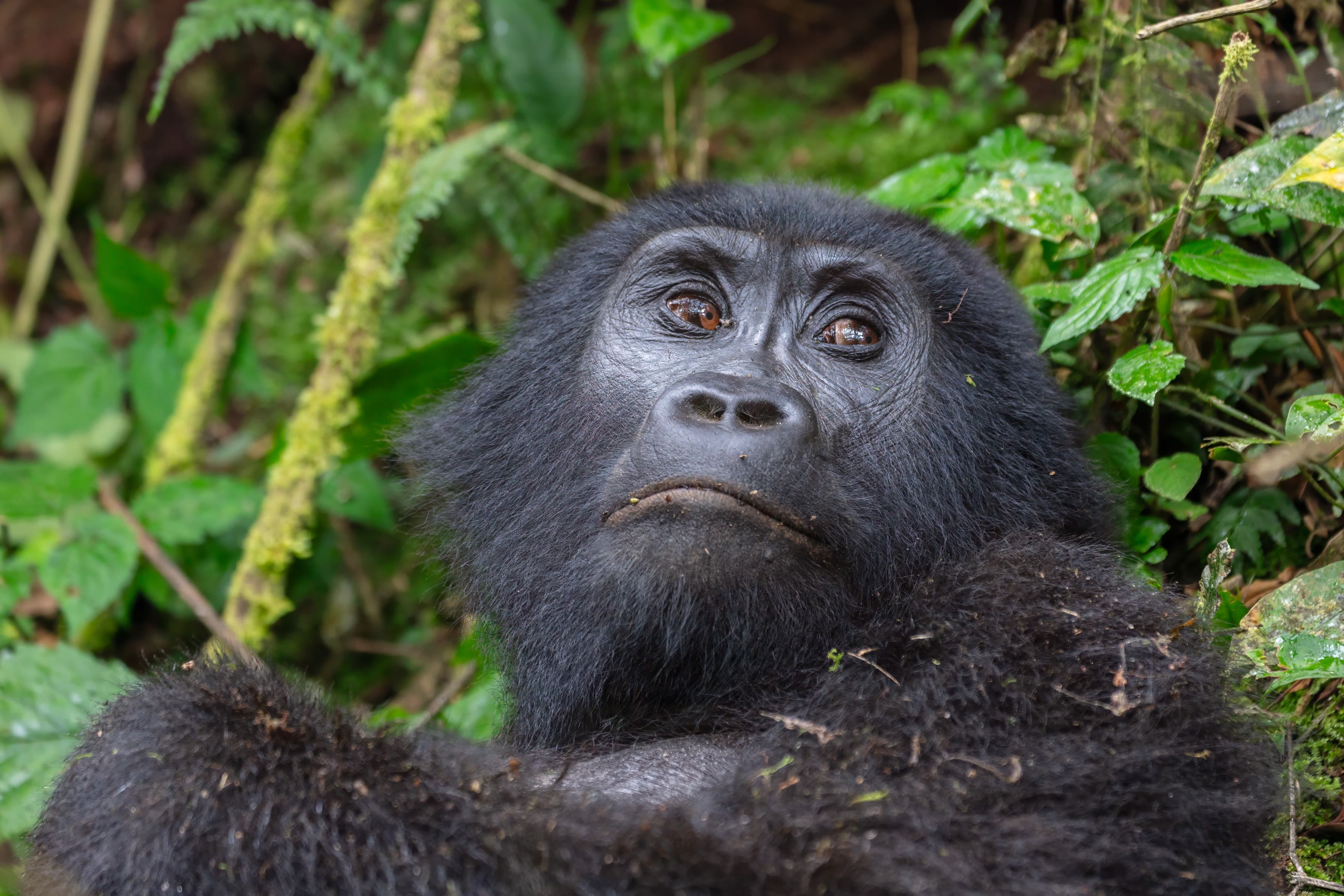
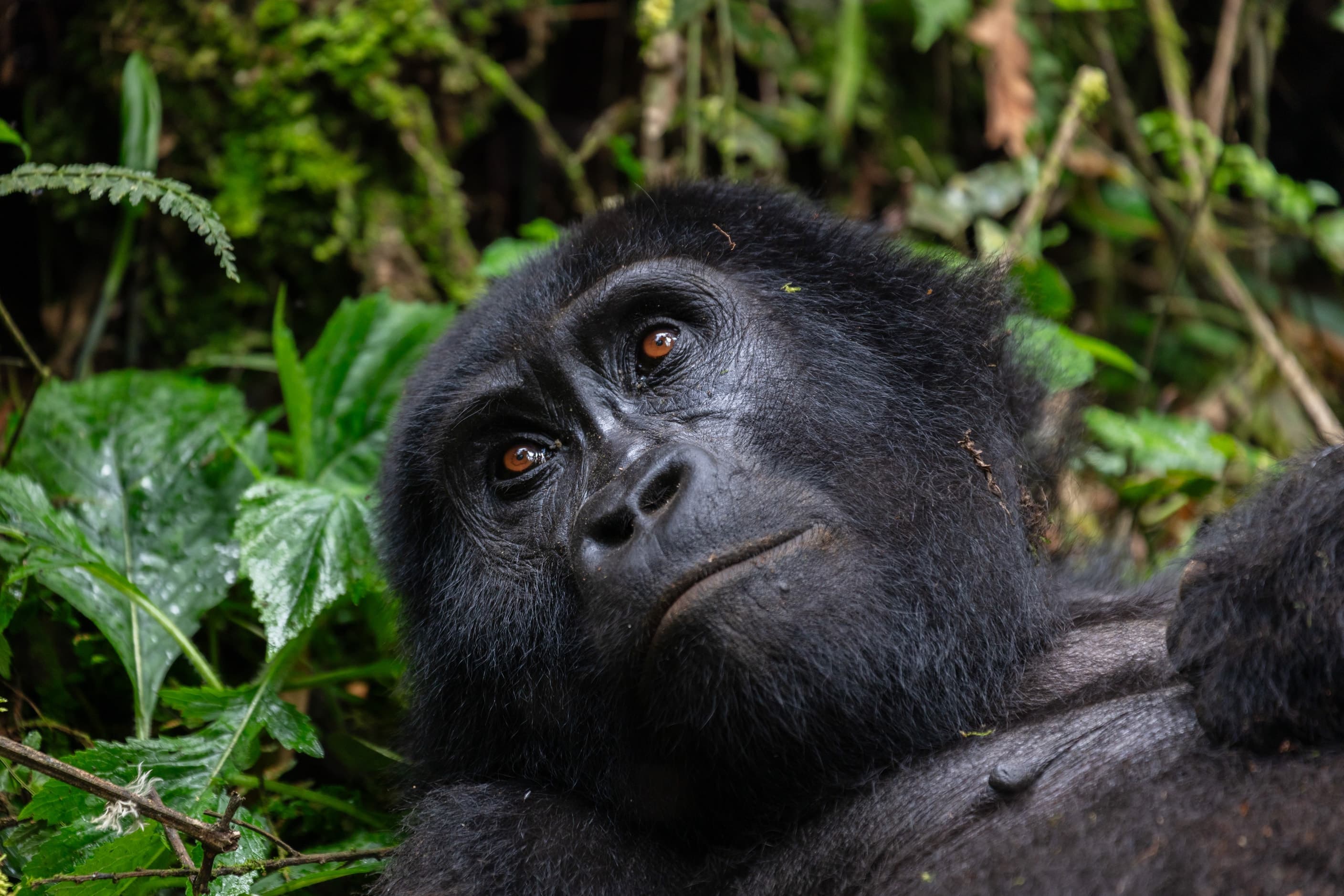
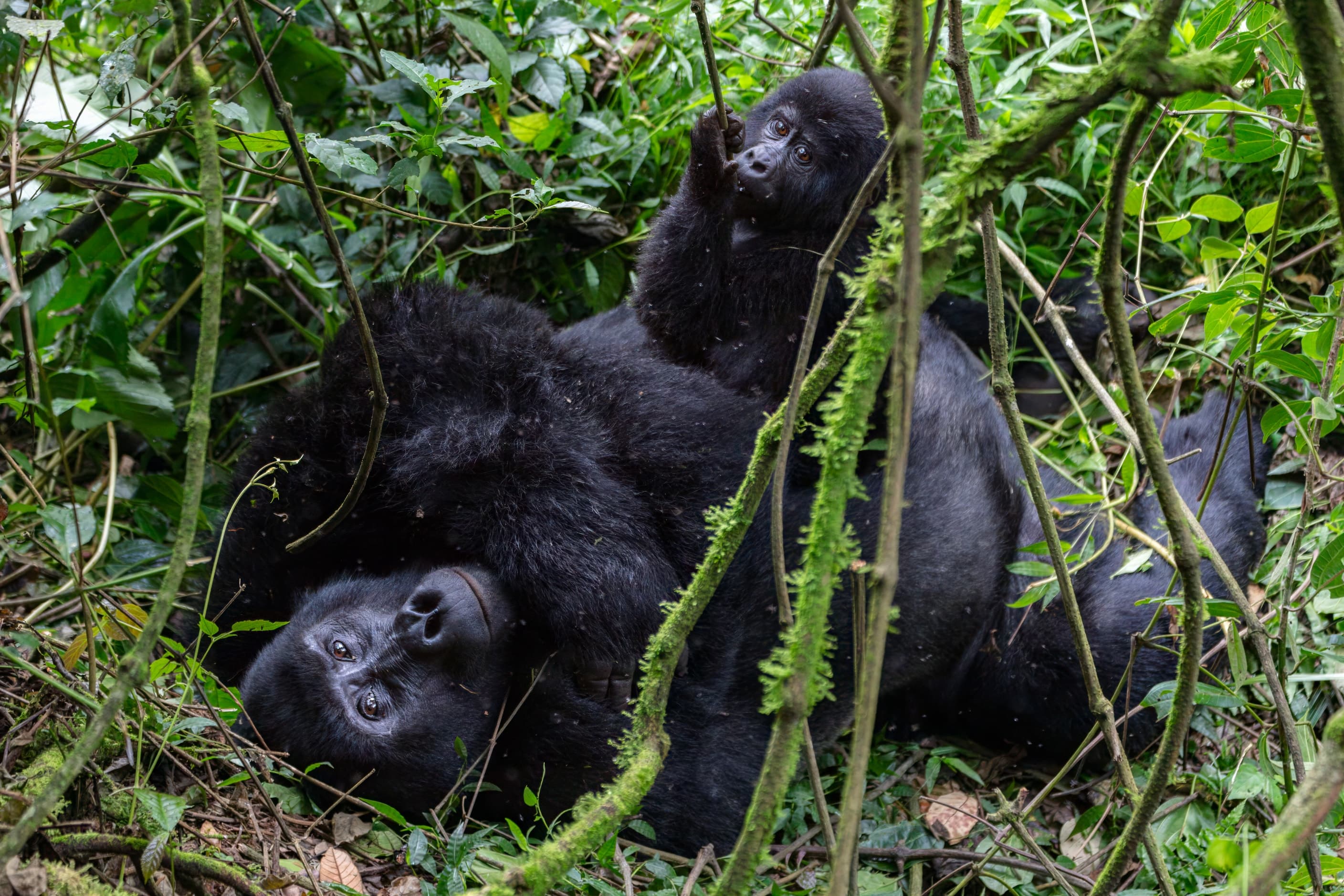
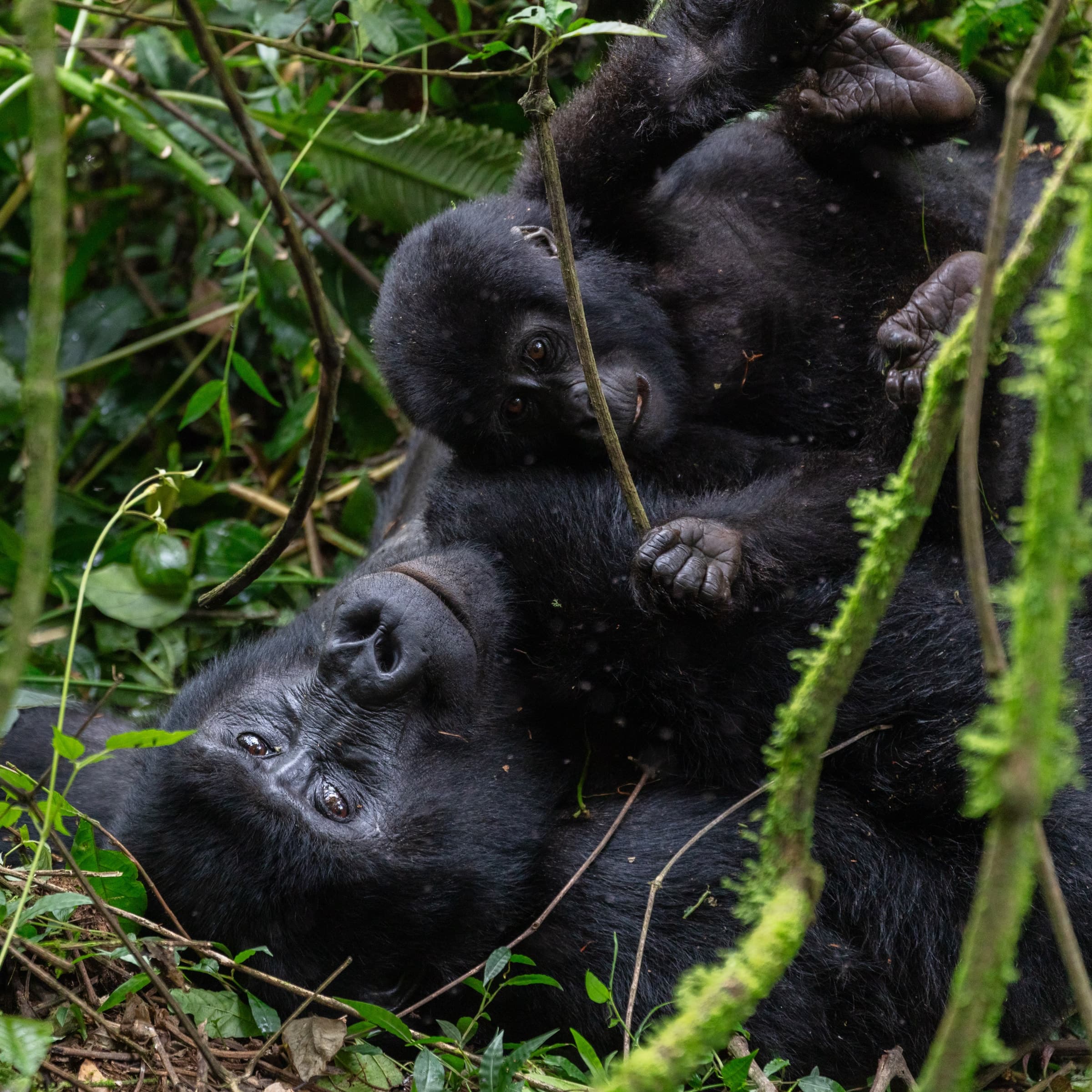
Uganda is one of only three countries where mountain gorilla trekking takes place. The Uganda Wildlife Authority says around 1,004 mountain gorillas exist today and that Uganda is home to more than half of them, with 27 gorilla families habituated and visited by tourists. Bwindi Impenetrable National Park, a UNESCO World Heritage Site, protects about 459 of them.
Habituated means a gorilla family has been gradually accustomed to people over years, so a small group can watch it quietly for a limited time. The forest itself is the other reason to go: UWA records more than 120 mammals and about 350 bird species in Bwindi.
What are the rules for gorilla trekking?
UWA publishes gorilla tracking rules alongside its tariff. They exist to protect the gorillas, which can catch human colds and infections, and they apply to every visitor.
- The minimum age for tracking is 15 years.
- At most eight visitors may visit a gorilla group.
- Do not visit the gorillas if you have a cold or other infectious illness.
- Keep a distance of 10 metres from the gorillas.
- Visits are limited to one hour per gorilla group per day.
- No smoking, eating or drinking during the tracking, and no flash photography.
- If you must cough or sneeze, cover your face and turn away from the gorillas.
How hard is a gorilla trek?
It depends on where the gorilla family is that day. Our approved Bwindi itinerary describes the trek as steep and muddy, and the hour with the gorillas begins only once the family is found. UWA describes Bwindi as dense, hilly rainforest, reached on winding murram roads where a four-wheel-drive vehicle is highly recommended.
- Walk regularly on hills before you travel, and tell us about any health or mobility concerns when you enquire.
- Wear long trousers, long sleeves and boots with grip, and carry a rain layer: the forest is wet.
- Bring water and a snack for the walk, but do not eat or drink near the gorillas.
- Carry your permit and payment receipts, as UWA’s rules require.
Chimpanzee tracking in Kibale
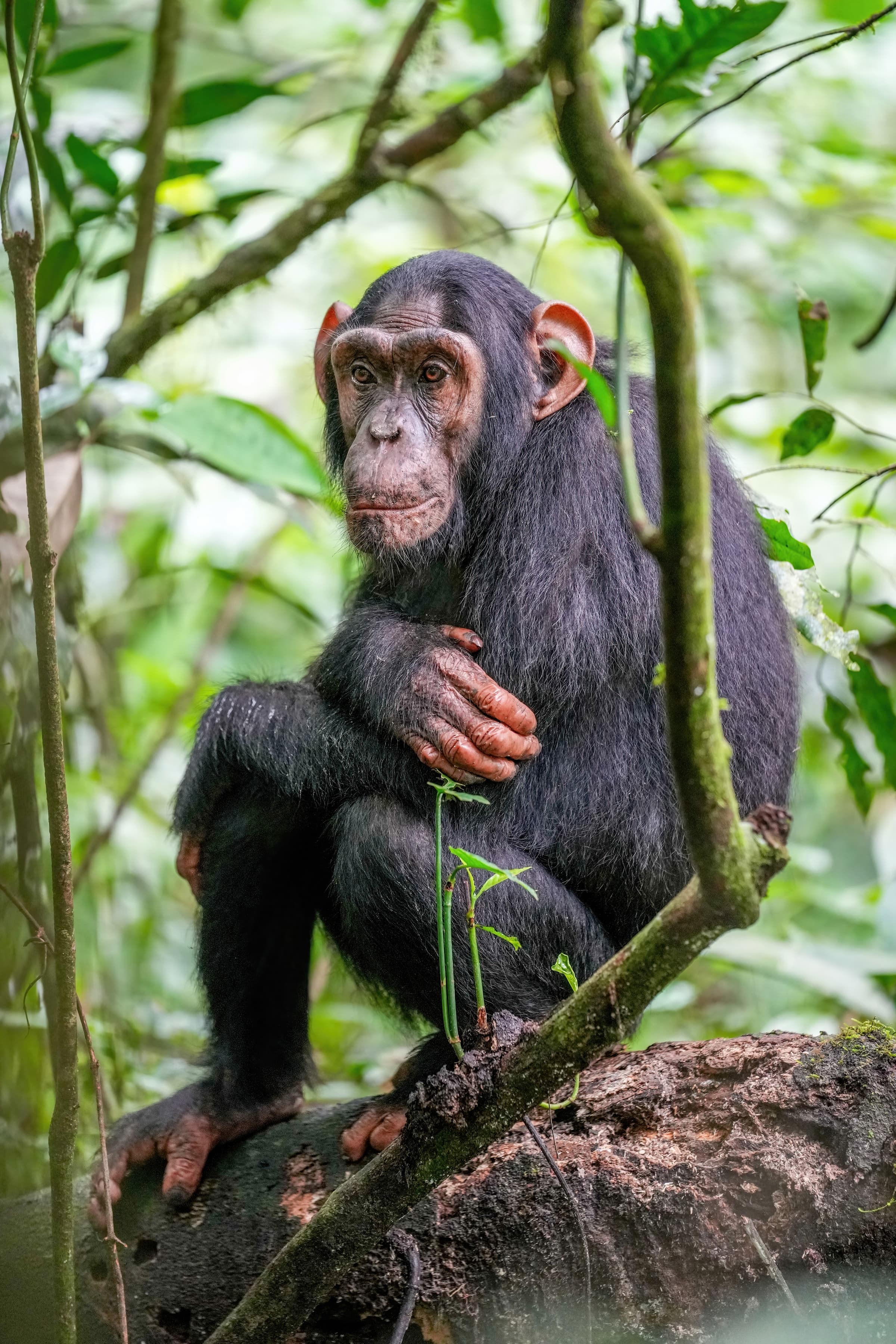
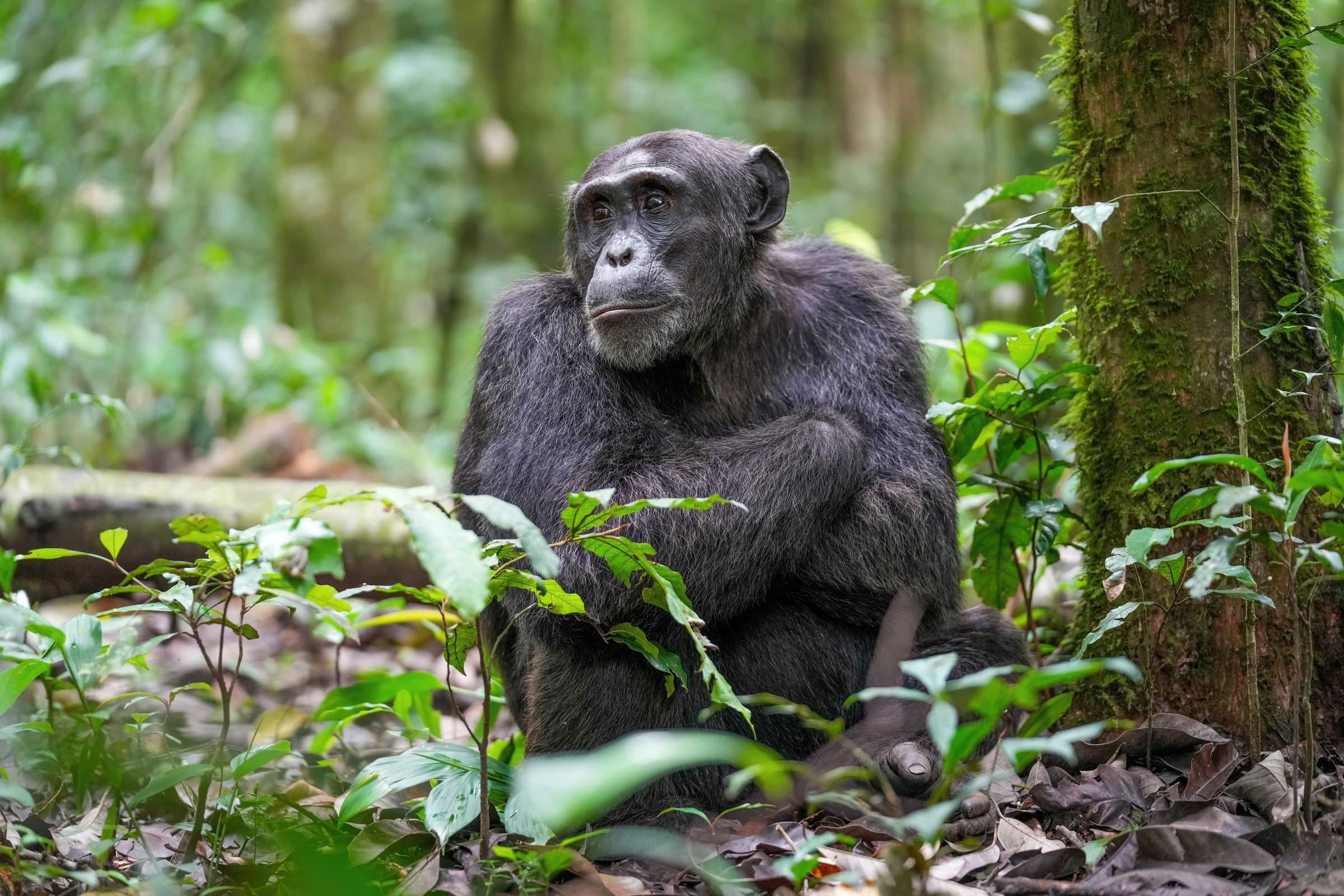
UWA calls Kibale’s chimpanzees the highlight of its Kanyanchu primate walk, and the park supports one of Uganda’s largest wild chimpanzee populations. Guided walks start daily at 8 am, 11 am and 2 pm from the Kanyanchu Visitor Centre, usually last between two and five hours, and allow one hour with the chimpanzees once they are found. Each group is limited to six people, and booking in advance is mandatory. UWA reports a sighting success rate of over 90 per cent, but no sighting is guaranteed.
Getting to Bwindi and Kibale
UWA describes several road routes from Kampala to Bwindi. One runs about 390 kilometres on tarmac to Rukungiri and then 82 kilometres on winding murram roads to the park headquarters at Buhoma; others pass through Kabale or through the Ishasha sector of Queen Elizabeth National Park. Scheduled and chartered flights from Entebbe to Kisoro or Kihihi airstrips take about an hour and ten minutes, followed by a road transfer.
Kibale lies about 326 kilometres from Kampala on the tarmac Kampala–Fort Portal highway, a drive UWA puts at about six hours, or about an hour from Fort Portal. These are UWA’s distances; actual driving times depend on roads and weather, which is why our 3 Days Bwindi Gorilla Trekking Midrange Safari spends its first day on the road and our 3 Days Luxury Fly-In Bwindi Gorilla Safari flies.
Uganda beyond the forest
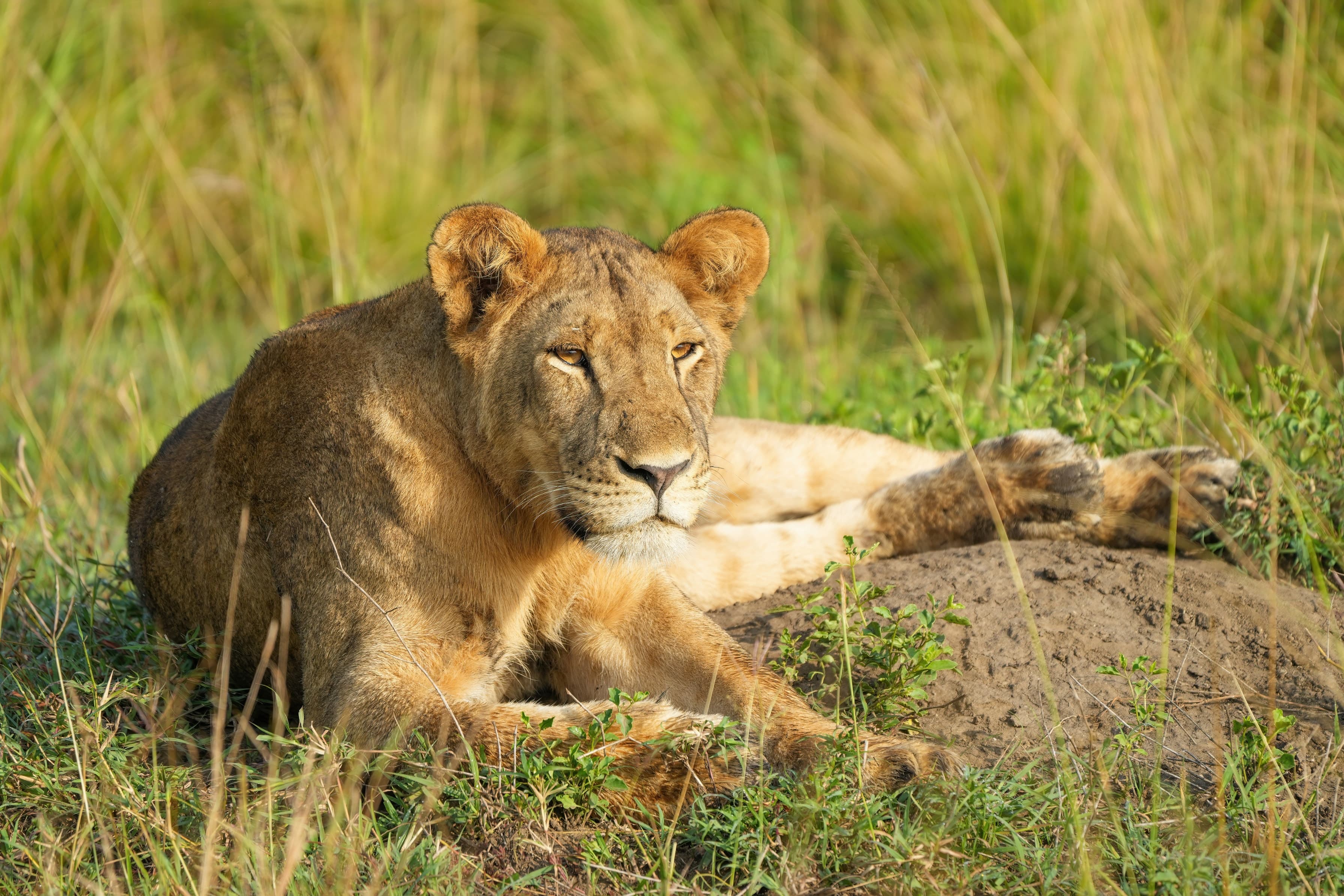
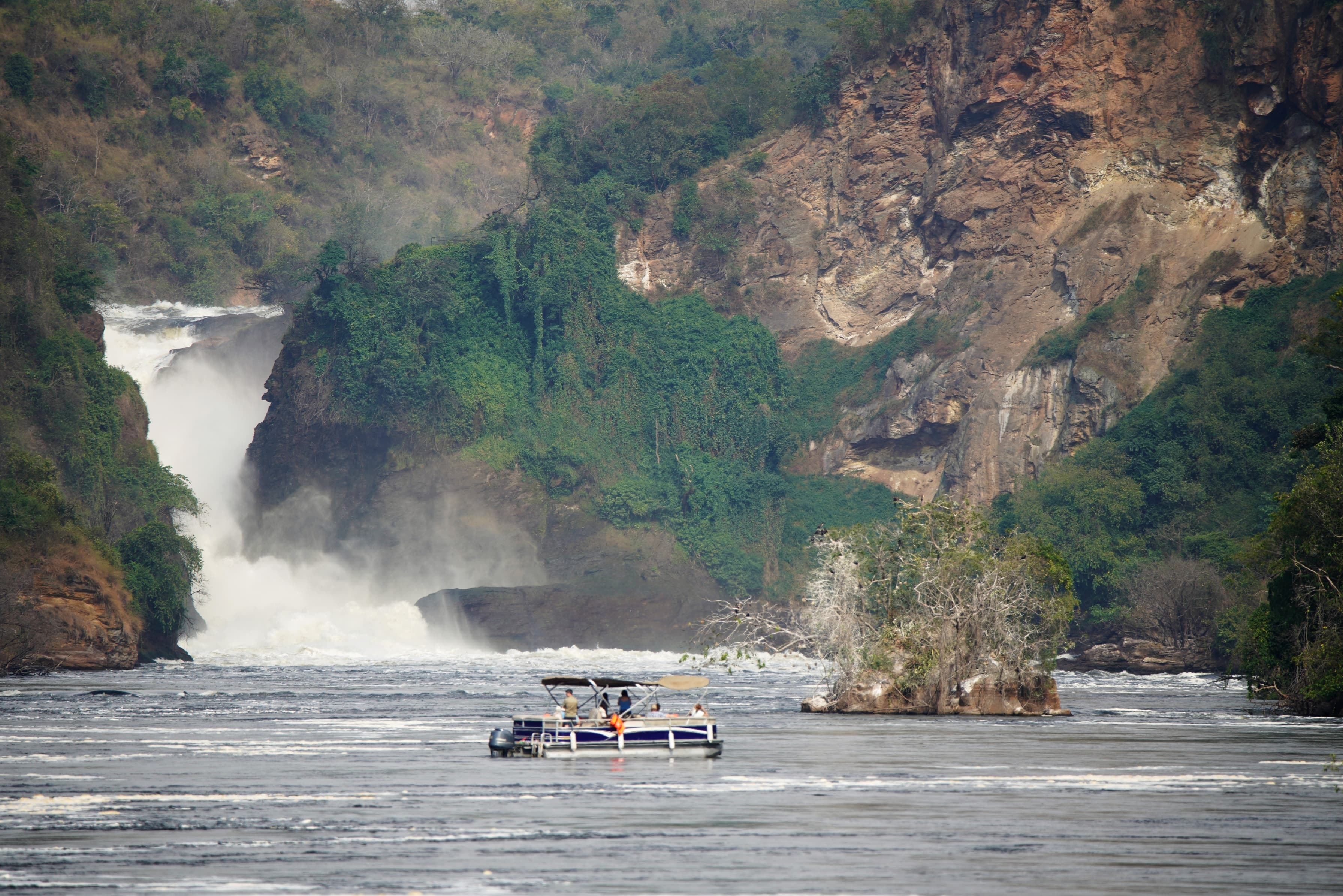
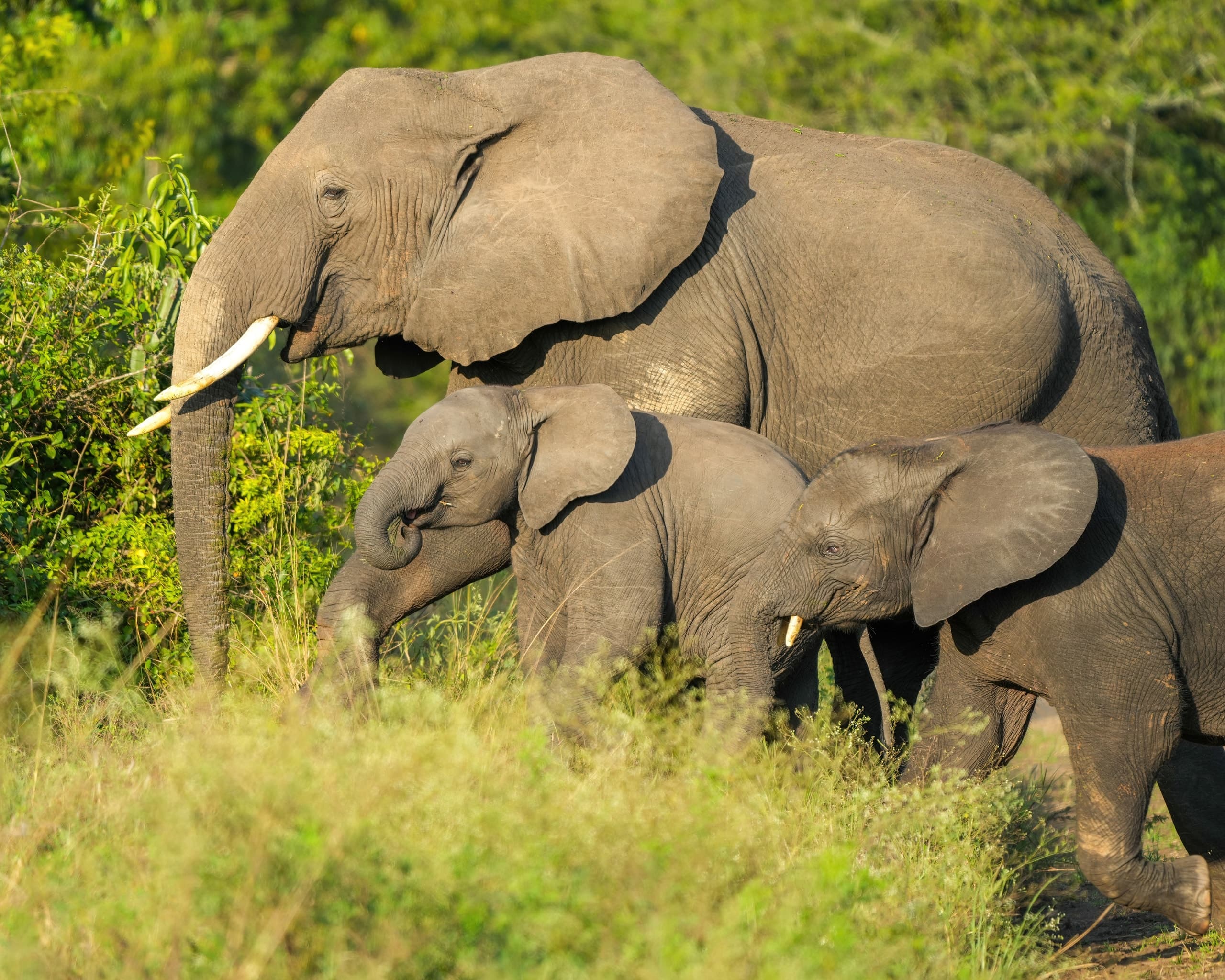
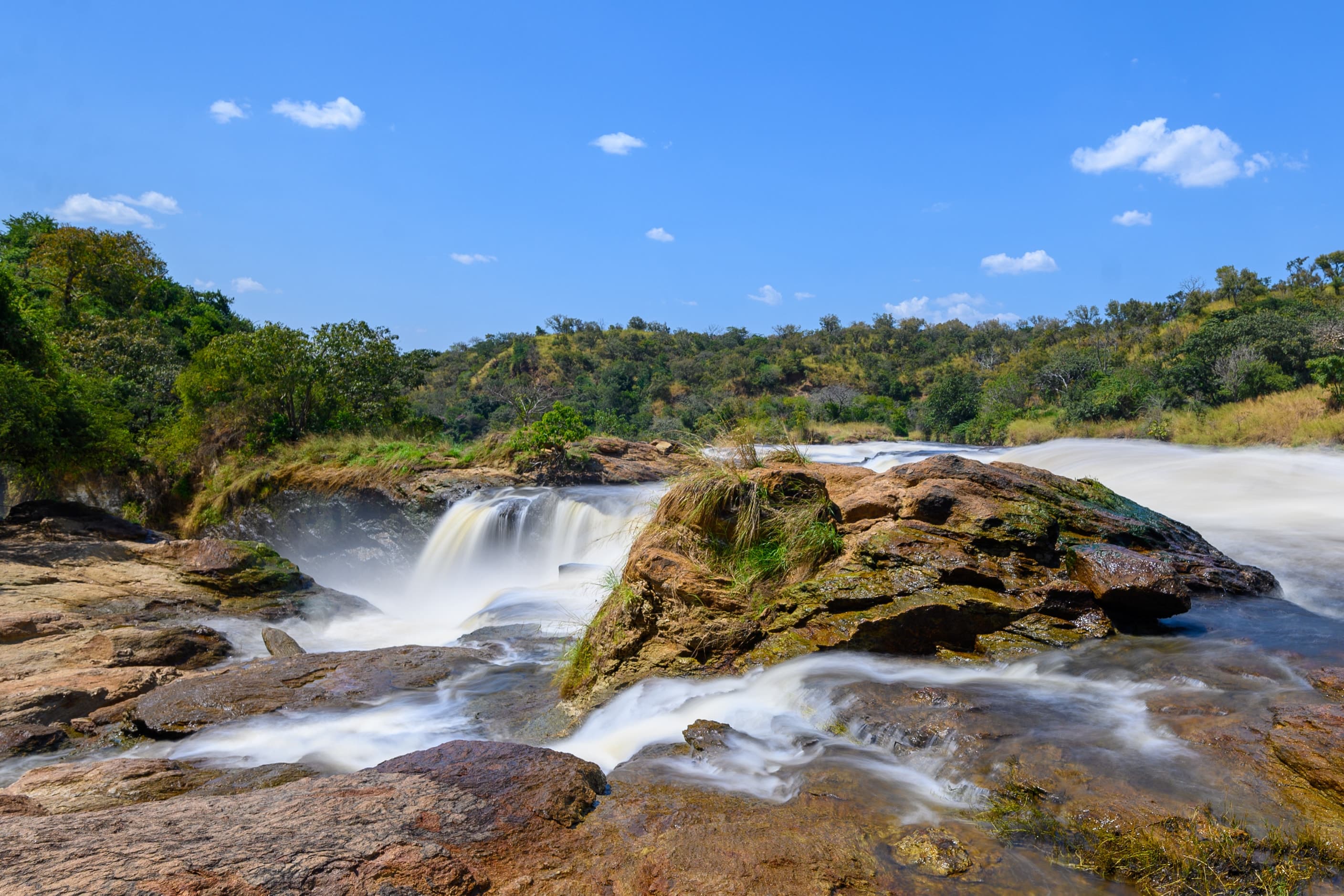
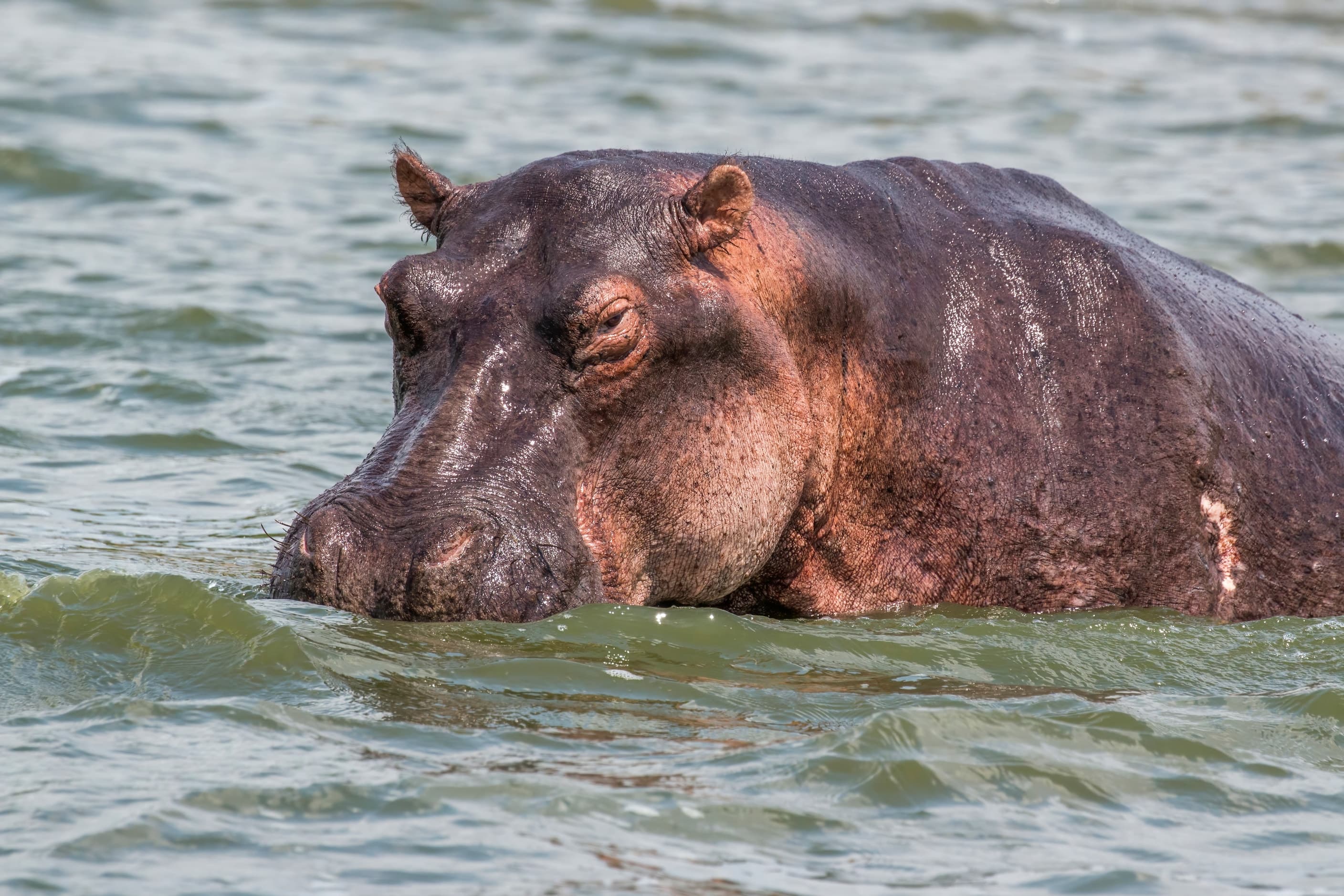
Queen Elizabeth National Park is, in UWA’s words, Uganda’s most popular and most biodiverse safari park, with the Kazinga Channel between Lake Edward and Lake George and the Ishasha sector, where lions are known to rest in fig trees. Murchison Falls, Uganda’s oldest and largest conservation area, is where the Nile forces through an eight-metre gorge and drops 45 metres, before calming into a river rich in hippos, crocodiles and waterbirds.
Several of our longer Uganda journeys combine gorillas, chimpanzees and wildlife, as their titles say; their day-by-day plans are prepared with your quotation. Our approved short itineraries focus on one park each.
| Journey | Length | Comfort | Price per person |
|---|---|---|---|
| 3 Days Bwindi Gorilla Trekking Midrange Safari | 3 days | Midrange | Price on request |
| 3 Days Luxury Fly-In Bwindi Gorilla Safari | 3 days | Luxury | Price on request |
| 3 Days Queen Elizabeth National Park Safari | 3 days | Budget | Price on request |
| 3 Days Murchison Falls Safari | 3 days | Budget | Price on request |
| 4 Days Queen Elizabeth Adventure | 4 days | Budget | Price on request |
Before you go to Uganda
Uganda issues tourist visas online, and its immigration directorate lists a passport valid for at least six months among the requirements. Uganda’s immigration directorate said on 2 October 2026 that a yellow fever certificate is no longer mandatory for entry, and the UK’s travel advice removed the requirement on 8 October; the CDC’s entry table, last updated in April 2025, still lists it, and the CDC still recommends the vaccine for travellers aged nine months or older. Kenya and Tanzania ask for a certificate from travellers arriving from Uganda, which WHO lists as a yellow fever risk country. Follow our entry requirements and safari health guides and check with the authorities before you travel.
Sources
- Uganda Wildlife Authority: About UWA and Uganda’s mountain gorillas (opens in a new tab)
- Uganda Wildlife Authority: Bwindi Impenetrable National Park: gorillas and getting there (opens in a new tab)
- Uganda Wildlife Authority: Conservation tariff July 2024 – June 2026, with park, gorilla and chimpanzee tracking rules (re-published on UWA’s website on 12 October 2026) (opens in a new tab)
- Uganda Wildlife Authority: Revised conservation tariff, taking effect 1 January 2027 and running to June 2028, with gorilla and chimpanzee tracking rules (published October 2026) (opens in a new tab)
- Uganda Wildlife Authority: Notice to stakeholders, 26 February 2026: low-season gorilla and chimpanzee permit rates and revised tariff (opens in a new tab)
- Uganda Wildlife Authority: Kibale National Park: chimpanzee tracking (opens in a new tab)
- Uganda Wildlife Authority: Queen Elizabeth National Park (opens in a new tab)
- Uganda Wildlife Authority: Murchison Falls National Park (opens in a new tab)
- Uganda Directorate of Citizenship and Immigration Control: Uganda Tourist Visa: single entry (opens in a new tab)
- Uganda Directorate of Citizenship and Immigration Control: Official notice: Yellow Fever Vaccination Certificate no longer mandatory for entry (posted 2 October 2026) (opens in a new tab)
- UK Foreign, Commonwealth & Development Office: Uganda travel advice (updated 8 October 2026: yellow fever certificate requirement removed) (opens in a new tab)
- US Centers for Disease Control and Prevention: Uganda: traveler view (page reviewed 25 August 2026; yellow fever section updated 23 April 2025) (opens in a new tab)
- World Health Organization: International travel and health, Annex 1: countries with risk of yellow fever transmission and countries requiring proof of vaccination (18 November 2022, revised 3 January 2023) (opens in a new tab)
How this guide was prepared
This guide was researched and drafted with the help of AI tools, working from the official sources listed above and Big Time Safaris’ own catalogue. Its facts were checked against those sources on 20 October 2026, and it was reviewed and approved for publication by the owner of Big Time Safaris on 22 October 2026. It is a planning guide, not a first-hand field report. Seasons, park rules and entry requirements change, so check the latest official information before you travel.