Big Time Field NotesNo. 16Route planning
Getting around on safari: roads, flights and realistic travel days
How safari journeys move between parks, what the park authorities say about distances and roads, when flying makes sense, and how to build a route that leaves time for wildlife rather than only driving.
In brief
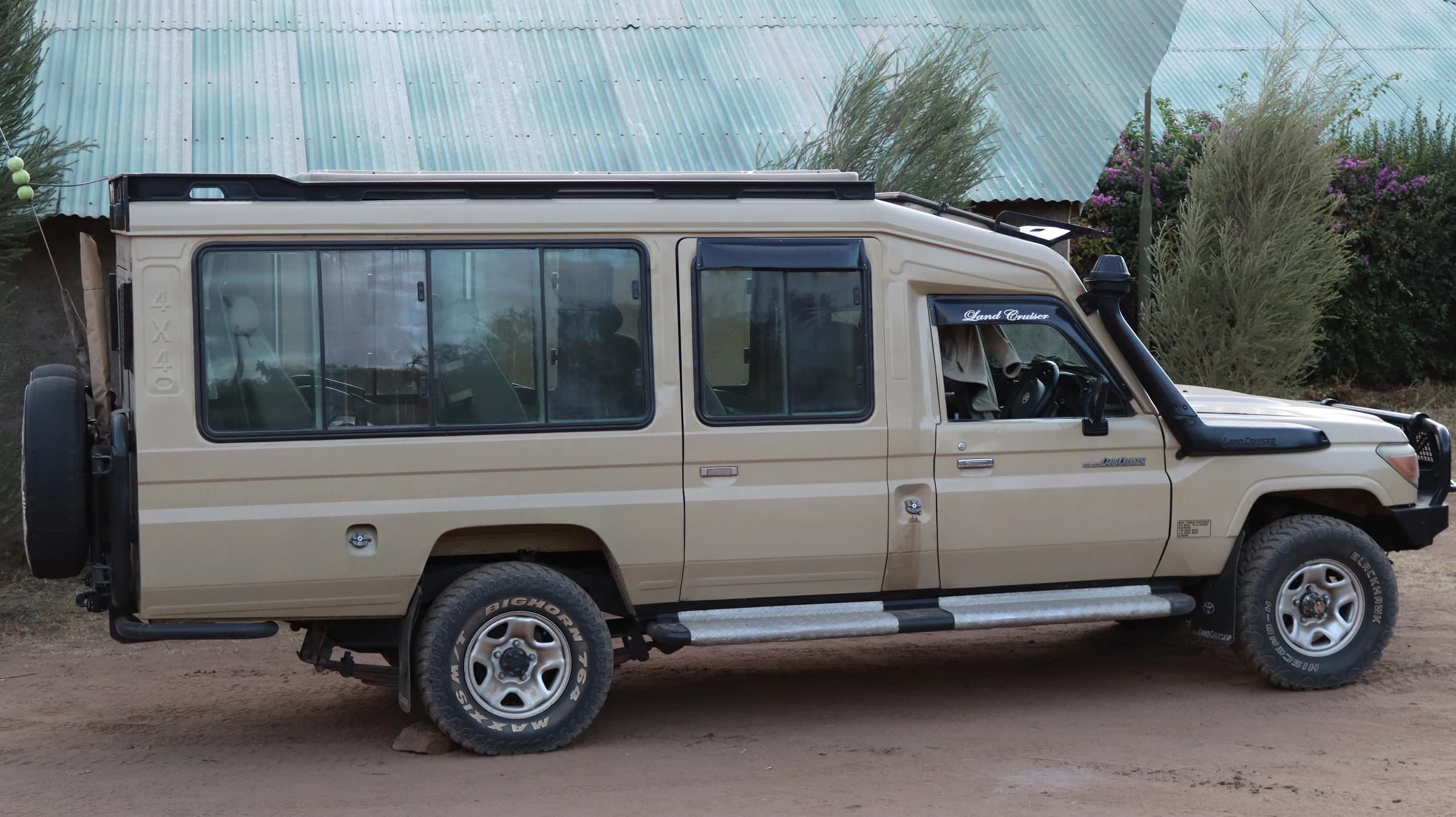
- Our Kenya and Tanzania road safaris travel in a 4×4 Land Cruiser; our fly-in journeys are in Tanzania and Uganda.
- Park authorities publish distances, not guaranteed driving times: UWA gives about 390 km of tarmac and 82 km of murram road from Kampala to Bwindi’s Buhoma on one route.
- Rain changes roads: Kenya Wildlife Service says some park roads need four-wheel drive in the low season.
- On our approved itineraries, game drives on travel days depend on arrival and departure times.
Contents
Do safaris travel by road or by air?
Most of ours travel by road. Our Kenya and Tanzania road safaris use a 4×4 Land Cruiser, so the drive between parks is part of the journey; our approved itineraries describe what it passes through, from the Rift Valley to farmland and highland. Two of our journeys fly instead: the 8 Days Ultimate Tanzania Luxury Fly-In Safari and the 3 Days Luxury Fly-In Bwindi Gorilla Safari.
Flying can save time on long transfers. If you are considering a fly-in journey, ask us about luggage limits before you pack.
How far apart are the parks?
Park authorities publish routes and distances, which are a better guide than any promised driving time. A few examples:
| Park | Route described by the authority | Source |
|---|---|---|
| Bwindi (Uganda) | From Kampala, about 390 km on tarmac to Rukungiri, then 82 km on winding murram roads to Buhoma; a four-wheel-drive vehicle is highly recommended | Uganda Wildlife Authority |
| Kibale (Uganda) | About 326 km from Kampala on the tarmac Kampala–Fort Portal highway, which UWA puts at about six hours | Uganda Wildlife Authority |
| Amboseli (Kenya) | From Nairobi via Emali to Iremito Gate, or via Namanga to Meshanani Gate, with tarmac as far as Namanga | Kenya Wildlife Service |
| Lake Nakuru (Kenya) | North-west of Nairobi on the A104, through Lanet, Nderit or the Main Gate | Kenya Wildlife Service |
| Serengeti (Tanzania) | Usually from Arusha by a long but scenic road, or by scheduled flight to Seronera airstrip | Tanzania National Parks |
| Mikumi (Tanzania) | On the A7 highway, a gateway to Ruaha and Nyerere | Tanzania National Parks |
Distances and descriptions as published by each authority, read in October 2026. Driving times depend on roads, weather and stops.
What happens on a travel day?
A travel day moves you from one base to the next, with a game drive on arrival when there is time. Our approved itineraries say this plainly: game drives on travel days depend on arrival and departure times, and timings can change with road and park conditions. On our Kenya and Tanzania journeys, the crossing point and transfer arrangements between the two countries are confirmed in each customer’s written quotation rather than assumed.
When does flying make sense?
Flying makes sense when the road is long and the time is short. The Uganda Wildlife Authority describes scheduled and chartered flights from Entebbe to the Kisoro and Kihihi airstrips near Bwindi taking about an hour and ten minutes, followed by a road transfer to the lodge. Tanzania National Parks notes regular flights to Seronera airstrip in the heart of the Serengeti, and Lake Manyara’s airstrip receives scheduled and charter flights.
Weigh what you gain against what you miss: a flight saves hours but skips the landscape between parks, and light aircraft have their own schedules and luggage rules.
How do the rains affect travel?
Wet roads are slower. Kenya Wildlife Service treats April to June as its low season, when some park roads need four-wheel drive. Tanzania National Parks warns of muddy sections in Tarangire from November to May and of muddy sections and rising rivers in Ruaha’s wet season, and the Uganda Wildlife Authority recommends four-wheel drive on the murram roads to Bwindi.
Our road safaris use a 4×4 Land Cruiser, and a rainy-season route should still allow more time between parks.
How to plan a route that is not all driving
- Count the full days in parks, not the number of parks. Two nights in a place gives one unhurried full day.
- Avoid back-to-back long transfers; a short day between two long ones makes a big difference.
- Put the place that matters most to you in the middle of the trip, not on a travel day.
- Allow a buffer before an international flight home.
- For two countries, allow for the border, and check your documents in our entry requirements guide.
Crossing a border on safari
Our Kenya and Tanzania journeys cross the border by road. The approved itineraries leave the crossing point and the transfer arrangements to each customer’s written quotation, so the details are confirmed for your route rather than assumed. Expect a border day to be a travel day, with any game drive depending on the time you arrive.
- Have your passport, visa or eTA and any vaccination certificates to hand, not packed away.
- Keep some time in hand: formalities can take a while.
- Check our entry requirements guide well before you travel.
A short safari close to Nairobi
If time is very short, Nairobi National Park is the exception to long transfers. Kenya Wildlife Service describes it as about ten kilometres from the city centre, close enough that a game drive can fit around a flight or a meeting. Our Nairobi National Park day safari is built around that.
Sources
- Uganda Wildlife Authority: Bwindi Impenetrable National Park: gorillas and getting there (opens in a new tab)
- Uganda Wildlife Authority: Kibale National Park: chimpanzee tracking (opens in a new tab)
- Kenya Wildlife Service: Amboseli National Park (opens in a new tab)
- Kenya Wildlife Service: Lake Nakuru National Park (opens in a new tab)
- Tanzania National Parks: Serengeti visitor guide (opens in a new tab)
- Tanzania National Parks: Mikumi National Park (opens in a new tab)
- Tanzania National Parks: Lake Manyara visitor guide (opens in a new tab)
- Kenya Wildlife Service: What is the weather pattern in Kenya? When is the best time to visit your parks and reserves? (opens in a new tab)
- Tanzania National Parks: Tarangire visitor guide (opens in a new tab)
- Tanzania National Parks: Ruaha visitor guide (opens in a new tab)
- Kenya Wildlife Service: Nairobi National Park (opens in a new tab)
How this guide was prepared
This guide was researched and drafted with the help of AI tools, working from the official sources listed above and Big Time Safaris’ own catalogue. Its facts were checked against those sources on 20 October 2026, and it was reviewed and approved for publication by the owner of Big Time Safaris on 22 October 2026. It is a planning guide, not a first-hand field report. Seasons, park rules and entry requirements change, so check the latest official information before you travel.